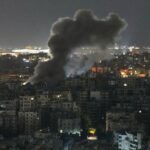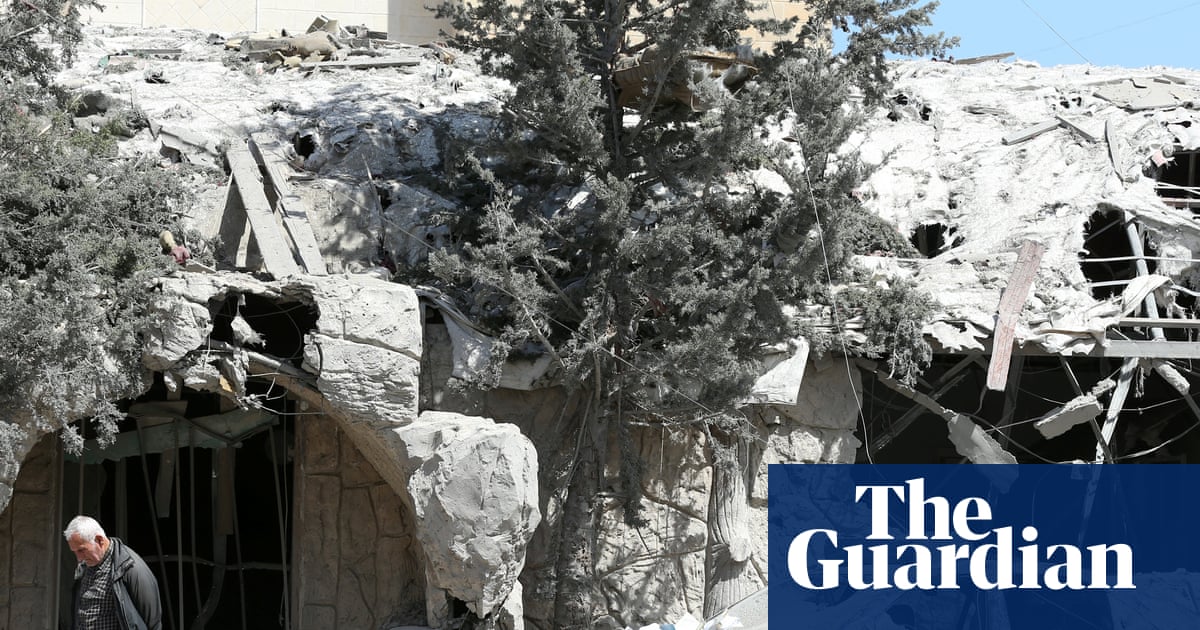

The recent bombardment of Lebanon by Israel, which occurred shortly after a ceasefire was announced between the US and Iran, has drawn widespread condemnation amid ongoing global efforts to maintain peace. More than 200 individuals lost their lives due to Israeli airstrikes, particularly in densely populated regions, leading to outrage from the International Committee of the Red Cross and other humanitarian organizations.
Israeli Prime Minister Benjamin Netanyahu asserted that Lebanon was not part of the ceasefire agreement reached on Tuesday evening under former President Donald Trump, emphasizing that military operations against Hezbollah would persist “wherever necessary.” He claimed that Israeli forces had successfully targeted and killed a high-ranking official associated with Hezbollah.
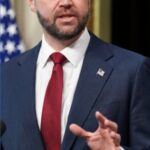
US Vice President JD Vance supported Netanyahu’s position, stating that the US never included Lebanon in the ceasefire terms. He suggested that any confusion stemmed from a “legitimate misunderstanding.” Vance is scheduled to lead a US delegation to Pakistan for discussions aimed at strengthening the ceasefire and pursuing a more sustainable peace agreement.
In contrast, Iranian President Masoud Pezeshkian warned that further Israeli attacks would undermine the potential for successful negotiations, affirming Iran’s commitment to supporting the Lebanese populace.
Pakistan, which played a crucial role in facilitating the ceasefire after threats of severe military action from Trump, contended that Lebanon was indeed part of the agreement. Robert Malley, a former American negotiator involved in prior US-Iran discussions, expressed confidence in the Pakistani mediation, highlighting that no American officials corrected Pakistan’s assertion for several hours.
Malley suggested that the situation appeared to indicate a US withdrawal from its commitments, inadvertently allowing Netanyahu to continue military actions for an additional 24 hours before any constraints were placed on Israel.
He proposed that the most favorable outcome of the peace talks in Pakistan would involve restoring the region to the conditions that existed before the US-Israeli military actions began on February 28, ensuring the Strait of Hormuz remains open and discussing measures to limit Iran’s nuclear ambitions along with potential financial restitution for Tehran.
As preparations for the delegations’ arrival commenced in Islamabad, authorities implemented stringent security measures in anticipation of the negotiations starting this Saturday.
With the ceasefire hanging in the balance, Trump issued a new ultimatum via social media, threatening a return to US military action unless Iran complied with what he termed “the real agreement.” He specified that Tehran must fully reopen the Strait of Hormuz to international maritime traffic and eliminate its nuclear weapons program, neglecting to mention Lebanon in his statements.
US allies have emphasized the necessity for a comprehensive ceasefire. A joint declaration from the UK, EU member states, Canada, and Japan urged all parties to adhere to the ceasefire, specifically mentioning Lebanon, where Israel aims to dismantle the Iranian-supported Hezbollah organization.
Kaja Kallas, the EU’s foreign policy chief, remarked that while Hezbollah has entangled Lebanon in conflict, Israel’s right to self-defense does not justify the extensive devastation caused. She noted that the Israeli strikes resulted in hundreds of casualties, complicating the argument that such significant actions were defensible.
French Foreign Minister Jean-Noël Barrot denounced the Israeli assaults as “unacceptable,” while his British counterpart, Yvette Cooper, described them as “deeply damaging” and warned that failing to include Lebanon in the ceasefire could destabilize the entire region.
Global diplomatic efforts have concentrated on reopening the Strait of Hormuz, a vital channel for approximately one-fifth of the world’s oil and liquefied natural gas supply. In the 24 hours following the ceasefire, only 11 vessels—comprising four Iranian, four Greek, one Chinese, one Omani, and one unidentified—were permitted to transit through the Strait, representing less than 10% of the prewar shipping volume.
Currently, around 1,400 vessels remain anchored in the Gulf, initially trapped by the conflict and subsequently by the uncertainty surrounding the fragile truce. Following an initial decrease in global oil prices after the ceasefire announcement, prices began to rise again towards $100 a barrel by Thursday.