
The saying “good fences make good neighbours” might soon evolve with the introduction of rainwater-collecting fences in the Netherlands, a concept being embraced by housing corporations to foster better community ties.
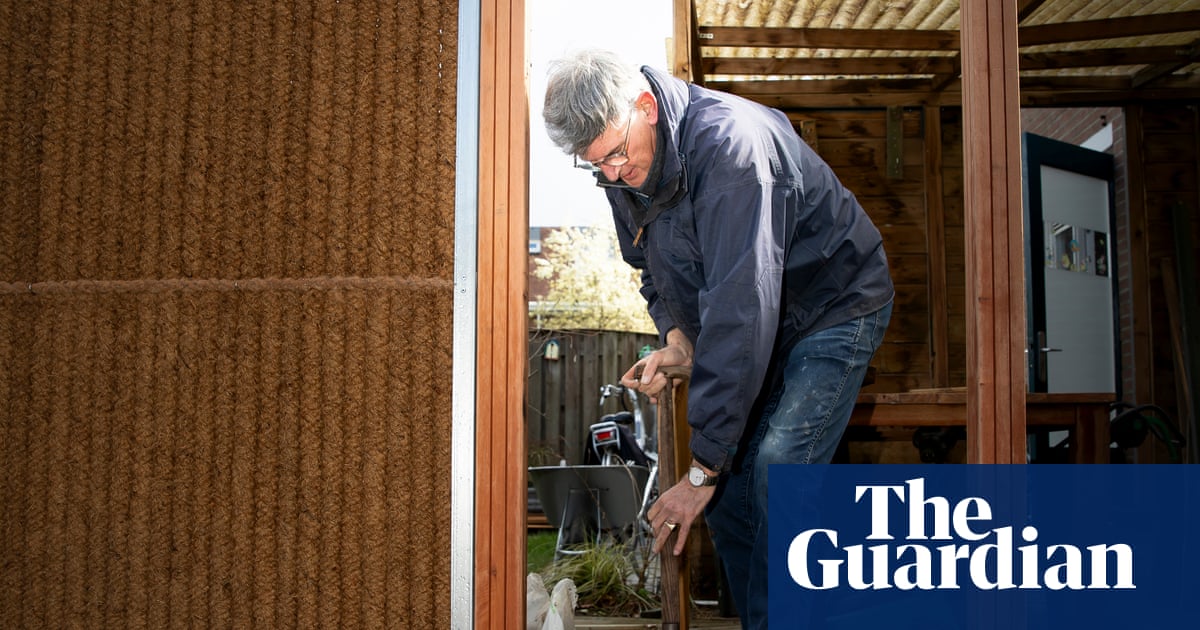
In Veldhoven, a well-kept neighborhood, the social housing organization Woonstichting ’thuis is implementing its inaugural rain fence. Residents Theo and Willy Bolder have already noticed a surge in interest from their neighbors. “Everyone is stopping by to inquire about the costs,” Willy shared.
The innovative design includes a system of plastic blocks concealed between rattan panels, which connects to their roof’s drainage. This setup can accumulate as much as 2,160 liters of rainwater, alleviating strain on drainage systems during heavy rainfall and providing a resource for their garden during dry spells.
Willy expressed concerns about the increasing intensity of rainstorms, explaining that cloudbursts can overwhelm the drainage, causing backflow into their home. “The extensive paving means the water has nowhere to go,” she noted.
Theo added that the hotter summers have adversely affected local vegetation and their overall living conditions. “I frequently fish in a lake that was completely dry last summer,” he remarked. “With frequent hosepipe bans, maintaining our garden is becoming a challenge.”
The couple’s experiences reflect a broader trend in the Netherlands, a country already grappling with climate change effects. The Royal Netherlands Meteorological Institute (KNMI) reports an average temperature rise of 1°C since 2000, with urban areas typically experiencing temperatures 5°C higher than rural settings.
Extreme weather events have become more common, highlighted by the devastating floods in Limburg in 2021, where over 15 cm of rain fell within just two days, leading to severe flooding.
Rik Thijs, the deputy mayor for public space, greenery, and water in nearby Eindhoven, emphasized the necessity for both private and public initiatives to adapt to these changing weather patterns. “Our sewage systems are not equipped to handle the rainfall we are experiencing, and increasing their capacity isn’t feasible, so we must find alternative solutions,” he stated. “We need to capture as much rainwater on the surface as possible.”
Proposed measures include re-exposing the old river Gender, creating water-holding “wadi” pools for heavy rains, and integrating green roofs and rainwater storage into new developments. “Given that the Netherlands is a vast delta, we are particularly susceptible to water-related issues,” he noted.
The country’s significant vulnerability to flooding was tragically illustrated by the North Sea flood of 1953, which resulted in the deaths of at least 1,800 individuals and extensive damage to properties and farmland. This disaster led to the establishment of the Delta Works sea defenses and left a lasting impact on local entrepreneur Harry den Hartigh, whose company, SunnyRain Solutions, installed the rainwater system for the Bolder family.
Despite the Netherlands’ reputation for frequent rainfall, there are growing concerns about water shortages during the summer months and rising urban temperatures. Jannes Willems, an assistant professor of urban planning at the University of Amsterdam, noted that implementing simple, scalable solutions could significantly help. “Harvesting rainwater is a straightforward solution,” he stated, highlighting the current system designed for rapid water discharge, which is inadequate in heavy rainfall situations.
“Encouraging water to seep into the ground through green initiatives can mitigate flooding while also lowering temperatures during heatwaves,” Willems suggested.
For Woonstichting ’thuis, the introduction of rain fences serves a dual purpose: environmental responsibility and enhancing the resilience of the housing complex’s 11,000 residences. Matthijs Hulsbosch, the property and sustainability manager, pointed out that these fences not only protect the environment but also safeguard property values. “Preventing water intrusion can save significant costs and hassle,” he noted.
Willems also remarked on the shift in perspective regarding the Netherlands’ relationship with nature. “Historically, the Dutch water management system aimed at mastering nature, but with the introduction of green infrastructure, we are beginning to embrace a more symbiotic approach,” he said.
Some wonder if these stylish rain fences could not only aid struggling plants but also improve neighborhood relations. David Hearn, a neighborhood manager for Woonstichting ’thuis, expressed his excitement about the Bolder family participating in the pilot project, though he noted some tenants have been too hostile to accept even a complimentary fence.