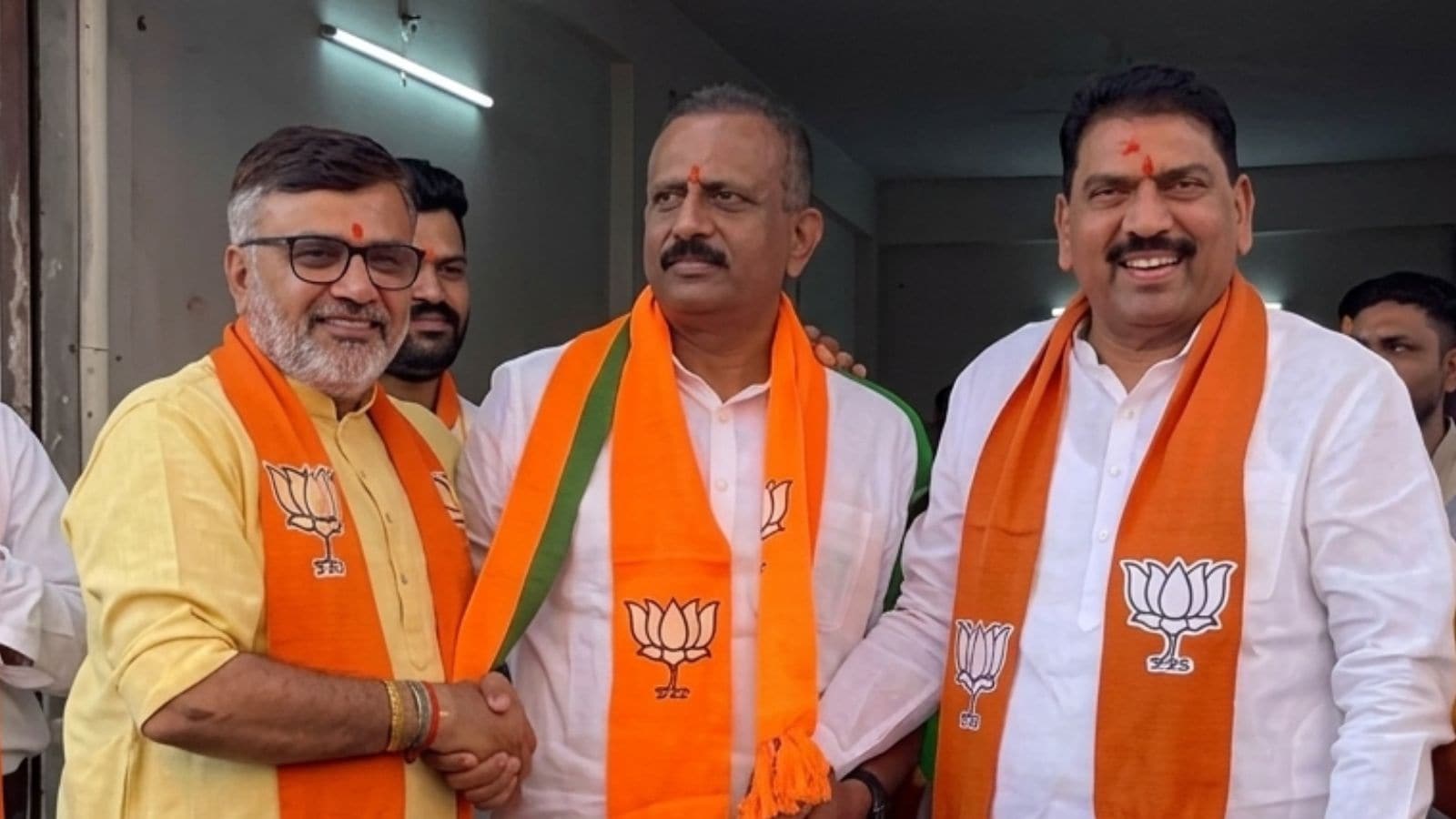

After dedicating 42 years to policing, 59-year-old Manoj Ninama, an IPS officer from the Gujarat cadre, has shifted gears to politics by officially joining the Bharatiya Janata Party (BJP) on Thursday. His move comes shortly after he voluntarily retired on April 7, ahead of his scheduled retirement on May 31.
Ninama has been nominated as a candidate for the Odh District Panchayat seat in Shamlaji taluka, as part of a list of 30 candidates released by the BJP. Just two days post-retirement, he has already begun strategizing for his electoral campaign in his home district.
In an interview with The Indian Express, Ninama explained that transitioning from law enforcement to political administration is an opportunity for him to engage more socially in his retirement while addressing crucial issues affecting the tribal community in his area.
His decision to enter politics has been significantly influenced by his long-time friend P C Baranda, a former IPS officer and current Gujarat Minister for Tribal Development, who represents the Bhiloda Assembly constituency. Ninama remarked, “P C Baranda and I have shared a long friendship, having studied, trained, and risen through the ranks of the police together.” He noted that while Baranda opted for voluntary retirement in 2017, he had initially committed to serving until the end of his tenure. Now, approaching 60, he feels it’s time for a change and is eager to embrace a social life after years of service.
Regarding his affiliation with the BJP, Ninama expressed admiration for the party’s focus on nationalism and development, as well as its disciplined approach, which resonates with his personal values. He stated, “Discipline has always been integral to my life, and I am attracted to the BJP’s consistent adherence to these principles. I am also impressed by Prime Minister Narendra Modi’s initiatives.”
As he prepares for his first electoral campaign, Ninama intends to prioritize rural development and address fundamental tribal concerns in Aravalli. His constituency, Odh village, is situated in the newly established Shamlaji taluka, previously part of Bhiloda.
Ninama pointed out that Shamlaji is one of the newest talukas, and Aravalli is a relatively recent district, having been formed from Sabarkantha in 2013. He believes there is a significant development gap that needs to be addressed due to inadequate coordination with higher levels of administration, which hampers the effective implementation of government schemes in remote areas.
He further noted that past representation of the district by individuals from outside the region has contributed to its developmental lag. “For years, the district was affiliated with Sabarkantha, and being a fully tribal district, it lacked local representation despite a reasonable literacy rate. When locals represent their communities, development accelerates,” he added.
Leveraging his administrative background, Ninama is determined to bridge the existing gaps in the region. He emphasized the importance of rural development in the forthcoming elections, highlighting that prior to 2000, the district experienced significant neglect. He credited the advancements made since 2002 to PM Modi’s leadership as Chief Minister.
“Comparing Aravalli to more developed districts like Anand and Ahmedabad reveals stark contrasts, especially in tribal regions that are newly established with challenging geographical features,” he stated. “I aim to utilize my administrative experience to enhance collaboration with government departments, ensuring that the focus remains on the development of Aravalli.”
Ninama’s extensive career spans over four decades, having started as a Deputy Superintendent of Police in Gujarat with early assignments in Bhuj in 2001. He achieved the IPS rank in 2012 and has held several significant positions within the Gujarat police, including Superintendent of Lajpore Jail in Surat and Joint Commissioner of Police in Vadodara. His final posting was as Inspector General of the Traffic Branch in Gandhinagar at the time of his voluntary retirement. Additionally, he has served as Commandant of Group 2 of the State Reserve Police Force in Vadodara and worked in the State Intelligence Bureau.
Aditi Raja, the Assistant Editor at The Indian Express, is based in Vadodara, Gujarat, with over 20 years of journalistic experience. Since 2013, she has been covering the Central Gujarat and Narmada districts, establishing her as a credible source on regional political, administrative, socio-economic, and environmental matters.
Raja’s expertise includes a deep understanding of the complexities shaping Central Gujarat, which is home to a significant tribal population, and she provides insightful analyses of political dynamics, government policies, and their implications for local communities.