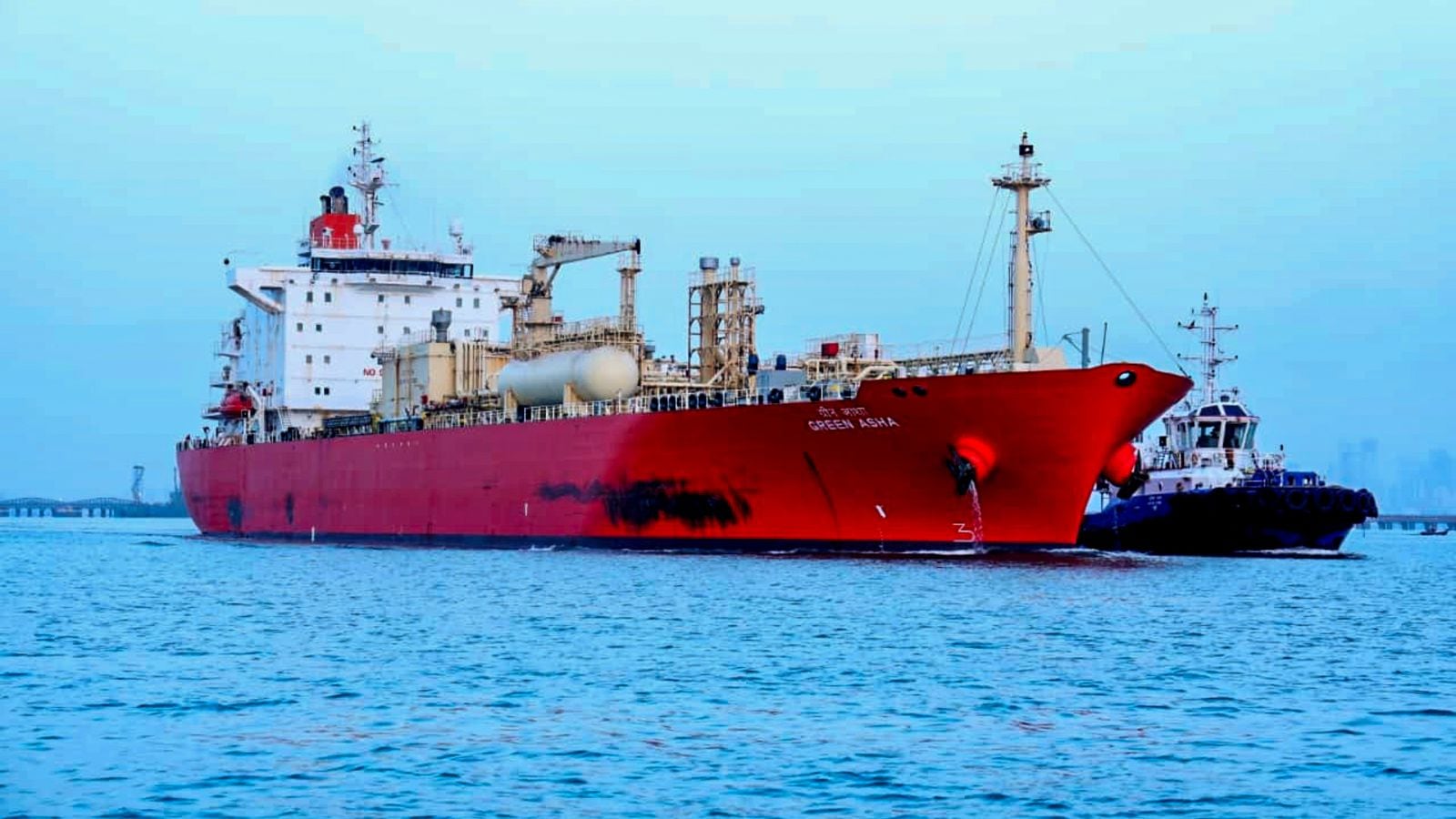

The situation in the Strait of Hormuz remains precarious, as Iran seeks to assert its control over this vital maritime route, even amidst a fragile ceasefire. Reports indicate that Tehran intends to limit the daily passage of vessels to a maximum of 15, as part of an agreement established with the United States, according to information from Russia’s TASS news agency.
This development was conveyed by a senior Iranian official to TASS on Thursday. The Strait of Hormuz, which narrows to just 34 kilometers between Iran and Oman, serves as a crucial corridor connecting the Gulf with the Indian Ocean. It is a significant channel for approximately 20% of the world’s oil supply and various essential commodities, including fertilizers.
Nations worldwide rely heavily on this route for their crude oil and natural gas needs. Notably, nearly 90% of India’s liquefied petroleum gas imports transit through the Strait. Since the onset of hostilities at the end of February, Iran has effectively curtailed traffic through this critical chokepoint, resulting in a spike in global oil prices.
The restrictions began following a series of coordinated strikes by the US and Israeli forces on February 28, which destabilized the region and initiated a cycle of violence. During the first day of the ceasefire, only one oil products tanker and five dry bulk carriers were reported to have passed through the strait, a stark contrast to the 140 vessels that typically navigated this route each day before the conflict, representing a significant portion of global oil and liquefied natural gas shipping.
With contributions from Reuters, this report highlights the ongoing complexities surrounding one of the world’s most crucial maritime corridors.
The Express Global Desk at The Indian Express is dedicated to providing reliable, well-researched coverage on significant international issues that influence global politics, policies, and migration trends. The desk emphasizes narratives with direct implications for both Indian and international audiences, merging breaking news with comprehensive analysis.
A key area of focus for the desk includes US immigration and visa policies, encompassing updates on student visas, work permits, pathways to permanent residency, executive actions, and judicial decisions. Additionally, the Global Desk monitors Canada’s immigration and visa policies, reporting on changes to study permits, post-study work opportunities, permanent residency programs, and regulatory shifts impacting migrants and international students.
All reporting from the Global Desk adheres to The Indian Express’ high editorial standards, utilizing official statistics, government announcements, court documents, and verified sources. The desk is committed to clarity, precision, and accountability, equipping readers with the knowledge to navigate complex global systems confidently.
The Express Global Desk is led by a proficient team of journalists and editors with extensive expertise in international relations and migration policy:
- Aniruddha Dhar – Senior Assistant Editor with a wealth of experience in global affairs and editorial leadership.
- Nischai Vats – Deputy Copy Editor specializing in US politics and immigration policies.
- Mashkoora Khan – Sub-editor focused on global developments, particularly in Canada’s immigration and study-related policies.
Stay informed with the latest updates – follow us on Instagram.