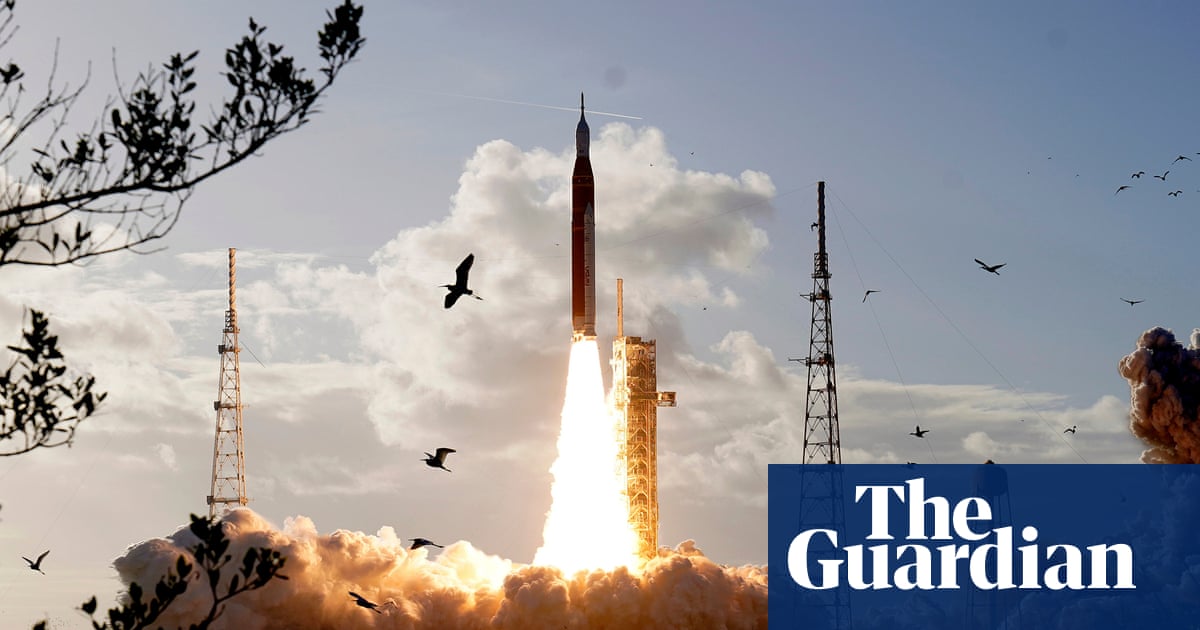

Zoe Williams articulates a sentiment shared by many regarding the U.S. space initiative, deeming it ineffective (Let’s stop going into space. There’s nothing to see and no one to talk to, 7 April). However, the situation is even more alarming. The Artemis program, with a staggering budget of $100 billion, exemplifies a significant misallocation of human ingenuity and resources.
To put this into perspective, the United Nations World Food Programme, prior to the substantial cuts made by Donald Trump to USAID, operated with an annual budget of $10 billion. This program positively impacts over 150 million individuals across more than 120 nations each year and could be fully financed for an entire decade by the funds allocated to the seemingly futile Artemis program. It is not challenging to determine which of these two investments would yield greater social, environmental, and security returns for contemporary society.
Robin Hambleton, Emeritus Professor of City Leadership at the University of the West of England, echoes my agreement with Zoe Williams’s perspective. I would advocate for a more stringent approach, suggesting that we should impose certain parental-like restrictions on this frivolous endeavor. Until humanity ceases its conflicts and the degradation of our planet, space travel should not be permitted.
In the four decades since, Eric Idle’s observation remains unmatched: “Pray that there’s intelligent life somewhere up in space / Cause there’s bugger all down here on Earth.”
Gabriella Herrick from Bath questions whether Zoe Williams recognizes the necessity for humanity to inhabit other planets as Earth becomes less viable, especially with the sun’s eventual expansion. While the moon landing was once celebrated as a monumental achievement for mankind, our current efforts in space exploration are merely modest steps for our species.
Provided we avoid self-destruction through war or the failure to address climate change, future generations may be grateful for the groundwork laid by today’s space initiatives. In a time fraught with challenges posed by misguided leaders and extremists threatening a bleak future, we should embrace the optimism that space exploration offers to humanity.
Peter Watts from Rhyl, Denbighshire, commends Zoe Williams for her courageous stance on what she perceives as a misuse of resources in the space race. Regarding the question of extraterrestrial life, he suggests that if other life forms exist in the multiverse, they likely possess a more refined understanding of intelligence than humanity does. A glance at the news reveals the current state of human intellect.
Ian Hogg from North Leigh, Oxfordshire, argues that concluding the absence of aliens in the universe due to our lack of evidence is akin to extracting one cup of water from the ocean, finding no fish, and declaring the entire ocean lifeless. The observable universe contains an estimated septillion stars dispersed across at least 200 billion galaxies, with the nearest star to our sun located over 40 trillion kilometers away. Even with advanced technology traveling at 20,000 miles per hour, it would take over 33,000 years to reach it.
Michael Fuller from Ampthill, Bedfordshire, invites readers to share their thoughts on any article published in the Guardian today. Submissions will be considered for inclusion in the letters section.