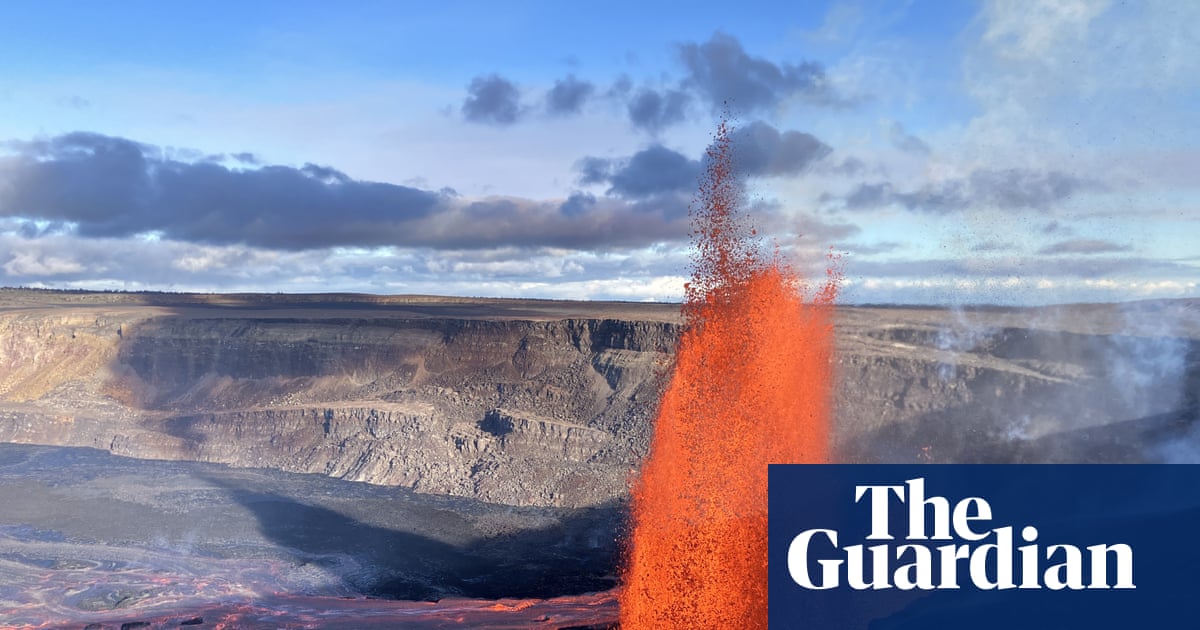

On Thursday, the Kilauea volcano, renowned for its frequent eruptions, sent streams of amber lava soaring over 200 meters into the atmosphere on Hawaii’s Big Island.
According to the United States Geological Survey (USGS), the eruption began shortly after 11 a.m. local time, with lava fountains visible in the area. By the evening, a livestream camera captured images of smoke and lava cascading down the slopes of the volcano. The USGS reported that this event has generated approximately 3.6 million cubic yards of lava to date.
In response to the eruption, the Hawaii Volcanoes National Park, a favored spot for tourists interested in witnessing volcanic phenomena, was closed on Thursday.
The National Park Service advised visitors to wear protective clothing, including long sleeves and pants, as well as eye protection, to reduce the risk of exposure to volcanic ash and tephra, which consists of small, glassy fragments produced by volcanic activity.
The National Weather Service has also issued an ashfall advisory for the southeastern part of the Big Island, effective until midnight local time.
The agency warned that larger tephra, comparable in size to a football, could descend near the summit and drift several miles downwind. Additionally, smaller volcanic particles may pose risks of eye and respiratory irritation.
According to the USGS, Kilauea has experienced numerous eruptions since 1952, with previous events lasting anywhere from two weeks to over a year. A significant eruption in 2018 led to widespread destruction, with lava flows engulfing homes and forcing residents to evacuate.
Each year, the Hawaii Volcanoes National Park attracts more than a million visitors. However, the area surrounding the eruption site has been off-limits to the public since 2007 due to potential dangers such as ground cracking and landslides that could expose people to hot, molten rock, as noted by the USGS.