
In 1991, filmmaker Jim Jarmusch was in the process of casting for his anthology movie titled Night on Earth. The concept was straightforward: it depicted five taxi drivers in various cities, each picking up passengers, accompanied by a musical score from Tom Waits. Jarmusch envisioned actress Gena Rowlands in the role of a passenger, but she required some convincing to take part. After recently experiencing the loss of her husband, director John Cassavetes, Rowlands was hesitant. Ultimately, she agreed, stating, “OK, I’ll be in this film for you.” Jarmusch possesses a remarkable ability to mimic those he quotes, a talent that adds a unique charm to his storytelling.
The film opens with Winona Ryder portraying a character who picks up Rowlands, who plays a casting director. Ryder, donning a baseball cap and chewing gum, lights a cigarette while Rowlands, embodying classic Hollywood grace, engages her about her aspirations. Ryder turns down Rowlands’ suggestion of pursuing fame, declaring her desire to become a mechanic instead.
Reflecting on this performance with the knowledge of Rowlands’ recent grief, one can detect a deep sense of melancholy and genuine humanity in her portrayal, which has always been her special contribution to cinema. Jarmusch’s strength lies in his ability to create empathetic, distinctive indie films that draw out understated performances from prominent actors. He consistently places his characters at the forefront of his narratives, expressing a disinterest in writing about “sex, revenge, or the pursuit of wealth.”
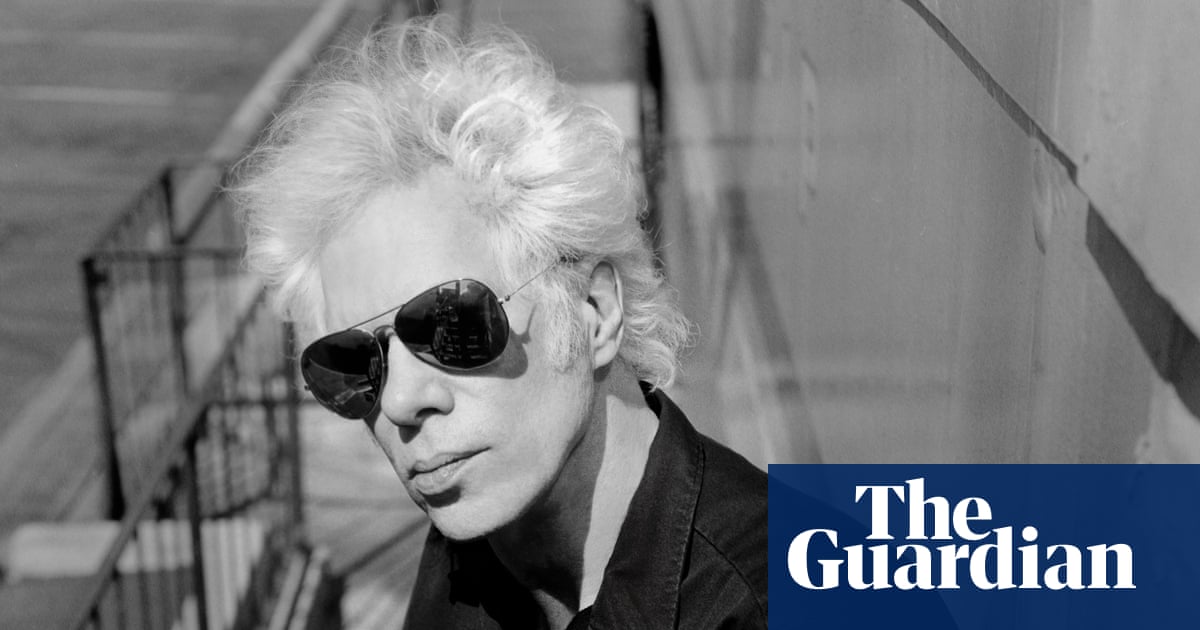
Now 73, Jarmusch is engaged in a video interview from a room filled with books in New York, discussing his latest film, Father Mother Sister Brother, which was awarded the Golden Lion at last year’s Venice Film Festival. With his iconic white hair, tinted glasses, and dark clothing, he presents a familiar image. Before delving into his new project, Jarmusch reflects on his collaboration with Rowlands, who passed away in 2024 at the age of 94. He appears momentarily overcome with emotion as he recalls, “Gena Rowlands. What can I say? She was an extraordinary and seemingly effortless talent. There was nothing forced or artificial about her performance. Coming from the Cassavetes approach, she understood that the essence of cinema lies in revealing something authentic from within. It was truly a beautiful experience and one of the greatest gifts of my career.”
During the filming of scenes featuring Rowlands and Ryder, Jarmusch received phone calls from Peter Falk, who starred alongside Rowlands in Cassavetes’ 1974 film A Woman Under the Influence. Falk would check in, saying, “Jarmusch, Falk here. What’s going on with Gena? Do you need anything?” Jarmusch chuckles as he imitates Falk’s distinctive voice, adding, “She was a lioness; she didn’t really require protection.”
Years after Night on Earth, Rowlands shared a Cassavetes script titled Unless That Someone Is You with Jarmusch. The script was described as “a beautiful, nonjudgmental love story about a woman and a younger person on the spectrum,” originally written for Rowlands prior to Cassavetes’ death. She hoped Jarmusch would direct it, but he insisted he would only do so if she took the lead role, to which she initially declined. After two years, Rowlands reconsidered, expressing urgency due to her advancing Alzheimer’s diagnosis.
However, at that time, Jarmusch was focused on preparing for Dead Man, a 1995 film featuring Johnny Depp, which he later referred to as a “psychedelic western,” and he had to decline Rowlands’ offer. “Dead Man was a nightmare to prepare, and I thought, ‘Oh no, I can’t take that on right now.’ It was the only moment I ever considered directing someone else’s script,” he admitted.
I remarked that this was a missed opportunity, but also a significant honor for Rowlands to seek his direction for a Cassavetes script. He agreed, stating, “I collaborate with cinematographer Fred Elmes, who has worked with both Cassavetes and David Lynch, and I feel a profound connection to both filmmakers through him. While I’m not a surrealist like Lynch, nor as visceral as Cassavetes, I align more with the humanist romanticism that John represented.”
Jarmusch leans closer to the camera, clarifying, “I am not trying to imitate them. Their work is beyond my reach. I find myself positioned between these two influential American filmmakers who have greatly impacted me.”
No one would accuse Jarmusch of imitation. His career, which began with his student film Permanent Vacation and continued with 1984’s Stranger Than Paradise, has been characterized by a focus on unconventional Americana. He often opts for a vignette style that delves into the mundane aspects of life, all while infusing his films with a distinctive deadpan humor. “I create films from moments that others might overlook. Most directors would eliminate taxi rides from their storylines, but I made a whole film centered around them. In Coffee and Cigarettes, I examined those interludes when people step away from the pressing matters of life,” he explained.
Accordingly, Father Mother Sister Brother continues in this vein. If anything, it embodies a style reminiscent of Yasujirō Ozu, a director Jarmusch greatly admires for his observations of everyday life. This new anthology is structured in three segments set in New Jersey, Dublin, and Paris. While the characters do not intersect, the film features recurring themes, such as a group of skateboarders navigating traffic and the notably British phrase, “Bob’s your uncle.”
In the first segment, titled Father, characters Jeff (played by Adam Driver) and Emily (Mayim Bialik) embark on a journey to visit their widowed father (Tom Waits) at his secluded countryside residence. As they arrive, tension escalates as the manipulative father claims financial hardship and shamelessly solicits money from his financially stable children.
The conversation among the siblings is strained, reflecting their lack of closeness, yet they seem more talkative compared to the family dynamics in the Mother segment. Here, we find a bestselling author mother (portrayed by Charlotte Rampling) and her daughters Timothea (Cate Blanchett) and Lilith (Vicky Krieps) during their annual family visit in a stately home on a broad avenue.