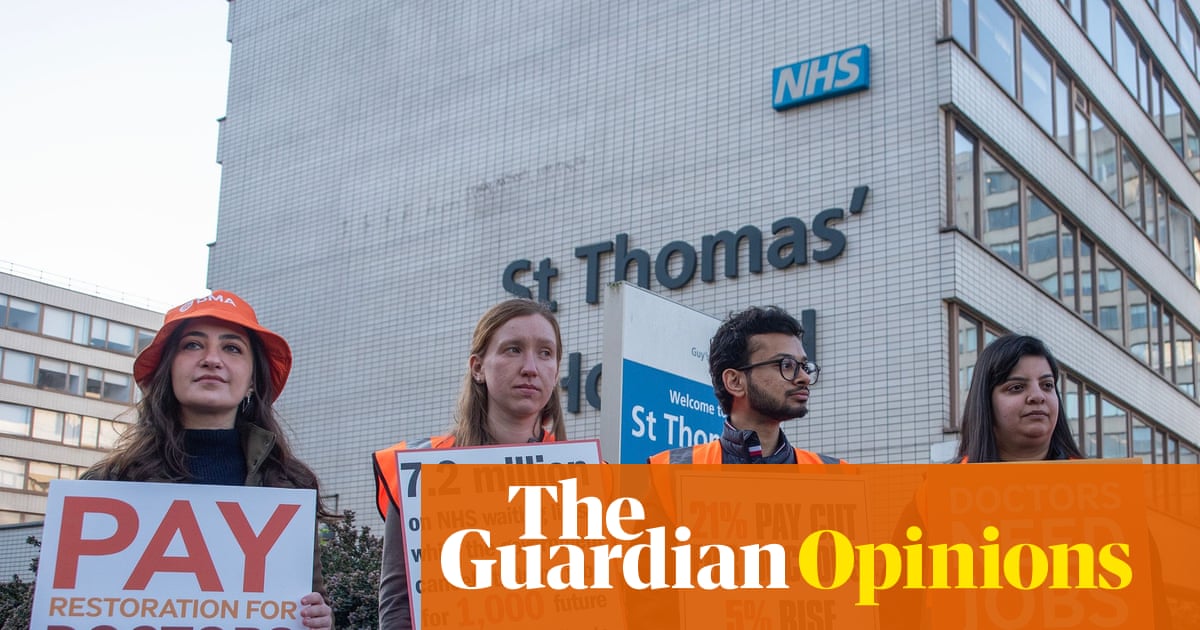

What options do we have for resolution? When I inquired with a member of the negotiating team associated with the health secretary, the disheartening response was, “I don’t know.” In England, resident doctors are currently engaged in another strike, this time lasting six days. The Labour government entered office with a promise of a 22.3% salary increase to resolve the strike situation it inherited, believing it had addressed the issue. However, within a year, doctors returned to the picket lines.
Initially, negotiations over several weeks appeared to progress positively, but they ultimately faltered at the final hurdle. The doctors expressed dissatisfaction, claiming that there was a last-minute dilution of the proposal and reverted to their original demand of reinstating their salaries to 2008 levels, which would require an additional 26% increase. Wes Streeting described this demand as “impossible,” asserting that resident doctors have received significant pay increases compared to other public sector workers. The situation seems to be at a stalemate, with neither side willing to budge.
One reason for this deadlock is that most parties involved are not currently experiencing financial hardship. Streeting noted that 95% of treatments continue during strikes, resulting in no increase in waiting times. Senior consultants are stepping in to fulfill the roles of junior doctors, working at rates established by the British Medical Association (BMA), which can reach around £4,000 for a weekend shift. According to the Royal College of Emergency Medicine, during some strike periods, emergency departments function more efficiently than usual when specialists see patients instead of junior doctors.
Typically, striking workers endure financial losses due to missed wages, but many of these doctors can recover their income by taking on extra shifts after the strike. Although voter turnout among resident doctors has declined in BMA ballots, those who choose not to participate are not suffering financially due to strikes they did not support. In February’s ballot, only 53% participated, with 93% in favor of striking, while the turnout in the first ballot of 2023 was 78%. This trend among high-achieving doctors signals a greater issue rather than a lack of engagement.
The NHS bears the brunt of this conflict. The cost of hiring consultants to cover for striking doctors amounts to £50 million per day, totaling approximately £3 billion since the onset of strikes in March 2023—funds that could have otherwise been allocated for additional treatments, staffing, and community services. While NHS performance is gradually improving, the public perception is also slowly shifting, making the lost £3 billion all the more critical, especially as critics on the right seek to highlight perceived failures within the NHS. Even though treatment times have consistently missed established targets, a significant majority of patients receive timely care; for instance, in February, 74.1% of patients treated in A&E did not wait longer than four hours.
What caused the recent negotiations, which initially seemed promising, to break down? Beyond salary disputes, a pressing issue for new medical professionals is the scarcity of training positions. Upon Labour’s assumption of power, only 25% of qualifying doctors could advance towards their desired specializations. Streeting took steps to double the available training slots and introduced an emergency law prioritizing British graduates over foreign applicants. He proposed an additional 1,000 training places for the current year and an extra 3,500 in the coming years, alongside a 3.5% salary increase this year, totaling a 33% rise over the last three years. He also offered to cover the costs of medical examinations, which often exceed £1,000 per session, and to expedite doctors’ progression through higher pay bands.
Despite initial optimism among Streeting’s team, when BMA officials presented the proposal to their committee, it was swiftly dismissed without a vote among members. In the meantime, the BMA council is undergoing elections, with a record 247 candidates vying for 69 seats. The active participants in this electoral process tend to be more militant, making it a challenging time for reaching a compromise.
Moreover, the government’s combative response, akin to a Trump-like approach, has not aided negotiations. Streeting remarked, “Because the BMA resident doctor committee has not agreed to call off these strikes and present an offer to members, we will now not be able to provide the 1,000 extra training places that the BMA requested.” It is widely acknowledged that these positions are essential. Additionally, NHS England’s chief executive, Jim Mackey, threatened to diminish reliance on resident doctors in response to the strikes—a tactic unlikely to foster collaboration.
As the UK economy faces significant challenges, the NHS is bracing for a “huge shock” to its financial stability. The Treasury is under pressure to meet the demands of various public services, in addition to households and businesses.
When discussing fair compensation in general terms, the public often perceives doctors and nurses as among the most deserving, while FTSE 100 CEOs rank much lower. However, public support for the doctors’ strikes, which was initially high, has dwindled; currently, 53% oppose the action compared to 38% in favor. In an era of stagnant economic growth, the BMA’s demand for a 26% salary increase to restore 2008 pay levels resonates with many in both public and private sectors. The starting salary for resident doctors in England is £40,000, rising to £76,500 during their final training years. Whether this compensation is considered adequate is subjective, especially in comparison to the national median salary of £39,000. While many doctors do not enter the profession purely for financial gain, they often compare their earnings with those of peers in lucrative fields such as commercial law or finance.
A senior consultant supervising resident doctors at a prestigious hospital reflected on the comparatively easier training conditions of his own era, when accommodation was free and student debts were not nearly as burdensome as the £100,000 debts faced by new medical staff today. This year, only one out of eight residents secured a training position, a fact that astonishes him. Despite his empathy, he opposes the strike due to the impact it has had on patient care, as he has had to cancel appointments this week. This complex web of conflicting sentiments illustrates the uncertainty surrounding potential resolutions, with no clear path forward in sight.
Polly Toynbee is a columnist for The Guardian.