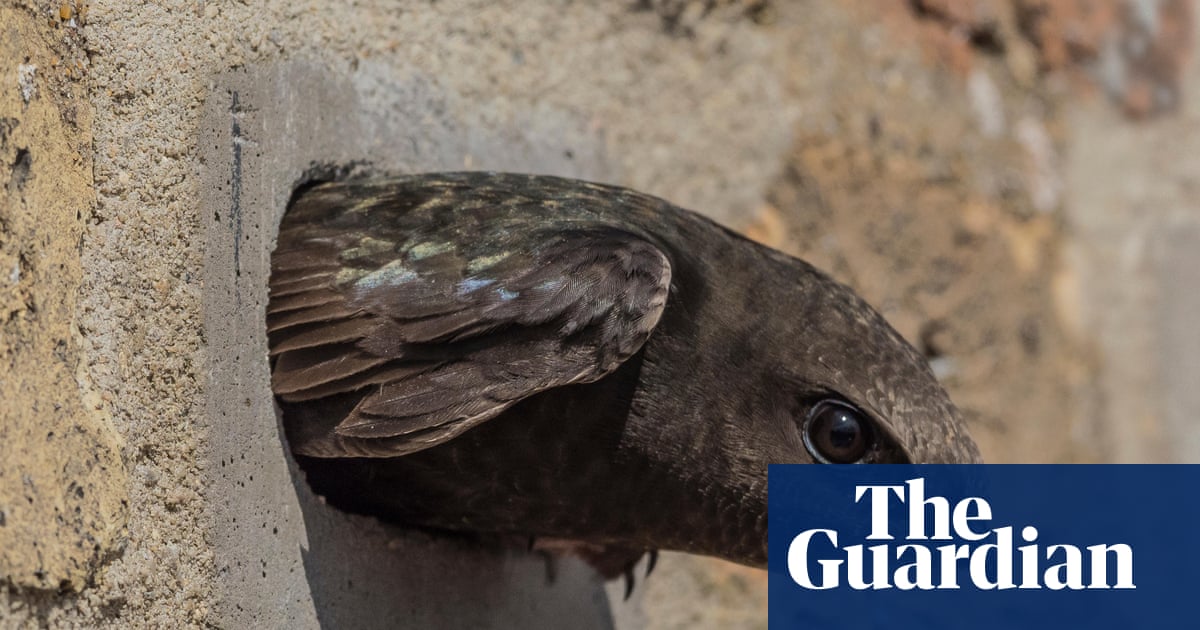

Campaigners have raised concerns that some swifts returning to Britain for breeding may find their traditional nesting sites obstructed following a £7.5 million refurbishment of a railway viaduct in Derbyshire.
Nature advocates had urged Network Rail to clear three blocked nesting holes, which are part of at least nine swift nesting locations on the twin viaducts located at Chapel Milton, near the Peak District.
According to the campaigners, Network Rail had received comprehensive information regarding the specific locations of these nesting holes, situated in small gaps within the stone structure; however, three of them were filled with mortar in February.
Deb Pitman, a dedicated swift advocate, expressed her distress, stating, “It’s incredibly disheartening. Witnessing footage of swifts attempting to access a blocked nest is profoundly upsetting. They often try repeatedly, which can lead to fatal outcomes.”
She continued, “It is believed that established breeding pairs are unlikely to successfully relocate to new nesting sites. Consequently, when they lose a nesting location, they effectively cease breeding.”
Network Rail commenced the refurbishment of the 160-year-old viaducts last summer while swifts were nesting. An ecological assessment conducted by Network Rail, which was not mandated by law, found no evidence of nesting swifts.
This assertion has been contested by swift watchers who presented 38 pieces of evidence indicating at least nine nesting sites on the viaducts. Network Rail eventually acknowledged the presence of swift holes and stated that they had taken steps to work around the nesting birds.
The British Transport Police’s wildlife crime team has launched an investigation to determine if the nesting birds were disturbed during the refurbishment work, following reports made by campaigners last summer.
A spokesperson for Network Rail commented, “During the necessary refurbishment of the viaduct at Chapel Milton last year, our teams identified potential swift nests. We consulted with ecologists and established exclusion zones to protect the nesting swifts adequately. The essential masonry repairs were completed after the bird nesting season.”
The spokesperson further stated, “We look forward to collaborating with local groups to enhance the viaduct as a habitat for swifts, including the installation of additional nesting boxes alongside existing sites.”
Advocates argue that maintaining the small swift holes would not compromise the structural stability of the viaduct.
Jason Adshead from the Chapel-en-le-Frith Biodiversity Group remarked, “We invested considerable time monitoring the viaduct work last year and possess evidence indicating the locations of the nest sites. This information was shared with Network Rail.”
He added, “We truly hope that arrangements will be made to reopen the nest holes before the arrival of the birds in significant numbers. Swifts are an integral part of summer, and we are fortunate to have them here.”
Bird enthusiasts are planning to hold a vigil beneath the viaduct on Saturday, hoping that the nesting holes will be unblocked prior to the swifts’ return for breeding at the end of April.
The swift population in Britain has seen a decline of 66% from 1995 to 2022, primarily due to the extensive loss of nesting sites in older roofs and buildings. A national initiative aimed at ensuring that all new homes include at least one hollow “swift brick” has been successful in Scotland but was turned down by the Labour government in Westminster.
Pitman concluded, “Swifts have been successfully breeding since the era of the dinosaurs, yet we cannot provide them with a small space. I refuse to accept this.”