
What is recognized as the earliest human portrait in history remains a subject of debate. Some argue that it is the 26,000-year-old ivory figurine found in Dolní Věstonice, Czech Republic, while others cite a 27,000-year-old facial drawing from the Vilhonneur grotto in France. Although a definitive answer may elude researchers, there is a general agreement that portraiture is among the oldest artistic forms.
An exhibition titled “Portraits in Time” currently underway at Bikaner House in Delhi, highlights humanity’s intrinsic desire to celebrate the human figure, featuring 50 artworks that span across centuries. According to Sonali Batra, curator and director of Great Banyan Art, “This exhibition is especially pertinent in today’s world, where we are perpetually taking photographs and documenting our identities.” The exhibition examines the evolution of the human face as a canvas for expression, authority, and memory, inviting viewers to see portraiture not merely as a static genre but as a dynamic exploration of identity and visibility.
The exhibition is organized chronologically, tracing various pathways of portraiture as both a form of documentation and an interpretative art practice, ranging from early European academic realism to contemporary expressions. It begins with the portrait traditions of 18th-century European courts, highlighting the expanding base of patrons and the transformation of the genre over time. Reflecting on an 18th-century portrait of a Dutch noblewoman, Batra comments, “In contrast to royal court paintings in other regions of Europe, Dutch commissions often came from affluent merchants, civic leaders, and other powerful figures in society.” She further notes that Spanish artists frequently prioritized the psychological depth of their subjects over ornate backgrounds.
In the context of India, the exhibition tracks the origins of academic portrait painting that emerged in the late 19th and early 20th centuries, coinciding with the introduction of European academic training through British-established institutions. “These institutions emphasized meticulous observation of the human form, guiding artists to approach portraiture with a greater sense of realism and individuality. Concurrently, artists at regional courts integrated and adapted these techniques through alternative training methods,” Batra explains. Among the notable portraits from the late 19th century are a depiction of Wasif Ali Mirza (1875–1959), the Nawab of Murshidabad, by JP Gangooly, and P Mukundan Tampi’s portrait of Panapillai Ananthalakshmi Ponnamma, the adopted daughter of Maharaja Ayilyam Tirunal of Travancore, an early patron of renowned artist Raja Ravi Varma.
The representation of the human figure has increasingly become a medium for reflecting the complexities of the human experience. The Progressive Artists’ Group, for example, championed a daring and experimental artistic language. Batra notes, “Drawing inspiration from international movements such as Expressionism and Post-Impressionism, their works featured distortions of form, vibrant colors, and an intensified psychological presence, transforming portraiture from a focus on outward appearance to a deeper exploration of the human psyche.”
The exhibition showcases a variety of significant pieces, including a portrait by HA Gade of his daughter Usha Battish, one of FN Souza’s iconic distorted heads, and a textured canvas by Krishen Khanna portraying a cloaked figure.
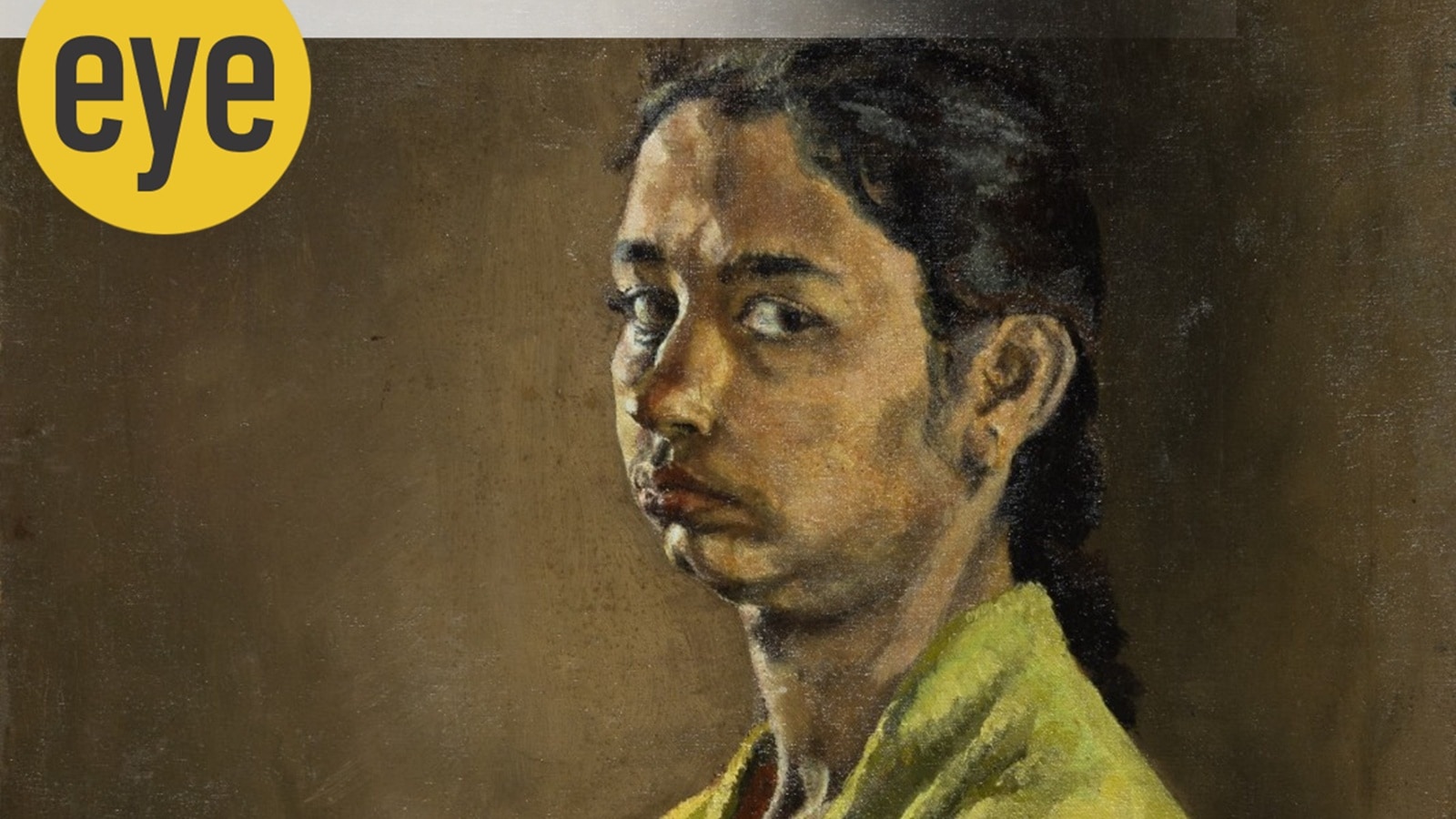
Among the most introspective examples of portraiture included is a 1962 oil painting of Shobha Broota, where the young artist engages with the viewer, a precursor to her later embrace of abstraction as a defining aspect of her work.
Vandana Kalra, an art critic and Deputy Associate Editor at The Indian Express, has spent over twenty years documenting the arts, culture, and daily life, with a particular focus on modern and contemporary art. Her deep engagement with the arts and comprehensive understanding of India’s cultural landscape have established her as a significant voice in contemporary art journalism.
Kalra’s career has evolved alongside the changing dynamics of India’s cultural scene, from the burgeoning Indian art market to the increasing significance of global biennales and art fairs. She closely monitors the fluctuations within this realm, reporting from studios, galleries, museums, and exhibition spaces, covering major Indian and international art events such as the Venice Biennale, Kochi-Muziris Biennale, Documenta, and the Islamic Arts Biennale.
Her contributions also include reporting on pivotal moments in modern Indian art, such as SH Raza’s exhibition at the Centre Pompidou in Paris and the opening of the MF Husain Museum in Doha, showcasing her longstanding engagement with the legacies of India’s modern artists.
In addition to her writing, Kalra applies a sharp editorial eye, crafting and refining art and culture narratives into informed, cohesive stories. Through insightful features, interviews, and critical reviews, she clarifies intricate artistic discussions, spotlighting issues of process, patronage, craftsmanship, identity, and cultural memory.
Her extensive coverage of significant events includes major happenings such as the Kochi-Muziris Biennale, the Serendipity Arts Festival, and notable international auctions.
Kalra also writes in-depth profiles of modern masters like M.F. Husain and contemporary performance artists, including Marina Abramović, revealing the diverse spectrum of the artistic landscape.
A recurring theme in her work explores how art resonates with the lives of marginalized communities, including migrants, farmers, and laborers.
Her recent writings are primarily focused on the 2025 art season in India, including pieces such as:
1. “At Serendipity Arts Festival, a ‘Shark Tank’ of sorts for art and crafts startups” (Dec 20, 2025): An exploration of how a new incubator is assisting artisans in pitching their products to investors.
2. “Artist Birender Yadav’s work gives voice to the migrant self” (Dec 17, 2025): A profile of an artist dedicated to illuminating the experiences of migrants over the past decade.