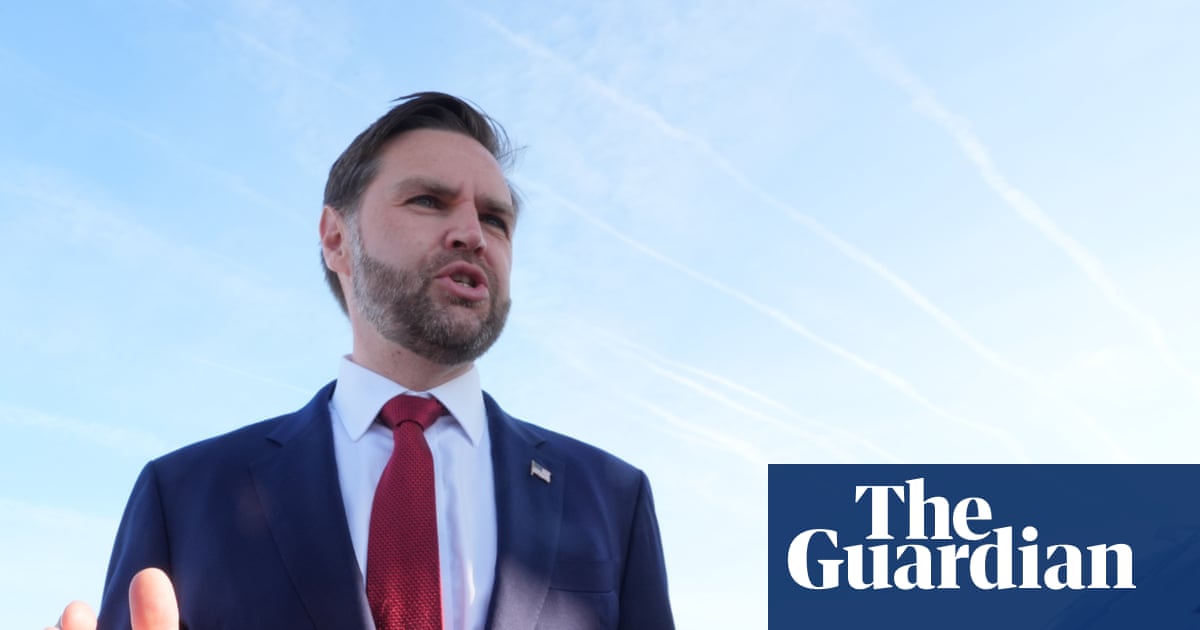

JD Vance, the U.S. Vice President, has issued a stern warning to Iran against attempting to manipulate the upcoming discussions scheduled for Saturday in Islamabad. Meanwhile, Iranian officials have declared their unwillingness to participate in the talks until Israel ceases its bombardment of Lebanon.
As Vance boarded a flight to Pakistan for discussions that could significantly influence the continuation of a ceasefire or the resurgence of conflict with Iran—events that could have serious repercussions for the global economy—uncertainty loomed over the actual commencement of the talks.
Iran’s parliamentary speaker, Mohammad Baqer Qalibaf, expressed on X that two mutually agreed-upon conditions must be met before negotiations can begin: a ceasefire in Lebanon and the release of Iran’s frozen assets. He emphasized, “These two matters must be fulfilled before negotiations begin.”
As of Friday evening, it remained unclear whether Qalibaf and Iran’s foreign minister, Abbas Araghchi, would proceed to Islamabad to lead their delegation. Reports indicated that at Washington’s request, Israel had removed both Qalibaf and Araghchi from its bombing targets last month.
Donald Trump added to the uncertainty by announcing that U.S. forces were rearming and prepared to launch attacks if the negotiations failed. In an interview with the New York Post, he stated, “We have a reset going. We’re loading up the ships with the best ammunition, the best weapons ever made… And if we don’t have a deal, we will be using them very effectively.”
Later, Trump reiterated his stance on social media, asserting, “The Iranians don’t seem to realize they have no cards, other than a short-term extortion of the World by using International Waterways. The only reason they are alive today is to negotiate!”
The Iranian delegates and their Pakistani mediators maintain that the two-week ceasefire agreement established by the U.S. and Iran on Tuesday includes Lebanon. However, both Trump and Israeli Prime Minister Benjamin Netanyahu contest this claim, with Israel continuing its bombardment of Lebanon in its offensive against Hezbollah, an ally of Iran, even after Netanyahu expressed a willingness to initiate peace talks with the Lebanese government.
Since the ceasefire was enacted, over 300 Lebanese citizens have reportedly lost their lives due to ongoing Israeli strikes. Lebanese President Joseph Aoun stated that 13 members of state security were killed in an Israeli assault on a government facility in Nabatieh.
Trump has criticized Iran for not adequately facilitating the passage of oil through the Strait of Hormuz, stating that it contradicts their agreement. The dramatic spike in oil prices following the U.S.-Israeli attack on Iran on February 28, and Iran’s subsequent closure of the strait to oil tankers, poses a significant political challenge for Trump ahead of the upcoming congressional elections in November.
Despite the precarious situation regarding the ceasefire, Vance expressed a generally optimistic outlook as he boarded Air Force Two, stating, “We’re looking forward to the negotiation. I think it’s going to be positive. If the Iranians are willing to negotiate in good faith, we’re certainly willing to extend the open hand.” However, he cautioned, “If they’re going to try and play us, then they’re going to find that the negotiating team is not that receptive.”
The U.S. delegation is expected to include Steve Witkoff, a key international negotiator, and Jared Kushner, Trump’s son-in-law. Witkoff and Kushner had previously engaged with Iranian negotiators before the U.S.-Israeli attack, which had focused on Iran’s nuclear and missile programs.
Omani mediators and UK observers believed that substantial progress was made in those discussions and were anticipating further negotiations when the surprise attack occurred on February 28. Following over five weeks of bombardment, which resulted in the death of Iran’s Supreme Leader Ali Khamenei, the campaign has yet to topple the Islamic regime in Tehran, although it has severely impacted Iran’s military capabilities, which still threaten shipping routes in the Strait of Hormuz and have disrupted the flow of a significant portion of the world’s oil and liquefied natural gas.
The forthcoming talks in Islamabad are expected to address the reopening of the Strait, Iran’s nuclear program, and potential sanctions relief. Iran has also indicated it will seek reparations for war damages, while Vance’s team is likely to demand the release of Americans currently detained in Iran.
Advance teams from both the U.S. and Iran reportedly began arriving at the five-star Serena Hotel in Islamabad on Friday, with Pakistani officials facilitating communication between the two parties. Representatives from Saudi Arabia and other Gulf nations are also expected to attend in order to safeguard their interests.
To ensure security during this high-stakes mediation effort, Pakistani authorities established a two-mile perimeter around the hotel, locked down the city center, and declared a public holiday.
Hezbollah has refrained from commenting on the negotiations between the Lebanese and Israeli governments, despite its historical opposition to any dealings with Israel. Naim Qassem, the group’s leader, issued a statement urging the Lebanese government to refrain from making unnecessary concessions, without directly referencing the ongoing negotiations. He asserted, “We will not accept a return to the status quo, and we call upon those in authority to cease making gratuitous concessions,” vowing to continue their fight against what he termed the “occupier.”