
Australia is working to secure a consistent fuel supply through a diverse array of international partnerships, but the sustainability of this approach remains in question.
A recent month-long halt in oil shipments through the Strait of Hormuz has caused significant disruption in the global oil market, intensifying international competition for resources.
While Australia sources a minimal amount of its oil directly from the Persian Gulf, the majority of its refined fuel imports—such as gasoline, diesel, and jet fuel—come from nations that are heavily reliant on crude oil imports from the Middle East. The repercussions of this situation are reverberating across the globe.
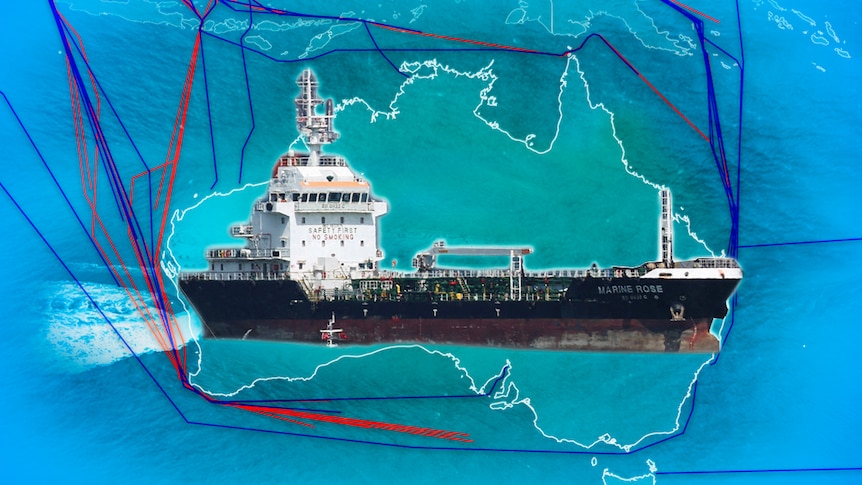
According to marine tracking data from Kpler, there were 62 fuel and oil tankers either arriving in or en route to Australia recently, with nearly all but five originating from Asia or the Middle East.
The ongoing global oil crisis is altering the dynamics of these supply routes. A closer examination of the same tracking data reveals notable changes in the sources of fuel reaching Australia.
As of April 9, there were 59 tankers that had already arrived or were expected to arrive this month, which is a reduction of three compared to the same period last year. While this snapshot might seem limited, long-term data indicates that overall shipments have not significantly declined at this stage.
However, the origins of Australia’s fuel supplies have shifted considerably. Previously, there were only a few tankers coming from the United States and one from South America; currently, 11 tankers from the US and two from South America are on their way, alongside four tankers making lengthy journeys from Europe and Africa, a significant increase from just one last year.
The mix of suppliers from Asia has also transformed dramatically. In the past, 16 tankers were anticipated from Taiwan, Brunei, and India in April, while now there are hardly any expected from these nations. James Noel-Beswick, head of commodities at the energy analytics firm Sparta, notes that these countries, along with China, are producing less and are unlikely to increase their exports to Australia soon, as they are either implementing product export bans or hoarding supplies for domestic use.
Conversely, Singapore, South Korea, and Malaysia continue to be crucial suppliers for Australia. With some neighboring countries limiting their exports, these trading partners have become increasingly important.
This week, Prime Minister Anthony Albanese visited Singapore to announce an agreement to enhance energy security for both nations. Under this arrangement, Singapore will maintain its fuel shipments to Australia, while Australia will supply essential liquefied natural gas to Singapore.
However, analysts caution that the deal does not ensure security for diesel or jet fuel supplies. Noel-Beswick commented that while the agreement is diplomatically sound and provides some reassurance for gasoline supplies, the constraints in the Strait of Hormuz limit Singapore’s capacity to deliver on Australia’s diesel and jet fuel needs.
According to Rahman Daiyan, an associate professor at the University of New South Wales, the allocation of fuel shipments primarily depends on commercial contracts, pricing, and logistical considerations. Kevin Morrison, an energy finance analyst at the Institute for Energy Economics and Financial Analysis, warns that other nations may redirect tankers away from Australia if they receive higher offers, making the situation increasingly competitive.
The costs associated with shipping oil products have surged, with Morrison noting that the daily rate for a fuel tanker has skyrocketed from around $20,000 to over $300,000. While Australia is positioned to afford these increased costs due to its wealth, there remains a risk of being outbid by other countries.
Australia’s heavy reliance on imports for diesel and jet fuel places it at a disadvantage, as noted by Noel-Beswick, who emphasized that the country urgently needs fuel supplies as one of the world’s largest importers.
This urgent demand has led to the exploration of unconventional shipping routes, with three tankers currently making lengthy journeys to Australia from the UK, Netherlands, and Algeria. Despite Europe facing its own diesel shortages, it has been outbid by Asian buyers and Australian firms.
Additionally, 11 tankers from the US are en route to Australia, most carrying diesel and gasoline. Some are taking a route that involves crossing the Atlantic Ocean and navigating around Africa before heading to Australia, which is an extraordinary journey that could take around 40 days and incurs an additional cost of approximately $8.5 million compared to shorter routes from Asia.
As the competition for US fuel grows fiercer, Noel-Beswick points out that the US’s own diesel inventory is not in great shape, which may soon lead them to prioritize their domestic needs.
As the global oil crisis continues to create challenges, Australia must navigate an increasingly competitive landscape to secure its fuel supplies.