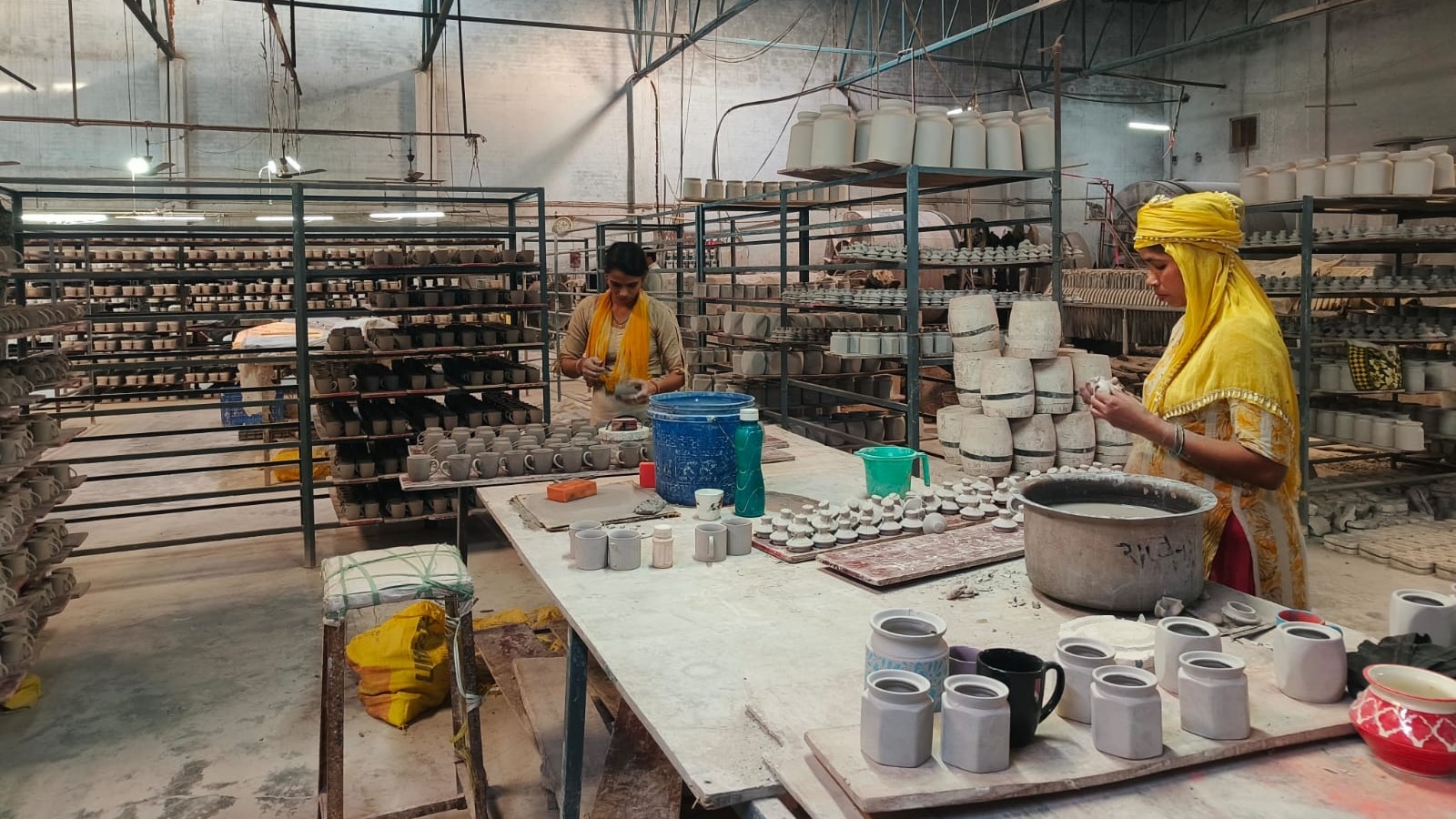

The chill in the factory is palpable. While one might assume it’s due to the clay, the reality is that the furnace has been inactive.
Inside his facility located in the industrial sector of Khurja, a factory owner points towards the numerous clay molds and unfinished plates that clutter the factory floor. He explains that the kilns have not operated for almost a month.
Khurja, situated approximately 90 kilometers from Delhi in the Bulandshahr district of Uttar Pradesh, has long been recognized as a hub for ceramic production in India. More than 350 manufacturing units are based here, creating a wide array of products including plates, cups, decorative trays, and crockery that are distributed to hotels, canteens, and households nationwide. This sector employs over 25,000 individuals directly and indirectly, earning Khurja the moniker of “Ceramic City.”
However, the recent conflict in Iran has severely disrupted energy supply chains, leaving many pottery manufacturers in Khurja unable to operate due to reduced gas availability and soaring fuel costs. This situation has also resulted in some workers starting to leave their jobs.
As per a report by Grand View Research, India’s ceramics market was valued at over $420 million in 2024 and is anticipated to grow to approximately $658 million by 2033, with Khurja at its center. Approximately 15% of the pottery produced in Khurja is exported, primarily to countries in West Asia. Another major ceramic production area, Morbi in Gujarat, known for tile manufacturing, is facing similar challenges. India ranks as the second-largest producer and consumer of ceramic tiles globally, accounting for over 15% of the total worldwide production.
The core issue at hand is fuel availability. The kilns in Khurja typically operate on piped natural gas provided by Adani Gas or on industrial LPG cylinders—large 422 kg cylinders colloquially known as “hippo cylinders.”
“Before the conflict, piped gas prices were around Rs 49 per kg, but they surged to Rs 120 per kg at the peak and currently stand at about Rs 90 per kg,” stated Alok Garg from Alok Industries, a small pottery manufacturer that previously generated Rs 30-40 lakh in monthly revenue before the war. This increase represents nearly double the pre-conflict rates.
During the peak of the crisis, the supply of 422 kg cylinders dwindled significantly as the government prioritized LPG for household cooking needs. Consequently, many ceramic manufacturers lost their alternative fuel source, leading to widespread stagnation of production across Khurja’s industrial sector.
The Adani Group did not provide a comment when contacted by The Indian Express.
Varun Garg, son of Alok Industries’ Alok Garg, elaborates on the critical nature of kiln operations, emphasizing that even minor fuel supply interruptions can halt production. “Our kilns require a continuous heat of 12 hours to reach the necessary temperature for baking pottery. If the supply is interrupted, even for a few minutes, the oven quickly loses heat, necessitating a complete restart of the process,” he explained.
Manufacturers report that new domestic orders have nearly vanished, and exports to the Gulf region, which were once a significant market, have slowed due to shipping constraints. Currently, many factories are focused on fulfilling orders placed months ago when fuel prices were lower. This backlog is expected to last for another month; beyond that, any new orders will likely incur higher costs.
In response to the fuel crisis, many manufacturers are attempting to establish new pipelines and storage facilities for industrial diesel, which has been temporarily authorized by the Commission for Air Quality Management (CAQM) to address the shortages. However, they warn that switching to diesel will compromise the quality of Khurja’s pottery.
The ongoing uncertainty is starting to affect the workforce that sustains Khurja’s ceramic industry. Factory owners report that numerous workers who had returned home for festivals have not come back.
Some workers had returned home for the Holi and Eid al-Fitr festivals, but as the kilns remain inactive and shifts become irregular, many are choosing to stay home. “We understand their predicament,” Bansal remarked. “In their villages, they can manage; they can cook over firewood and find local work. Here, without the kiln operating, they have nothing to do. Their primary concern is food at their accommodations, as many fear they won’t have access to cooking fuel, and they cannot afford to buy cylinders at inflated black market prices.”
Additionally, the upcoming elections pose another challenge. A significant portion of Khurja’s pottery workforce hails from the eastern regions, particularly West Bengal. With the state’s assembly elections approaching in just two weeks, factory owners anticipate that more workers will travel home to vote. “If the factories continue to operate under these conditions, some may decide to remain there,” Garg expressed. “That is a significant concern for us.”