
The Election Commission’s Special Intensive Revision (SIR) of electoral rolls, which has been conducted in ten states and three Union Territories, has resulted in a reduction of the electorate by 5.58 crore, accounting for a 9.55% decline.
The second phase of this SIR, launched in nine states and three Union Territories in October of the previous year, concluded on Friday. This phase saw a reduction of 5.37 crore electors, which translates to a decrease of 10.55%. Including Bihar, where the first phase of the SIR was initiated, the overall number of electors has fallen from 58.87 crore to 53.28 crore.
With the completion of the second phase on Friday, the final electoral roll for Uttar Pradesh was published, revealing a drop in the electorate from 15.44 crore to 13.39 crore, a decline of 13.23%. While the electoral rolls for other states and Union Territories were made public in February, Uttar Pradesh was granted an extension until April 10 for its roll publication.
Across the twelve states and Union Territories involved in the SIR (including Rajasthan, Goa, Lakshadweep, Puducherry, Gujarat, Chhattisgarh, Andaman & Nicobar Islands, Kerala, Madhya Pradesh, Tamil Nadu, West Bengal, and Uttar Pradesh), the electorate decreased from 50.97 crore on October 27, 2025, when the SIR was announced, to 45.59 crore post-revision.
Among the nine states, Gujarat experienced the most significant reduction in voters at 13.39%, followed closely by Uttar Pradesh at 13.23%, Chhattisgarh at 11.77%, West Bengal at 11.63%, and Tamil Nadu at 11.55%. Notably, the Andaman and Nicobar Islands reported the highest overall decrease at 16.86%. In Bihar, where a different methodology was applied, there was a 6% drop in the number of electors.
In a departure from the usual annual and pre-election Special Summary Revisions (SSR), the Election Commission decided on June 24, 2025, to implement a comprehensive SIR across the country, starting with Bihar in anticipation of upcoming Assembly elections in November.
The Election Commission explained that the last intensive revision had occurred around twenty years ago, and the changes in demographics due to urbanization and migration necessitated a thorough review of the electoral rolls.
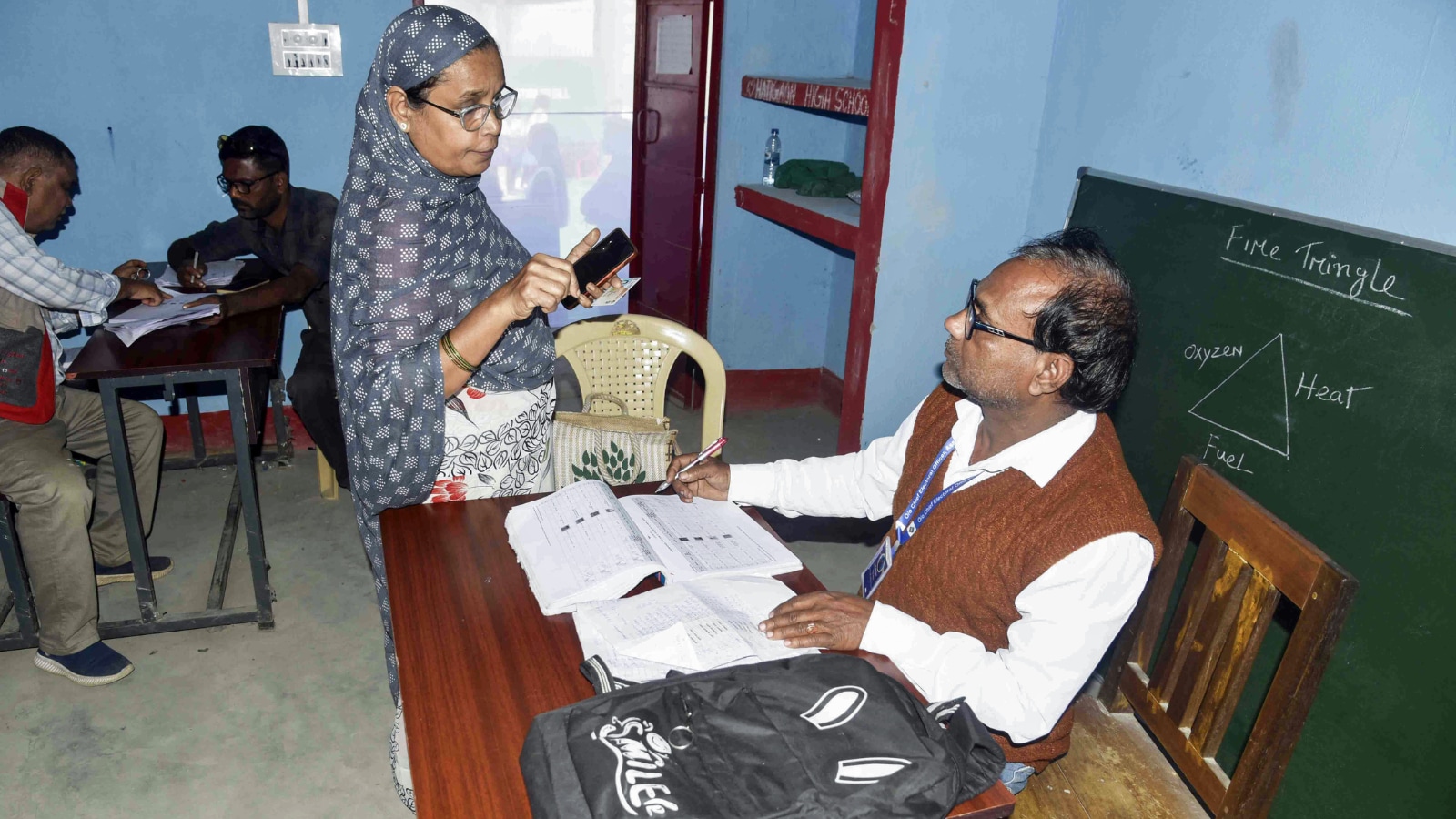
Unlike the SSR, which makes adjustments to existing lists, the intensive revision process involves creating new electoral rolls from scratch. Historically, during intensive revisions, Election Commission officials, specifically Booth Level Officers (BLOs), would visit households to verify the number and information of electors. However, for the SIR, an unconventional approach was taken, mandating that all electors submit an enumeration form within a month or risk being removed from the draft roll.
Furthermore, the Election Commission required certain groups of voters to provide documentation to confirm their eligibility, including proof of citizenship, marking another unprecedented step in this process.
The June 24, 2025 directive by the Election Commission has faced legal challenges in the Supreme Court, with critics alleging that the SIR could serve as a means of indirectly verifying citizenship. The Election Commission has announced plans to initiate the SIR in the remaining states and Union Territories shortly.
Damini Nath serves as an Assistant Editor for the national bureau of The Indian Express, focusing on housing, urban affairs, and election-related topics. With 11 years of experience in journalism, she previously reported for The Hindu’s national bureau, covering various subjects including culture, social justice, and urban issues.
Damini Nath specializes in two primary areas: Housing and Urban Affairs, where she provides detailed insights on urban development and policy, and Election Commission matters, delivering comprehensive coverage of electoral processes and the Commission’s functions.
Her professional history reflects a well-rounded understanding of journalism, having worked as both a reporter and sub-editor. Before her tenure at The Indian Express, she contributed as a reporter for The Hindu, where she engaged with topics ranging from culture to social justice and electoral affairs.
Her extensive experience at two of India’s premier news organizations reinforces her reputation for factual, unbiased, and high-quality reporting, making her a reliable source for news on urban governance and electoral issues.
Stay connected with the latest updates – Click here to follow us on Instagram.