
Each year, Australia imports approximately 1.55 billion new textile items, leading to significant waste when it comes to donated clothing. While many Australians support sustainability by donating their used garments to op shops, a substantial portion of these items are not fit for resale.
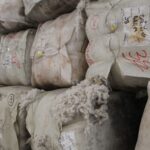
To address this issue, the Hobart City Mission has initiated a pilot program aimed at minimizing textile waste in landfills by washing and mending clothes that require minor repairs. In the charity’s warehouse, volunteers are diligently sorting through bags of donations, with many items unfortunately deemed unsuitable for sale.
Taryn Townsend, the retail manager at Hobart City Mission, expressed her concern regarding the overwhelming textile waste. According to her observations, only about 20% of items in a donation bag are saleable, while 80% must either be repurposed or disposed of in landfills. She attributed this trend to a culture of overconsumption and the prevalence of low-quality clothing, as people frequently change their styles.
Data from Charitable Reuse Australia indicates that Australian charity shops receive around 310,316 tonnes of clothing annually. Of this, roughly one-third is sent overseas, 36% is transformed into new materials like rags, 14% ends up in landfills, 0.4% is allocated for welfare programs, and 16.5% is sold in charity stores.
Claire Dollan, who leads the repair project at Hobart City Mission, noted that many donated items arrive in too poor a condition to be sold. She highlighted the daily challenge of seeing numerous items thrown away due to being dirty or having irreparable damage. However, she mentioned that some items only require minor fixes, such as button replacements or stain removal, which often go unaddressed due to resource limitations.
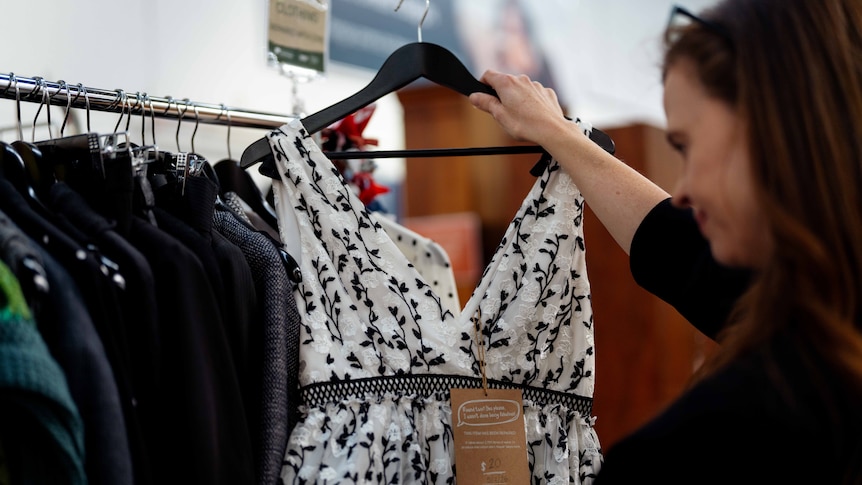
Thanks to funding from the Tasmanian Waste and Resource Recovery Board, the newly launched Rinse, Repair and Rewear pilot project is set to help divert these items from landfills. Volunteers and op shop staff will wash and repair donations to make them available for resale. An initial assessment of the project revealed that 42% of the items reviewed were recoverable for washing, and 11% were suitable for repair.
One notable success involved the restoration of a vintage fur stole with minor holes, emphasizing the importance of saving valuable items from waste. Volunteers, who previously had to discard many donations, are excited to have new options for handling these textiles.
Items that are beyond repair are being creatively repurposed to ensure that valuable materials are not lost. For instance, silk scarves with damage are being transformed into scrunchies. Yassie Samie, a postdoctoral fellow at RMIT’s School of Fashion and Textiles, stressed the need for Australians to rethink how they dispose of unwanted textiles. She noted that 87% of Australians default to donating items to charity, which may not be the best option for lower-quality garments.
Dr. Samie suggested that commercial recycling could be a more effective solution for these lesser-quality textiles, as many commercial collectors are equipped to process them into new fibers or materials. With some fast fashion retailers also accepting in-store clothing donations, there are various avenues for responsible disposal.
Dr. Samie pointed out that the issues of overconsumption and overproduction are primary contributors to textile waste. With the influx of low-quality materials in fast fashion, textiles have become increasingly disposable. Hobart City Mission’s repair initiative aims to serve as a model for other op shops across Australia, with plans to create a handbook to facilitate nationwide implementation.
Dollan emphasized that while this project will not solve all waste-related challenges, it demonstrates a practical approach to divert valuable textiles from landfills, inspiring others within the charity sector to follow suit.