
The global temperature is rising, and the United Kingdom is urged to increase its renewable energy production. However, the question remains: what cost should accompany this commitment?
Located in mid-Wales, the Cambrian Mountains represent a national park that has yet to be established. During the 1950s, official designations were assigned, granting national park status to Eryri (Snowdonia), the Pembrokeshire Coast, and the Brecon Beacons. Although the Cambrians are larger and more impressive than the Brecon Beacons, their inaccessibility led to their exclusion from the national park designation, as three parks were deemed sufficient for Wales.
This oversight could lead to significant consequences. Following Energy Minister Ed Miliband’s decision to lift the ban on onshore wind turbines, plans are rapidly taking shape. The Cambrian Mountains, encompassing nearly 500 square miles of rugged terrain, boast the wildest scenery in southern Britain, surpassing even Dartmoor and the Peak District. With their vast expanses stretching from Plynlimon to the Pembroke border, they represent some of the most invaluable and overlooked wilderness areas in the UK.
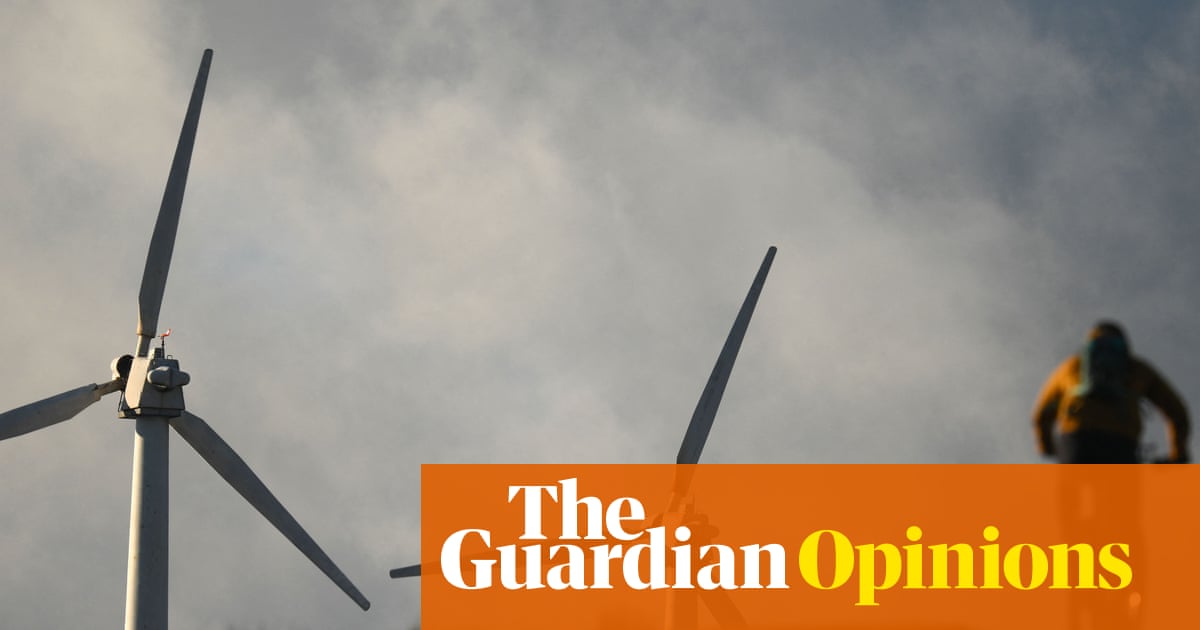
Through collaboration with the Welsh government, Miliband appears poised to allow private companies to develop wind turbine projects across portions of this pristine landscape. The proposals include over 100 massive turbines, with some expected to reach heights of 220 to 230 meters—50% taller than any currently installed in England and Wales and more than double the height of Big Ben. These structures will be colossal in scale.
Each turbine installation necessitates the digging of a large pit to accommodate a 2,000-ton concrete foundation, in addition to requiring a minimum of 100 tons of steel per turbine. This development will also entail the construction of roads, maintenance facilities, and storage spaces. Furthermore, plans call for more than 200 kilometers of pylons to connect these turbines to the National Grid, resulting in significant carbon emissions associated with the construction process. Wind turbines generally have a lifespan of only 20 to 25 years before needing replacement.
Local opposition to these projects has been vigorous. The Wild Wales Trust has warned that these developments could “degrade and industrialize vast regions of the uplands and valleys.” They highlight that several proposed sites would intrude upon Wales’s sole UNESCO biosphere reserve in the Dyfi Valley. The Campaign for the Protection of Rural Wales has also expressed strong disapproval of the initiative. In contrast, the Welsh Greens seem constrained by their unwavering support for wind energy.
A further challenge facing the Cambrian Mountains is their sparse population, which limits advocacy for their preservation. Recently, I observed hand-drawn signs fluttering in the wind on the beautiful Glaslyn uplands, appealing for protection against a proposed industrial estate featuring 26 turbines, each 220 meters tall. These turbines would be visible from various points across Wales. A nearby scenic area known as Artists Valley is also slated to host 37 similar turbines, potentially necessitating a name change.
If these proposals were put forth for one of Britain’s designated national parks, they would likely be met with strong opposition. The Cambrian Mountains have never received such status, largely due to local farmers resisting the designation, coupled with a general disregard for Wales’s visual allure in political matters. Moreover, the energy produced by these turbines is not needed to meet Wales’s energy demands, as the country is moving towards renewable self-sufficiency and is currently a net energy exporter. Thus, these turbines would primarily serve to supply energy to the rest of the UK, reminiscent of past decisions to flood Welsh valleys in the 1960s to provide water for Liverpool.
Wind turbines could be installed in various locations where the wind blows. It is fundamentally unjust to place them in a stunning rural region of Britain to satisfy the ambitions of a politician. The resulting damage would be unacceptable.
Simon Jenkins is a columnist for The Guardian.