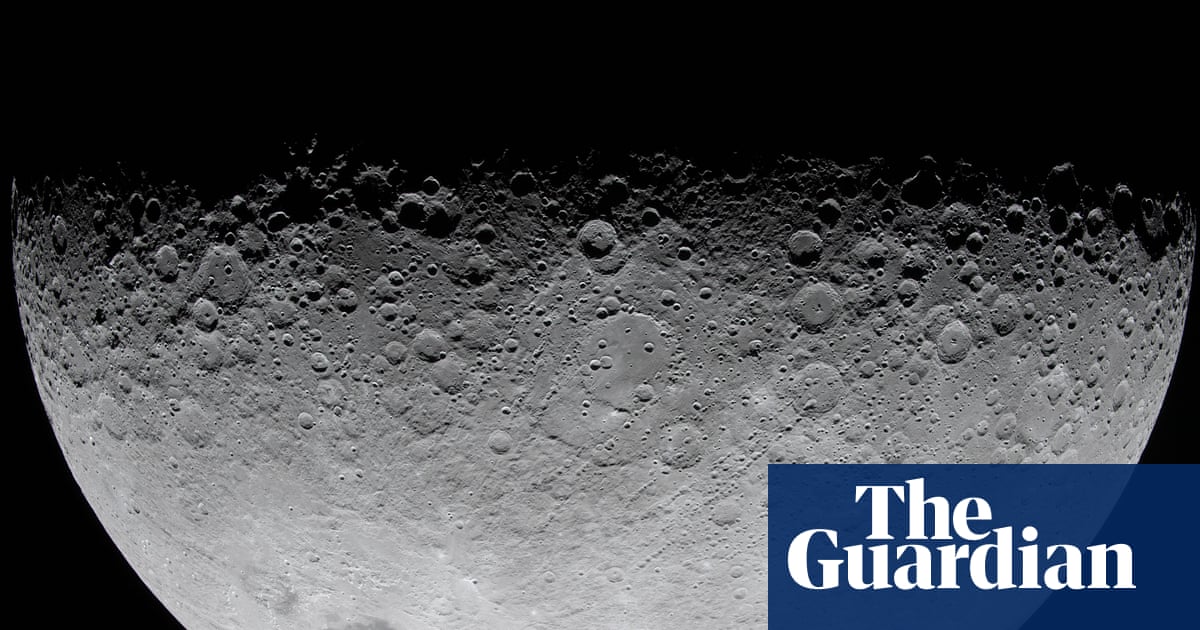

The recent enthusiasm surrounding the Artemis II mission, which includes a flyby of the moon’s far side, has sparked memories of a significant milestone in space exploration. On October 7, 1959, the Soviet spacecraft Luna 3, also known as Lunik 3, became the first to capture images of the moon’s hidden side. These images were transmitted back to Earth and featured in the Soviet newspaper Pravda using conventional wire-photo technology.
Interestingly, the Daily Express received one of these images through the Jodrell Bank radio telescope, but unfortunately misrepresented its dimensions in their publication. As a young student fascinated by space exploration, I reached out to Pravda in Moscow, requesting a copy of the newspaper that contained the accurate photograph. To my delight, they graciously fulfilled my request. In a related personal anecdote, during a heart surgery a few years back, I dreamt of orbiting the Earth and the moon in a figure-eight pattern. Upon waking after the operation, I excitedly declared, “I’m alive!”—having been informed of a 90% survival rate.
The stunning visuals of the moon and Earth shared by Artemis II recently transported me back to 1969. I was working a student job on the same morning as the historic moon landing. My colleagues and I were gathered, applying barrier cream before our shift, eagerly discussing the live broadcast of the event from just hours earlier. Suddenly, one person expressed skepticism, saying, “I thought it was all a bit far-fetched.” This remark left us momentarily speechless as we proceeded to begin our work.
If you have thoughts on anything you’ve read in the Guardian, we invite you to share your letters for potential publication in our letters section.