
The ongoing conflict in the Middle East and the blockade of the Strait of Hormuz have severely impacted Thailand’s fishing industry, valued in the billions. As a consequence, a significant number of fishing boats are now stranded on shore due to skyrocketing diesel prices, which have more than doubled since the onset of the conflict.
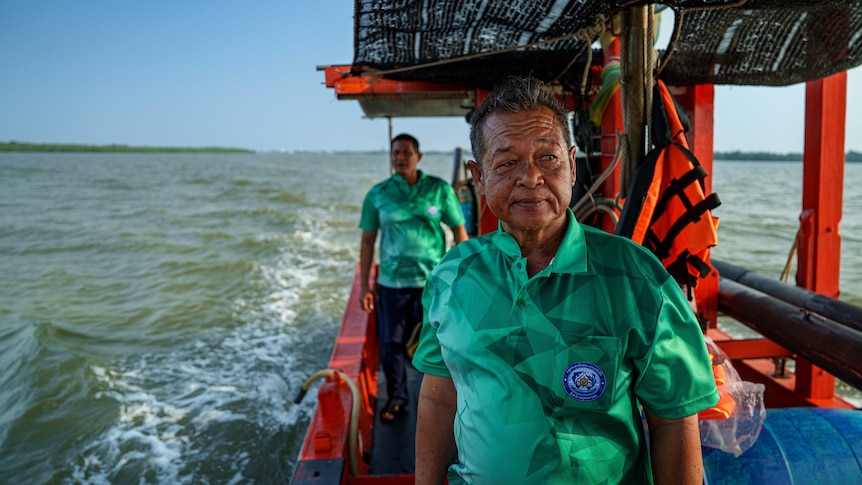
Industry experts predict that over 100,000 fishermen may face unemployment, with the ripple effects potentially affecting millions of others connected to the sector. Captain Wongduen Meesamrong, returning from a 15-day fishing trip in the Gulf of Thailand, was shocked to find the price of diesel had surged from 83 cents per liter to approximately $2.22. This increase makes it financially unfeasible for many fishermen to operate their boats.
“I will have to stop working for a long time,” Captain Wongduen remarked as he unloaded his catch in Samut Sakhon, Thailand’s largest fishing and seafood processing hub. “The fuel costs are exorbitant. We simply can’t go out to sea.” The gravity of the situation is felt universally among fishermen in the region.
Throughout Thailand, the war and fuel supply issues have left numerous small and large fishing vessels idle, as the country relies on the Middle East for about half of its energy imports. In Samut Sakhon, both fishermen and fishmongers are experiencing declining sales as consumers cut back on spending.
Seafood vendor Srinual Malithong noted a drop in customers since the conflict escalated, stating, “People are hesitant to go out.” Somporn Auesrichat, with five decades of fishing experience, lamented that this is the most challenging period he has faced, but emphasized the need to adapt, as the sea is vital for their livelihoods.
Others, like nurse Piyathida Chaiyapun, are adjusting their spending habits to afford fuel, while Sooksan Kanual expressed frustration over the soaring costs, indicating he may need to seek alternative employment on land. The situation has forced many vessels to remain docked, unable to afford the necessary fuel.
Boat owner Sombat Rungruangsakorn, aged 65, conveyed his despair over the unsustainable operational costs: “I can only hope that the war will come to an end.” Saowaluk Pengkubhnu, a seafood vendor in the Mahachai Market, reported a 20 to 30 percent decrease in sales, highlighting the increasing difficulty of sustaining a business under current conditions.
According to Sombat, the fishing industry is heavily reliant on fuel, consuming approximately 80 to 90 million liters monthly. Many vessels embark on extensive trips, sometimes over 100 kilometers offshore. Even a slight increase in fuel prices can have a significant impact on operations. He recalled similar surges during the Gulf War of the early 1990s, stating that prices exceeding $1.30 per liter make fishing unprofitable.
This crisis threatens the livelihoods of not only the fishermen but also the numerous migrants, primarily from conflict-ridden Myanmar, who work on these boats. The war has triggered this predicament, but fishermen also suspect that some fuel is being stockpiled offshore as suppliers anticipate further price increases. Reports indicate that around 70 million liters of fuel have gone missing from the southern city of Surat Thani, prompting an investigation by the Department of Special Investigation.
Justice Minister Police Lieutenant General Rutthapon Naowarat revealed that fuel was allegedly transferred from tankers to smaller vessels, disappearing without a trace. As frustration mounts within the fishing community, the Thai government has announced efforts to increase the availability of B20 fuel, a more affordable blend of diesel and biodiesel.
This week, the government also initiated a reduction in retail diesel prices by about 9 cents per liter. However, this measure has received a lukewarm response from fishermen, who argue that the discount is insufficient to address their challenges. Mongkol Mongkoltrirak, director of the Samut Sakhon Fisheries Association, expressed concern that seafood prices would not keep pace with the rapid rise in fuel costs. He warned that if more than 80 percent of fishing vessels remain inactive, around 150,000 workers could be left jobless.
Mongkol is advocating for the government to eliminate income tax for fishermen this year and establish a recovery fund that offers interest-free loans to those forced to stop fishing. Without substantial intervention, the future of the fishing industry and the livelihoods it supports remain uncertain.