
There exists a well-known phrase from the Christian gospels that emphasizes the importance of caring for others: “Love thy neighbor as thyself.” This sentiment is frequently cited across various regions, from the Americas to Africa, often featured in speeches and national mottos.
However, like many ethical principles, its implementation tends to be more challenging than mere declaration. Currently, a troubling situation is unfolding across the Caribbean and Latin America.
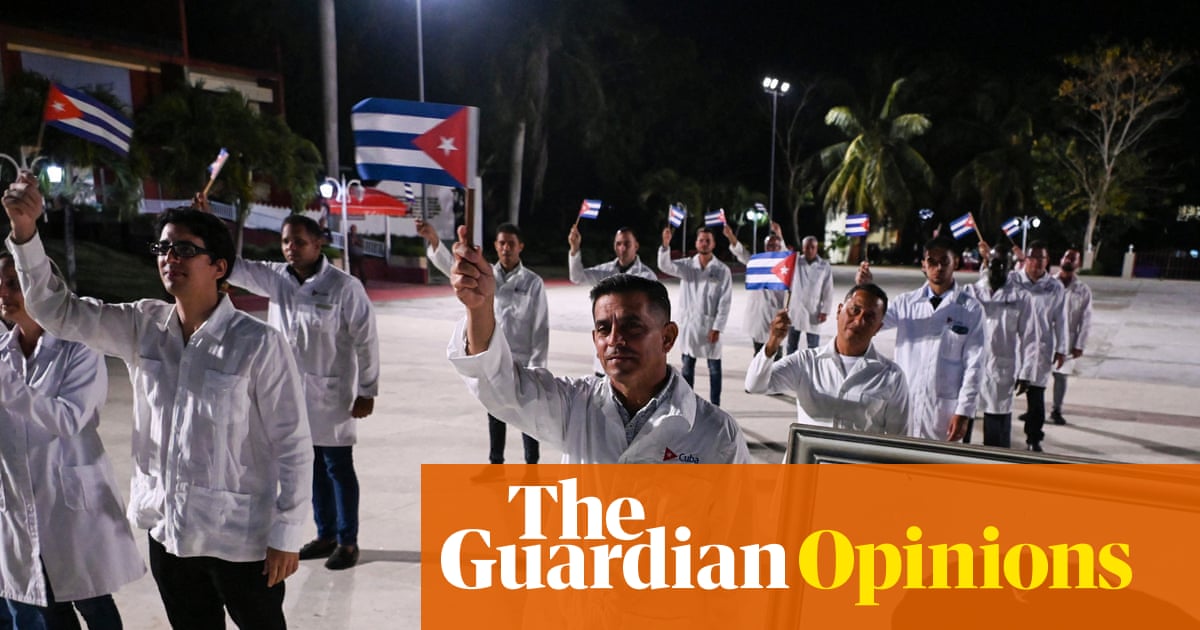
Cuban healthcare professionals, representing a nation facing significant challenges, are being expelled from various countries. Their contracts are being ended, and health initiatives are collapsing. The repercussions will be felt most acutely by the underserved populations, who may face untreated health issues, unassisted childbirths, and undiagnosed illnesses. Essentially, the region is severing a critical support system, influenced by U.S. pressure.
On Friday, Cuban Foreign Minister Bruno Rodríguez accused the U.S. of coercing nations to terminate longstanding agreements with Cuba regarding the provision of medical personnel.
This shift began during Donald Trump’s administration. In 2018, a significant number of Cuban doctors, totaling 8,300, departed from Brazil following threats from then-president-elect Jair Bolsonaro, who aligned closely with U.S. interests. Bolsonaro critiqued the program and questioned the qualifications of Cuban physicians—concerns that had not been raised previously when their services were crucial.
Since then, the U.S. has encouraged countries throughout the region to cancel these agreements, labeling them as “forced labor” and even “human trafficking” due to the Cuban government retaining a portion of the doctors’ salaries. This narrative conveniently overlooks the fact that these professionals received their training at no cost, unlike medical graduates in nations like the U.K., who often carry substantial student debt for years.
The fallout has been severe. Countries including Guatemala, Honduras, Jamaica, the Bahamas, Antigua and Barbuda, Guyana, and St. Vincent and the Grenadines have succumbed to these pressures. Many health programs, some established for over five decades, are being dismantled, leading to the withdrawal of medical personnel and straining already vulnerable healthcare systems—all under the threat of U.S. visa restrictions and diplomatic sanctions. Only St. Kitts and Nevis and Trinidad and Tobago have not yet acquiesced, putting millions at risk of losing essential healthcare, particularly vulnerable Indigenous populations.
Cuba has historically prioritized “doctors, not bombs,” and for over sixty years has championed a principle that is often out of vogue in contemporary geopolitics: solidarity. During the Ebola outbreak in West Africa in 2014, Cuban medical teams were among the first responders. They have also provided assistance after natural disasters in the Caribbean and other regions, demonstrating a commitment to humanitarian aid.
With a global network of over 50,000 medical professionals, Cuba has generated billions in revenue through its health missions, which have supported its economy despite ongoing embargoes. In nations like Venezuela, where thousands of Cubans worked in public health initiatives, these programs became essential. However, this model is now under considerable strain. Increased U.S. pressure, including sanctions and disruptions to oil supplies, is resulting in the withdrawal of Cuban medical personnel, which threatens one of the few reliable sources of income for Cuba while undermining healthcare systems abroad.
Furthermore, Cuba has educated tens of thousands of international students, including many from the Caribbean, at its Latin American School of Medicine—all at no cost. Yet, this island, located just 90 miles off the coast of Florida and enduring an embargo since 1962, faces severe economic constraints.
The situation unfolding in Cuba can hardly be described as mere “pressure”; it amounts to economic warfare, with Caribbean and Latin American nations complicit in this scenario.
Sanctions are inherently blunt tools that inhibit trade, finance, fuel, and medical supplies, leading to economic contraction, heightened poverty, and suffering among citizens rather than targeting government officials. In Cuba, the consequences are visible: frequent blackouts, shortages of essential goods, and dwindling productivity. As the nation grapples with disrupted fuel supplies, it faces its most significant crisis in decades, and at a time when solidarity is crucial, the Caribbean and Latin America have opted for distance.
Historically, Caribbean leaders voiced a different perspective. In the 1970s, Jamaica’s Prime Minister Michael Manley described Cuba as “fundamental” to the region, a partner against imperialism, and praised its “brave and brilliant social experiment.” He understood that small nations thrive not through submission but through solidarity.
Today, the narrative has shifted. Jamaica’s current Prime Minister Andrew Holness, while recognizing the contributions of Cuban doctors, emphasizes compliance and legality. This pragmatism risks slipping into passive acceptance.
A notable change is evident in Trinidad and Tobago, where Prime Minister Kamla Persad-Bissessar, who once admired Fidel Castro, now mirrors Trump’s criticisms of Cuba while entertaining a deeper U.S. military presence, aligning with the U.S. administration.
In contrast, Barbados, although not currently hosting Cuban medical staff, benefitted from their support during the COVID-19 pandemic. Prime Minister Mia Mottley has defended Cuba’s medical missions, rejected allegations of “trafficking,” and affirmed Barbados’ commitment to moral principles, even at the risk of U.S. repercussions. This stance serves as a reminder that sovereignty encompasses not just constitutional rights but also moral responsibilities.
So, what drives the U.S. interest in Cuba? Strategically, Cuba occupies a crucial position near vital shipping routes in the Gulf of Mexico and close to the Panama Canal. Economically, it possesses estimated offshore oil reserves exceeding 4 billion barrels, along with nickel, cobalt, and significant tourism potential, presenting it as another potential target for U.S. interests.