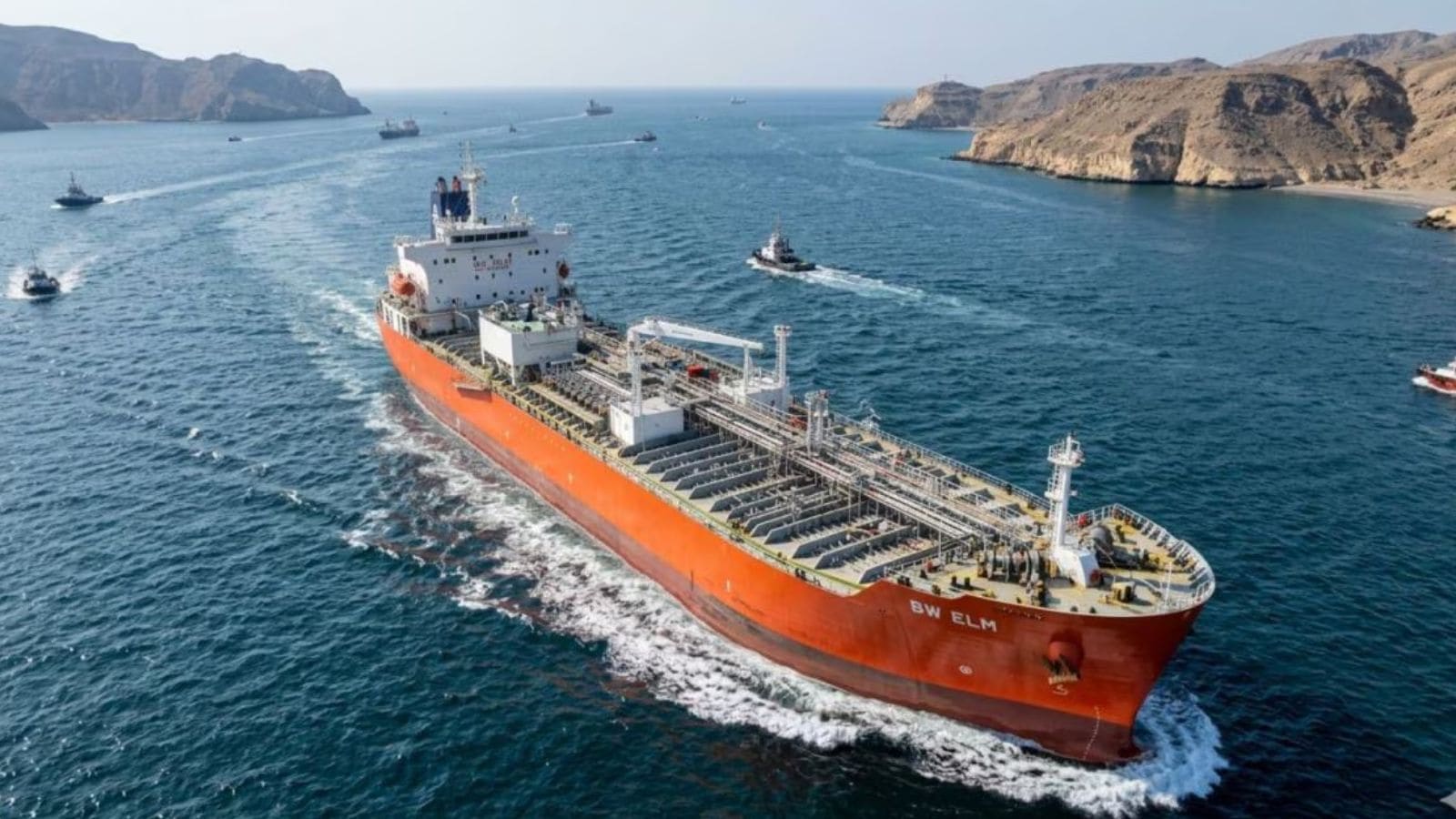

The Jag Vikram, a liquefied petroleum gas (LPG) tanker registered under the Indian flag, successfully navigated the Strait of Hormuz late Friday night into Saturday morning. This marks the first instance of an Indian-flagged vessel transiting this critical maritime chokepoint since the recent announcement of a temporary ceasefire between the United States and Iran, as indicated by ship tracking data. The Jag Vikram is the ninth Indian vessel to depart from the Persian Gulf since the beginning of March, with an additional 15 Indian-flagged ships still present in the region. As of Saturday at noon (India time), the tanker was located in the Gulf of Oman, heading eastward.
Trade sources suggest that Jag Vikram may be transporting approximately 20,000 tonnes of LPG. The vessel is classified as a mid-sized gas carrier (MGC) and is owned by the Great Eastern Shipping Company based in Mumbai, according to shipping databases. It has a deadweight capacity exceeding 26,000 tonnes, which encompasses the total weight of cargo, fuel, fresh water, ballast, provisions, and crew.
Reports indicate that the Jag Vikram had been awaiting its passage through the Strait of Hormuz for over a week. On April 3, The Indian Express noted that both the Jag Vikram and another LPG tanker, Green Asha, were anticipated to cross the vital waterway shortly. The Green Asha completed its transit on April 5. Numerous vessels have faced delays in the Persian Gulf since the outbreak of conflict, with only a select few successfully navigating the Strait, often requiring coordination with Iranian authorities.
Among the eight other Indian LPG tankers that have crossed the Strait in recent weeks, seven are classified as very large gas carriers (VLGCs), which have more than double the LPG carrying capacity of an MGC. The remaining 15 Indian vessels in the Persian Gulf include at least one additional LPG tanker, four crude oil carriers, one liquefied natural gas (LNG) tanker, one chemical products tanker, three container ships, two bulk carriers, and several vessels undergoing maintenance.
While navigating the Strait of Hormuz, the Jag Vikram communicated its identity as an Indian ship with an Indian crew onboard. This identification practice has become customary among ships passing through the Strait in cooperation with Iranian authorities, who are overseeing vessel movements. The Strait of Hormuz, a narrow passage between Iran and Oman, connects the Persian Gulf to the Arabian Sea and serves as a crucial route for global energy supplies. Prior to the onset of the conflict, approximately one-fifth of the world’s oil and gas passed through this waterway.
India has been actively engaging in diplomatic discussions with Iran to ensure the safe passage of its vessels through the Strait of Hormuz, especially as Tehran has significantly restricted maritime traffic amid ongoing hostilities in the region. Following the ceasefire announcement on Wednesday, there are renewed expectations that vessel traffic will gradually improve. Although there has been a slight uptick in movements, overall traffic remains limited.
In light of reports suggesting that Iran may implement a toll or transit fee for merchant vessels crossing the Strait of Hormuz, India continues to advocate for free and secure navigation through this vital passage. A senior official from India’s Foreign Ministry recently stated that there has been “absolutely no discussion” regarding the toll issue between India and Iran, reiterating India’s longstanding position and its preparedness to assess future developments as they arise.
There have been claims that Iran has already required certain vessels to pay a “toll” prior to their passage through the Strait. However, the Indian government has consistently denied any allegations of toll payments by Indian-flagged ships transiting the waterway. Since the onset of the conflict, eight Indian-flagged vessels, all LPG tankers, have returned from the Persian Gulf. India relies heavily on West Asia for its oil and gas supplies, with most imports arriving via the Strait of Hormuz, which is also critical for other commodities such as fertilizers and petrochemicals.
“Regarding the toll issue, there have been no discussions on this matter between us and Iran. That is our current standing. As for potential scenarios that may arise in the future, we will address those as they come. However, our position remains that we advocate for free and safe navigation through the Strait of Hormuz,” stated Foreign Ministry Spokesperson Randhir Jaiswal on Thursday.
According to international maritime law, specifically the United Nations Convention on the Law of the Sea (UNCLOS), natural chokepoints like the Strait of Hormuz should not impose tolls merely for passage. Although neither Iran nor the United States has ratified this convention, it is widely regarded as customary international law that both nations have typically adhered to. Sources suggest that altering the status of the Strait of Hormuz would necessitate a resolution through the United Nations.
Prior to the ceasefire, Iran indicated that non-hostile vessels associated with nations outside of the US, Israel, and their allies could transit the Strait in coordination with Iranian authorities. Following the ceasefire declaration on Wednesday, Iran’s Foreign Minister Seyed Abbas Araghchi confirmed that safe passage through the Strait of Hormuz would be possible for two weeks, contingent upon coordination with Iran’s Armed Forces and consideration of technical limitations.