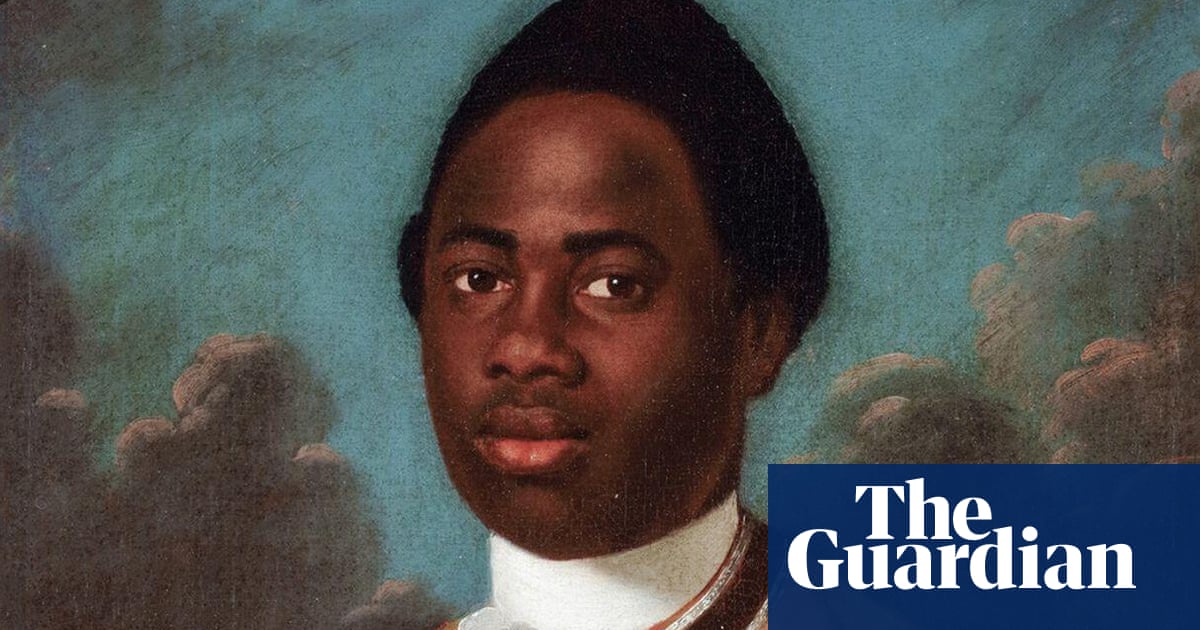

In 1760, a young Black boy, approximately ten years old, was presented to the Swedish royal court as a “gift” for the queen. This child, Adolf Ludvig Gustav Fredrik Albrecht Couschi, later known as Badin—a term derived from the French word for joker—went on to hold various titles, including chamberlain, court secretary, ballet master, and civil servant.
Badin is believed to have been born into slavery between 1747 and 1750 in the former Danish colony of St. Croix, currently part of the US Virgin Islands. He was owned by Christian Lebrecht von Pröck, who transported him to Denmark. Subsequently, he was “received” by Gustaf de Brunck, a Swedish commerce official, who later gifted Badin to Queen Louisa Ulrika.
Upon his passing, Badin left behind a collection of diaries, numerous books, personal letters, and an autobiography that provide insights into his life during the 18th and 19th centuries in Stockholm. Despite his rich legacy, Badin remains largely underexplored and often overlooked by the Swedish public, even though he has been depicted in various fictional works, including a stereotypical portrayal in August Strindberg’s 1902 play, “Gustav III,” and more recently in the ballet “Gustavia” at the Royal Swedish Opera.
A groundbreaking exhibition at the National Museum in Stockholm seeks to rectify this oversight by presenting a more comprehensive view of Badin’s life and contributions to Swedish society. Titled “Badin – Beyond Surface and Mask,” the exhibition showcases his writings for the first time, alongside a specially created film by Salad Hilowle, an artist who has devoted a significant portion of his career to exploring Badin’s legacy.
Hilowle expressed that this commission marks an important moment in Swedish art history, offering recognition to Badin and himself as an African-Swedish artist. He emphasized, “He [Badin] was an image and he was the other, and now the other is also an artist. Time has changed in Sweden. It’s a super strong moment.” His film, “Maroonen” (The Marooned), draws from Badin’s own writings and imagines him delivering a lecture to contemporary students at Uppsala, reflecting on his life and his evolving portrayal over time.
Hilowle’s frustration stems from the common perception of Badin being reduced to mere imagery, overshadowing his voice. “He appears in various formats, from plays by August Strindberg to other artistic projects,” he noted. “His image is prevalent, yet his own narrative remains unheard.” The film also incorporates opera elements to delve into Badin’s writings. In one of his texts, he referred to himself in Swedish as “I as one of the Blacks.” Hilowle highlighted the significance of these words being sung by an opera singer traversing the museum, stating, “I wanted to explore how it feels to hear that.”
Historical records indicate that there were roughly 20 individuals of African descent in Sweden between the early 18th and early 19th centuries, but little is known about their experiences due to a lack of documentation. Badin stands out as a notable exception, although his privileged position within the royal court means his experiences are not necessarily reflective of those of other court attendants.
Åsa Bharathi Larsson, the exhibition’s curator and an art and media historian at Södertörn University, remarked, “He occupies a unique position in the court; he is free yet not a member of the royal family. We lack information about his biological family, but he possesses a distinct status and a unique relationship with the royal family compared to other court servants.”
Queen Louisa Ulrika raised Badin following the principles of philosopher Jean-Jacques Rousseau, who advocated for the independent development of boys. Badin received a Christian education, acquiring writing skills that were uncommon for his time, and later engaged in dance and theater.
Using Badin’s diary as a foundational text, Hilowle’s primary aim was to restore dignity and acknowledgment to Badin while portraying him as “sensitive and fragile.” He stated, “That tenderness is often absent when we discuss the Black narrative in Swedish culture.”
Hilowle speculated that Badin’s role as a joker might have been a survival strategy, suggesting that showcasing his education could have posed a threat to those in power, leading him to adopt the persona of a trickster. “Yet, he documented his experiences in his own diary,” he added, indicating that Badin “wrote himself into history.”
Having previously created another film about Badin and planning a third, Hilowle continues to grapple with many unanswered questions. “I am eager to understand—how did he survive? What strategies did he employ? There is a profound sense of grief in his story. It’s fascinating to consider the costs of his existence and his ability to navigate various spaces almost as a shapeshifter.”