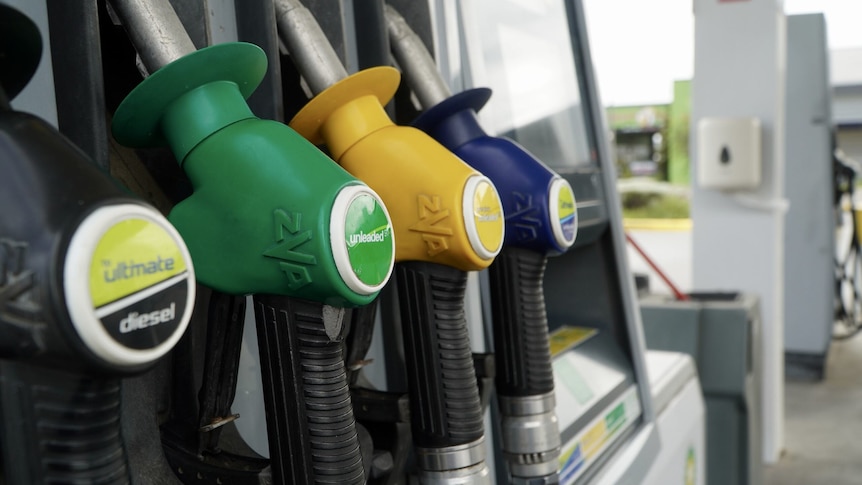

The ongoing conflict in the Middle East has led to a significant surge in diesel prices, even as global fuel supplies remain constrained. Despite the federal government reducing fuel tax excises, the average diesel price has surged past $3 per litre once again.
Industry experts and advocates express concern that this spike will intensify inflationary pressures, potentially forcing some road transport businesses to cease operations. The situation raises questions about why diesel prices are increasing while petrol prices are declining, and what this means for Australia, where diesel powers the majority of freight transport and nearly 30% of passenger vehicles.
One key factor contributing to the higher cost of diesel compared to petrol is the inflexibility of demand. While petrol users can often adjust their travel habits in response to price changes, those reliant on diesel for commercial purposes, such as freight and agriculture, have less flexibility. According to Kushneel Prakash from the Melbourne Institute of Applied Economics and Social Research, “Higher petrol prices may prompt households to reduce driving or modify their behavior, which can help lower demand. However, diesel is predominantly used in sectors such as freight and mining where usage cannot be easily reduced.” This combination of restricted supply and rigid demand is responsible for the rising cost of diesel amidst more stable petrol prices, despite the government’s excise tax reductions.
Concerns surrounding diesel prices are echoed by Michael Kaine, the national secretary of the Transport Workers’ Union, who notes the industry’s skepticism regarding the fluctuations in fuel prices. He indicates that diesel prices have doubled since February, prompting the competition watchdog to investigate potential anti-competitive practices among major fuel suppliers like Ampol, BP, Mobil Oil, and Viva Energy in regional Australia.
Although the federal government did implement a reduction in the fuel excise—halving it by 26.3 cents per litre—this was intended to help alleviate rising costs. Additionally, state leaders contributed an extra reduction, totaling 32 cents per litre until June 30. However, within two weeks, diesel prices have surged once more. As of Friday, the National Roads and Motorists’ Association (NRMA) reported an average diesel price of 323 cents per litre.
It is essential to understand that petrol and diesel prices are influenced by different benchmarks. Phil Bullock, a director at NineSquared, explains that while crude oil prices have slightly decreased, Australian fuel prices are determined by international refined fuel benchmarks, not crude oil prices. Diesel is priced according to the Singapore gasoil benchmark, which has seen a more significant rise than petrol benchmarks.
Furthermore, Bullock points out that a significant portion of the crude oil processed by Singaporean refineries comes from the Middle East. Consequently, any oil sourced from other regions may incur added transportation costs. “Global supply disruptions and the refined fuel structure in Asia have disproportionately impacted diesel, keeping international prices elevated despite recent excise reductions,” he notes.
Some experts argue that the government should have prioritized a more substantial cut to the diesel excise rather than to petrol. Lurion De Mello from Macquarie University states, “I would have expected a more significant reduction in the diesel excise, as diesel poses a larger issue.” He highlights that increased diesel prices have a more pronounced effect on inflation since diesel trucks transport nearly all consumer goods. “The impact on grocery prices, transportation, and imports will be substantial,” he adds.
Despite a slight decrease in overall inflation, which fell to 3.7% in February, it remains above the Reserve Bank’s target range and does not yet reflect the full ramifications of the ongoing energy crisis that escalated in March. Westpac’s CEO has issued warnings about the heightened risk of a recession in Australia, with predictions of three additional rate hikes this year due to the energy crisis, as articulated by chief economist Luci Ellis.
Looking ahead, energy analyst Saul Kavonic suggests that the situation may worsen before it improves. He anticipates that the true shortage of fuel has yet to manifest. “We are still utilizing fuel that was available before the conflict began,” he explains, indicating that the real challenges will emerge later this month and in May. “At that point, competition for the remaining fuel supplies will intensify among nations in Asia and globally,” he concludes.