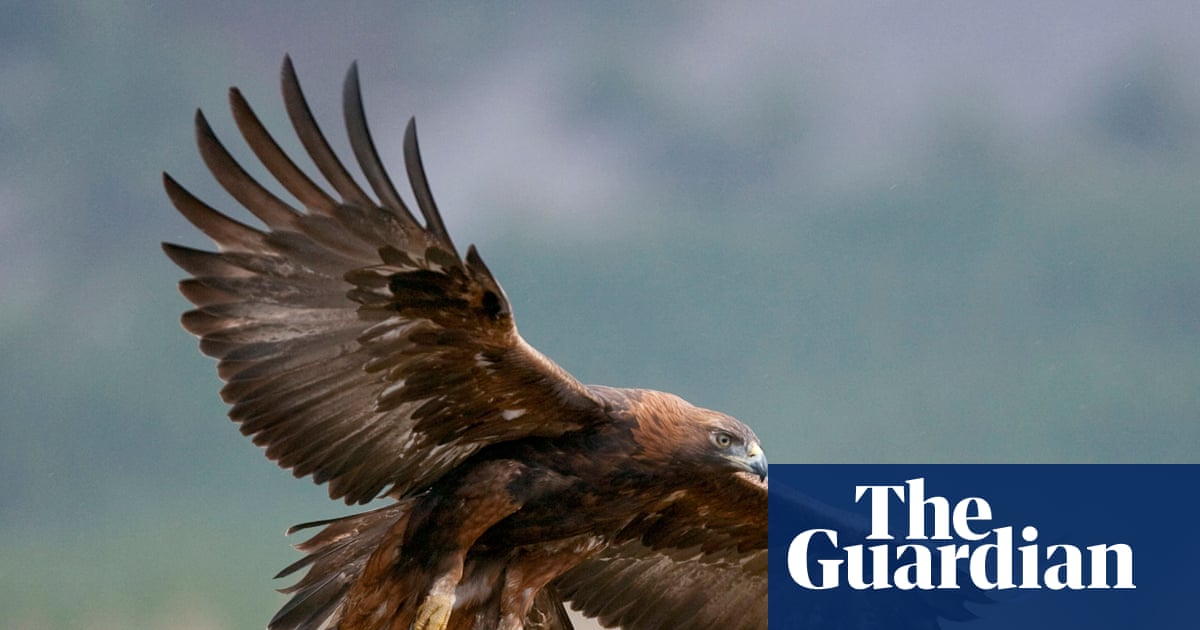

The world has deteriorated to the point where the weak are threatened even in places the strong avoid, a sentiment articulated by Shakespeare in his play Richard III. In light of this, there is a glimmer of optimism amidst the prevailing negativity: the potential reintroduction of golden eagles to England after more than 150 years of absence.
Once a common sight in the skies of England during Shakespeare’s time, the golden eagle has been nearly extinct in the region, with only a few pairs spotted over the past century and a half. These magnificent birds, known for their impressive wingspan of up to two meters, have not been seen in England since the last native individual reportedly passed away in 2015 in the Lake District. Their decline is attributed to centuries of persecution by gamekeepers and farmers, who regarded them as threats to livestock and game birds.
Occasionally, golden eagles are spotted in regions like Northumberland, migrating from southern Scotland, where their population is on the rise. However, a recent study conducted by Forestry England, released on Sunday, suggests that England has the necessary conditions to support the revival of golden eagle populations.
The study identifies eight potential “recovery zones” as suitable habitats for these birds, primarily located in northern England. Nevertheless, establishing breeding populations in these areas may take over a decade.
In light of the findings, Environment Secretary Emma Reynolds has allocated an additional £1 million in funding dedicated to species recovery initiatives, which could allow for the release of juvenile golden eagles, aged six to eight weeks, as early as next year.
Reynolds remarked, “This government is dedicated to safeguarding and revitalizing our most endangered native wildlife, including the iconic golden eagle.” She emphasized the collaborative efforts with partners and communities aimed at reintroducing this majestic bird into England’s landscapes.
In southern Scotland, golden eagle populations have reached record levels due to a significant conservation initiative. Satellite tracking has shown that some of these relocated birds have already begun to venture into northern England, according to government reports.
The new funding is expected to facilitate the settlement of these birds south of the border, alongside strategic reintroductions. Research indicates that Scottish golden eagles could be observed in northern England within a decade, although establishing breeding populations will require more time.
Mike Seddon, the chief executive of Forestry England, stated, “The insights from our feasibility study will help us and our partners, Restoring Upland Nature, take the necessary steps towards the recovery of golden eagles in northern England.” He added that the funding will enable them to build upon their initial efforts by engaging local communities, landowners, and conservation organizations.
This funding is part of a broader £60 million initiative announced by the Department for Environment, Food and Rural Affairs (Defra) aimed at halting the decline in species populations by 2030 and minimizing the risk of species extinction by 2042, relative to levels recorded in 2022.