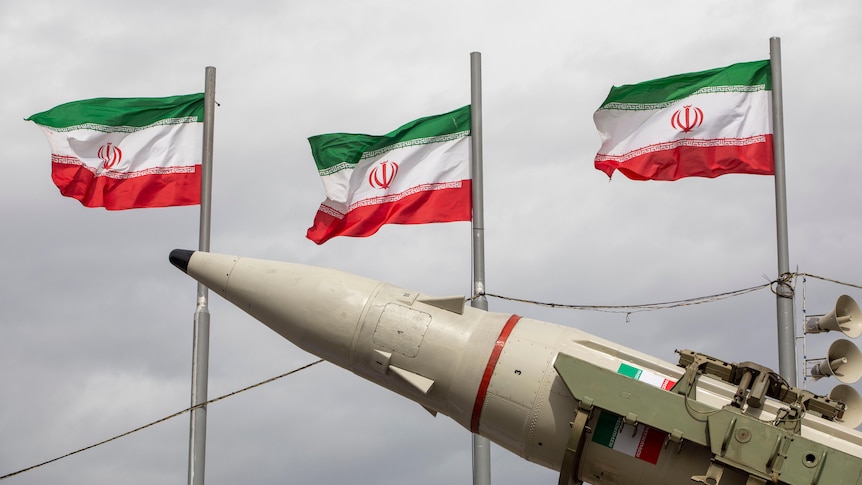

In the Persian Gulf, the ongoing conflict involving Iran has resulted in a scenario that many regional monarchies had long feared and sought to avoid. Since hostilities erupted, allies and partners of the United States in the Middle East have faced thousands of missile and drone assaults from Iran, which has been responding to a targeted military campaign initiated by the U.S. and Israel in February.
The repercussions of this warfare have been extensive, encompassing damaged infrastructure, disruptions to travel, economic instability, and a significant decrease in tourism, as well as the departure of anxious families. Furthermore, Iran’s blockade of the Strait of Hormuz has severely affected the region’s oil and gas supplies.
For decades, neighboring countries have prepared for the possibility of being at the forefront of such a conflict by maintaining a strong presence of U.S. military forces in the area, according to analysts. However, the tactical decisions by President Donald Trump and Prime Minister Benjamin Netanyahu to launch military actions in February left these nations vulnerable.
Jessie Moritz, a lecturer at the Centre for Arab and Islamic Studies at the Australian National University, emphasized that these nations are bearing the consequences of a conflict they did not initiate. Iran’s approach has involved targeting U.S. military assets and energy facilities in the Gulf, aiming to compel the governments of these countries to influence the Trump administration to reconsider its military strategy.
On March 19, Saudi Arabia’s Foreign Minister, Prince Faisal bin Farhan al Saud, stated that the precision of Iran’s targeting suggests a well-coordinated and deliberate military strategy rather than a mere reaction to evolving circumstances. He noted that Iran’s tactics are part of a broader war strategy designed to exert pressure on the international community.
According to Ali Ansari, a professor specializing in Iranian history at the University of St Andrews, the Iranian regime has relied on its ability to endure the daily assaults from the U.S. and Israel, banking on the idea that the repercussions of its strikes would be more difficult for its adversaries to bear.
After five weeks of conflict, Gulf nations find themselves ensnared in a war they sought to avoid, as observed by Dr. Moritz. Currently, a fragile ceasefire and ongoing discussions provide a glimmer of hope for resolution. However, once the fighting concludes, these nations will be tasked not only with rebuilding the economic and physical damage inflicted by Iran’s retaliatory actions but also with adapting to a regime that is perceived as increasingly unpredictable and violent.
Throughout the conflict, Iran has executed numerous retaliatory strikes targeting countries such as Bahrain, Kuwait, Saudi Arabia, the United Arab Emirates, and Qatar. Iranian President Masoud Pezeshkian claimed early in the conflict that Tehran’s assaults were aimed solely at U.S. military installations in the region. Key sites targeted by the Islamic Revolutionary Guard Corps (IRGC) included Al Udeid Air Base in Qatar, Ali Al Salem in Kuwait, and Al Dhafra in the UAE.
Energy infrastructure has also suffered significant damage, with satellite images capturing smoke billowing from the Fujairah oil base in the UAE last month. A March 19 attack on the Ras Laffan energy facility in Qatar, which is the largest liquefied natural gas export site globally, resulted in a 17% reduction in its export capacity. Saudi Arabia has reported that strikes on vital pipelines and production facilities have drastically reduced its oil output.
Matt Stanley, an energy market analyst based in the UAE, noted that while it is challenging to gauge the full extent of the damage, it is likely to be severe. He remarked that the impact is not limited to one specific type of energy product; rather, it affects the entire energy sector across the Gulf Cooperation Council.
The war has also disrupted civilian infrastructure, including hotels, ports, residential buildings, and airports. Dr. Moritz highlighted that Bahrainis faced significant challenges last week, being effectively trapped in their country as the primary exit routes were threatened. The main airport has remained largely closed, and the King Fahad Causeway to Saudi Arabia was shut down by the Bahraini government following Iranian threats.
Dr. Moritz asserted that restoring business and travel confidence would be crucial for the post-conflict recovery efforts. She emphasized that convincing the global community of the safety of air travel through Dubai will be essential for the region’s economic stability. Following a tentative agreement to suspend fighting between Washington and Tehran, Gulf states continued to report incidents of incoming missiles and drones from Iran, prompting activation of air defenses across the area.