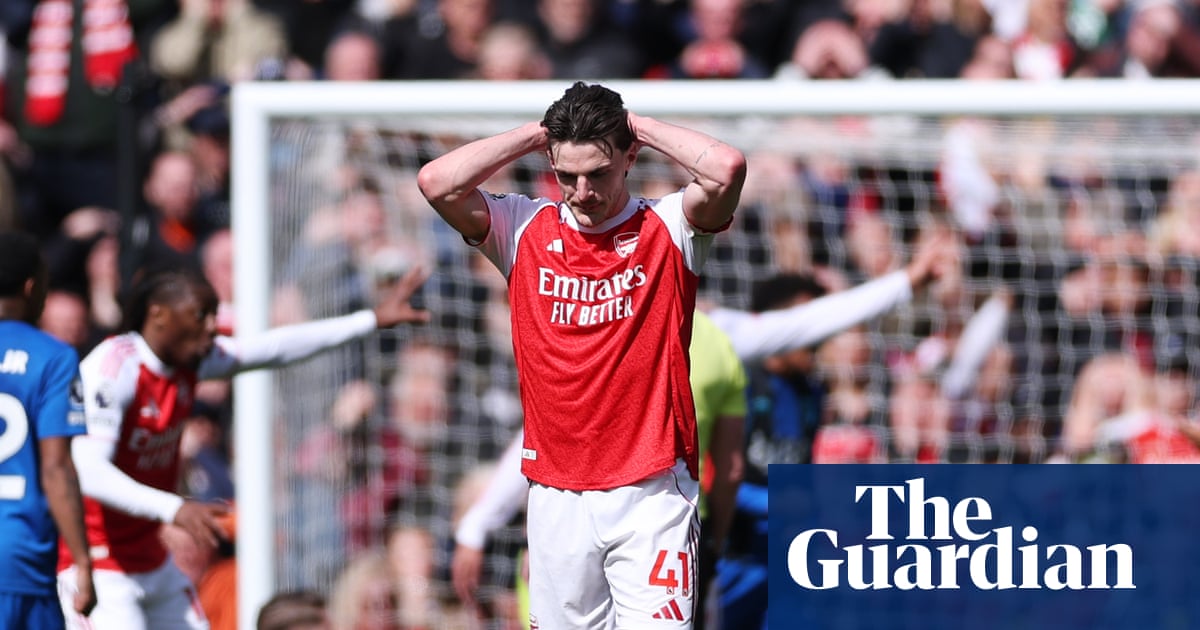

In yet another crucial match, Arsenal found it essential to motivate their squad prior to the game. Mikel Arteta, adopting a light-hearted demeanor, playfully encouraged fans to “bring your lunch, bring your dinner” to enhance the atmosphere for the early kickoff at 12:30.
The players, for their part, trained with a large screen displaying past successes of Arsenal, likely intended to inspire the team to replicate those triumphs. Arteta emphasized, “Every game, we have to be there,” but the question remained: were they truly present?
The first half unfolded as many anticipated: a fiercely competitive and physical battle. Bournemouth leveraged vulnerabilities on Arsenal’s right flank to take an early lead, but the home side equalized from a set piece, converting a penalty that resulted from a corner routine.
Viktor Gyökeres stood out as Arsenal’s most valuable player during this half. Although his opportunities on the ball were limited, his relentless determination and focus were commendable. He took charge during the penalty moment, retrieving the ball from Kai Havertz and scoring with composure. This kind of resolute performance has been a hallmark of many of Arsenal’s victories this season.
Unfortunately for Arsenal’s aspirations of clinching their first league title in 22 years, football matches consist of two halves, and the second half proved revealing. The crowd was energized, particularly with the drum ensemble in the Clock End, setting a faster pace as the game resumed. It seemed the next 45 minutes would witness both teams striving for victory, but that was not the case.
A rare triple substitution by Arteta just nine minutes into the second half, while Arsenal appeared to be on the offensive, dramatically shifted the dynamics of the match. It is difficult to pinpoint exactly why, as one ineffective attacking trio was replaced with another, but the time spent establishing new connections may have allowed Bournemouth to gain the upper hand.
In the 65th minute, Gyökeres found the net again, but his effort was disallowed for a preventable offside. This momentary distraction occurred amid Bournemouth’s growing dominance, which culminated in a remarkable goal from Alex Scott in the 74th minute—a precise finish following a swift series of passes around the edge of the Arsenal penalty area.
Shortly thereafter, Gyökeres had another opportunity when Djordje Petrovic poorly punched a cross from Max Dowman. Despite having the time to control the ball, the Swedish forward misfired, sending his shot wide of the post without making solid contact.
As the match progressed, Gyökeres found himself playing deeper than Gabriel, as Arteta opted to position his center-back as the focal point for any potential attacks in search of an equalizer. This tactic highlighted a concerning trend: the pace during those closing minutes was slow and methodical. One might assume that nerves had taken hold of Arsenal, but this sluggish tempo was consistent throughout the match.
The slow pace was partly due to Arsenal’s inability to execute quick combinations. Their strategy relied on gaining ground, drawing fouls, and attempting to capitalize on set-piece opportunities. Arsenal registered 1.44 expected goals from set plays, surpassing Bournemouth’s total of 1.2. However, all of Bournemouth’s chances stemmed from open play, while Arsenal’s open play opportunities generated a mere 0.19 xG, marking one of their lowest tallies at home since such statistics began to be recorded.
So, did Arsenal really show up? Given the defeat, they did not meet Arteta’s standards. Alternatively, one could view this as a Schrödinger’s Arsenal—existing in a state of uncertainty, potentially either alive or dead based on the circumstances in the box at any moment. More troubling for loyal supporters is the possibility that Arsenal were indeed present but simply outperformed by a Bournemouth side that has successfully adapted following a summer of player departures, maintaining a cohesive style that transcends individual contributions.
Despite this setback, Arsenal remains nine points ahead at the top of the league. In a season where many matches have been touted as pivotal only to fall short, it would be premature to declare this defeat as decisive. However, if Manchester City wins their remaining matches, that nine-point lead could quickly diminish. Arsenal now faces the additional challenge of withstanding the pressure from seasoned competitors, a struggle highlighted by pre-match discussions, and they must discover ways to secure victories beyond mere grit and resilience, particularly through set pieces delivered by Declan Rice.