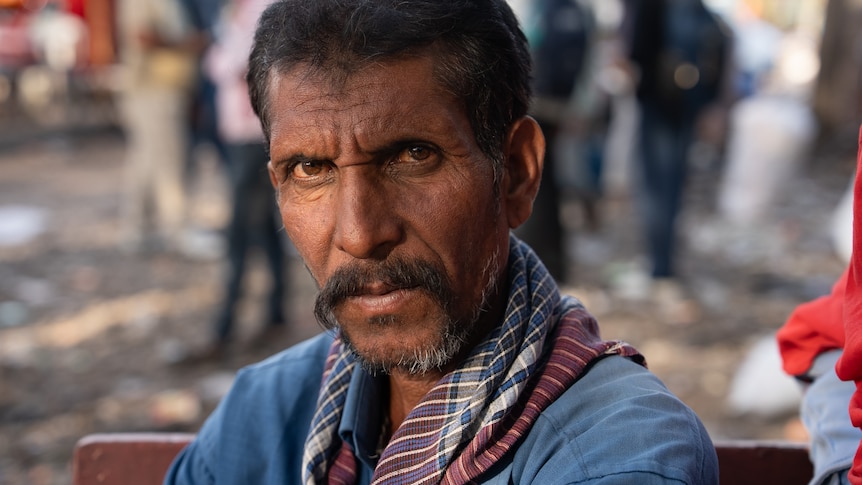

At 2 PM, Wankaner station is bustling with activity. Families disembark from rickshaws, carrying bedding, luggage, and suitcases, navigating the heat as they search for a place to sit on the crowded platform floor.
The train bound for Jabalpur is delayed, and when it finally arrives, it is expected to be overcrowded. The journey will span nearly 20 hours.
The majority of those waiting are migrant workers departing from the industrial town of Morbi.
Just a few weeks prior, these workers were employed. Morbi, located in western India, boasts the world’s second-largest ceramics industry, valued at $11 billion. This region produces nearly all of India’s tiles and bathroom fixtures, which are exported to construction markets in America, Asia, Africa, and Europe.
This industry relies heavily on two key factors: consistent heat and a substantial migrant workforce, directly employing over 400,000 individuals.
For years, this equilibrium remained stable. Workers flocked from northern and eastern states like Uttar Pradesh, Bihar, Madhya Pradesh, Jharkhand, and Odisha, enticed by the promise of steady wages. The factories operated continuously, powered by imported propane and natural gas.
However, this balance was disrupted in late February when escalating conflicts in the Middle East restricted shipping through the Strait of Hormuz, a crucial route for India’s energy imports. As a result, gas supplies dwindled, and prices surged dramatically.
Within days, numerous factories ceased operations, with more than 500 units halting production.
“Gas is our largest expense and the core of ceramics production,” remarks manufacturer Kishor Dulera. “Without gas, manufacturing is impossible.”
The repercussions for workers were immediate and severe.
Hari Gupta, a resident of Morbi for two decades, worked as a kiln operator, earning approximately $250 a month—just enough to support his wife and three children, with no savings to fall back on. His situation became precarious after a back surgery prevented him from working and his ten-year-old son required heart surgery.
To cover these medical expenses, he borrowed over $2,000, only for the factory to close shortly thereafter.
“My younger son hasn’t attended school in six months because I can’t afford his fees,” he laments. Most of his acquaintances have already returned to their hometowns, but Mr. Gupta remains. His health makes travel challenging, so he stays at home, relying on borrowed funds to meet daily needs.
“There’s no cooking gas, work has stopped, and my children need to go to school. I’m the sole breadwinner—how can we manage? The only option is to go back home,” he explains.
At railway stations and bus terminals, the exodus continues. Some individuals express intentions to return once factories reopen, while others remain uncertain.
Railway personnel and bus drivers report a significant increase in passenger traffic in recent weeks, with long lines forming at ticket counters and limited seating available.
“These unfortunate individuals don’t comprehend war; all they know is their ongoing battle with hunger,” states bus driver Salim Pathan.
The disruptions have extended beyond the ceramics sector, affecting packaging companies, transport services, and other connected industries, leaving even more workers without a source of income.
Anita Devi, a 32-year-old single mother of two, faces a difficult decision. Employed in quality control for bathroom fittings, her monthly salary of about $120 barely covers rent, school fees, and basic necessities.
Returning to her village would require several thousand rupees, which she lacks. With her children currently in the midst of exams, removing them from school now would jeopardize their academic progress.
“No one can provide a definitive timeline for when the company will reopen,” she says. “Everyone is optimistic that factories will resume operations in fifteen to twenty days.”
The situation has even affected cooking, as gas cylinders have become scarce and costly. She mentions that once hers runs out, she will resort to using wood for cooking.
“Nobody anticipated that a conflict in another country could so profoundly impact our lives,” she adds.
Manufacturers have acknowledged that this disruption has revealed their reliance on global energy supplies. Some have attempted to switch to piped natural gas, but at significantly higher costs.
Prior to the crisis, Mr. Dulera’s factories produced 20,000 boxes of tiles daily, generating annual revenues of approximately $25 million. Now, he has only a few workers performing minimal maintenance tasks. Even with plans to restart operations using piped gas, he expects to operate at only half capacity.
“This is not a fully sustainable solution,” Mr. Dulera observes. “Clients will not accept increased prices due to the war, and manufacturers cannot absorb these costs.”
Others have opted to remain closed rather than incur losses. Despite a two-week ceasefire now in effect in the Middle East, expectations for a swift recovery remain low.
Restoring normal operations could take two to three months, contingent on stabilizing fuel supplies. Workers who have departed will need to return, equipment will require repairs, and orders will need to be rebuilt.
Until then, uncertainty looms. Mr. Dulera warns that the industry, which had experienced significant growth over the past decade, is likely to slow down. If the conflict reignites and persists for months, many businesses could face dire consequences.
“A laborer’s life is no life,” Ms. Devi reflects. “We work to eat; without earnings, we have nothing.”