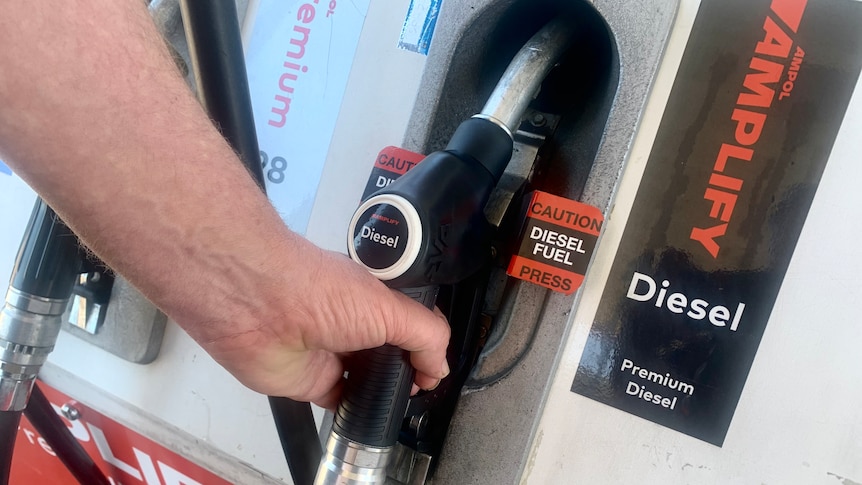

The Western Australian government is exploring the establishment of a diesel stockpile aimed at safeguarding the state against potential fuel crises, particularly in light of recent disruptions linked to the conflict in Iran.
Amber-Jade Sanderson, the state’s Energy Minister, indicated that this reserve would consist of “millions of litres” of diesel, although she did not disclose precise figures regarding its size.
The government is collaborating with the mining sector to identify available storage space for this diesel reserve. They believe that given Western Australia’s vastness and the critical dependence of its agricultural and resource sectors on diesel, a dedicated stockpile is warranted.
Currently, the federal government mandates that fuel retailers maintain a minimum reserve of 30 days’ worth of petrol and diesel, which can be accessed at the government’s discretion to bolster supply. However, Minister Sanderson has pointed out that this existing system has not functioned effectively for Western Australia, particularly as the ongoing conflict in Iran has strained fuel supplies nationwide.
“We discovered that the minimum stock requirement did not ensure all fuel suppliers maintained their reserves in Western Australia,” she explained. “Most of the stock belongs to BP, which has facilities here, but other companies like Viva and Ampol have their reserves located in Queensland.”
Sanderson reiterated that the planned stockpile would amount to “millions of litres.” She anticipates that further discussions will clarify the exact volumes involved.
The state is also leveraging the existing fuel transport infrastructure, which is capable of managing additional diesel distribution. Smaller distribution entities, such as independent truck drivers, will play a crucial role in meeting the needs of the Wheatbelt and Goldfields regions.
“The independent spot market was the first link in the supply chain to fail, impacting agricultural businesses and smaller mining companies,” Sanderson noted. “Establishing a diesel stockpile would enable us to release fuel into that market as needed, particularly in response to spikes in demand when supplies dwindle.”
This reserve aims to enhance resilience for regional and remote communities, ensuring that the fuel is directed towards areas in greatest need, such as agricultural zones at the end of supply chains and isolated communities that still heavily rely on diesel.
Sanderson expressed confidence that the creation of a separate stockpile would not lead to conflicts with the federal government. “It is essential for states to receive their fair share of the federal fuel reserve. Our state has acted promptly to develop the necessary framework to comprehend the supply chain and facilitate fuel movement in complex situations,” she stated.
Currently, there are no plans to establish a petrol stockpile. “The focus is on diesel, as it presents the most challenges, particularly for remote communities and the agricultural and resource sectors that depend significantly on it,” Sanderson added.
Additionally, Sanderson cautioned petrol retailers who are allegedly overcharging consumers despite recent reductions in fuel excise. “The state government is collaborating with the Australian Competition and Consumer Commission (ACCC) to scrutinize the price margins between wholesale and retail prices for both unleaded and diesel fuel,” she said.
She emphasized the expectation that retailers would pass on the benefits of excise reductions to customers. The commissioner for consumer protection is actively investigating retailers, with potential action planned if any violations of consumer law are detected. Sanderson noted that fuel prices have been trending downward since the excise cut.