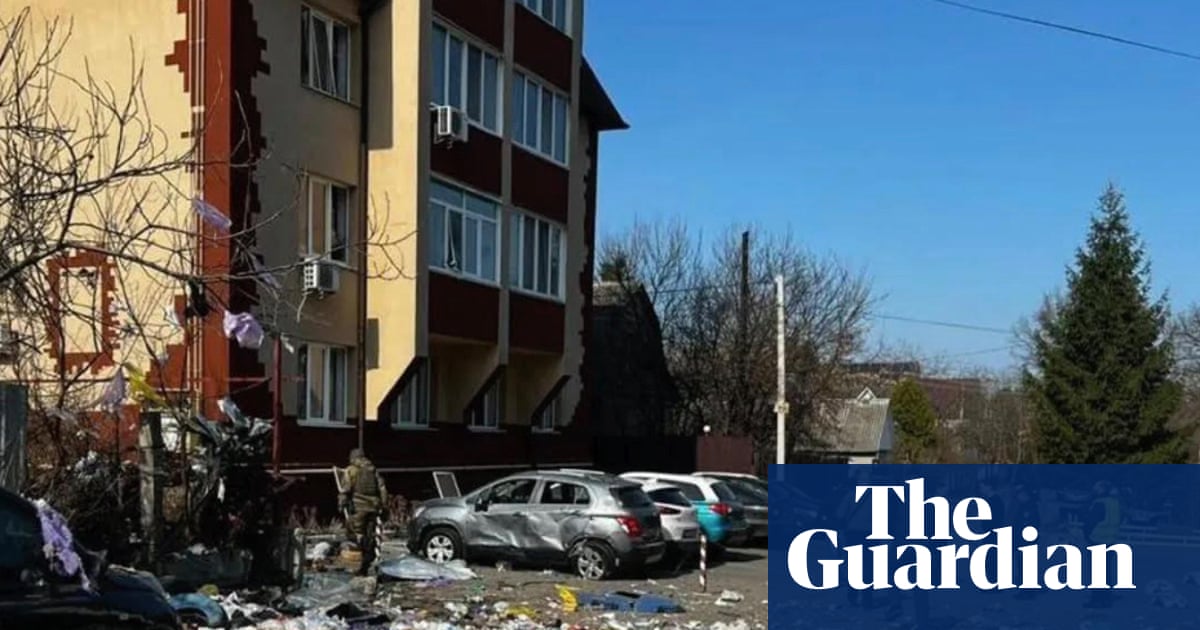

In March, Bohdan Tymchenko, a 21-year-old from Bucha, logged into the online game World of Tanks. Just days later, he was implicated in a bombing incident outside his apartment, marking a disturbing trend in Ukraine where individuals are allegedly recruited by Russian intelligence to conduct sabotage against their own nation.
The incident, which occurred in Bucha—a town near Kyiv notorious for its atrocities during the Russian invasion—has heightened public outrage and disbelief. Ukrainian investigators have determined that Tymchenko was first contacted by a Russian operative through the game’s chat feature. This handler then provided detailed instructions via the messaging platform Telegram on how to gather explosives, construct the devices, and execute the attack, with a promise of $1,200 for his cooperation.
The bombings took place in the early morning hours, exhibiting characteristics of a double-tap strategy. The first explosion occurred around 5:30 AM, followed by a second blast nearly two hours later, injuring two police officers who had arrived in response to the initial attack.
Dmytro Prokudin, head of the Kyiv regional prosecutor’s office, expressed his dismay over the situation, stating, “It’s a stab in the back. It doesn’t really get worse than one of your own citizens doing this.” He noted that such incidents are becoming increasingly frequent.
Ukraine’s security service, the SBU, has reported identifying over 800 Ukrainians, including at least 240 minors, who have been recruited by Russian operatives in the last two years. These recruits have been tasked with targeting essential infrastructure and military draft offices, with the intent to instill fear and uncertainty within the population.
Residents of Tymchenko’s apartment building have been left unsettled by the notion that the threat could originate from someone within their community. Inna, a neighbor and pensioner, remarked, “I simply don’t understand how this could happen here, done by someone you see every day.” Inna, who survived the town’s occupation in spring 2022, reflected on the violent history of Bucha, where over 400 bodies were discovered post-liberation, including those of bound civilians.
Another resident recounted that she noticed two large black trash bags near the entrance on the night of the explosions but dismissed them as unremarkable. “How could I imagine they were bombs? It didn’t even cross my mind,” she said while comforting her pet chihuahua.
Some witnesses claimed to have seen Tymchenko hiding behind trees during the explosions, igniting the devices up close, and investigators are currently looking into these accounts.
According to neighbors, there were no clear indicators that Tymchenko posed a threat. He was described as a reserved individual who spent most of his time indoors and was unemployed. This raises further questions for prosecutors, particularly given his military family background—his brother was killed in combat for Ukraine and posthumously honored, while his mother serves as a medic in the armed forces.
Prokudin stated, “We are still trying to establish his motive and whether he was specifically targeted because of his background or simply approached at random.” It is believed that Russian recruiters often engage in casual online conversations with potential recruits before escalating their interactions.
Recruiters typically initiate contact, gauging an individual’s willingness to collaborate. Prokudin noted that financial incentives are a primary motivator, while relatives living in Russian-occupied areas may also be used as leverage to compel recruits. The complexity of the recruitment process, with various intermediaries and Telegram handlers, complicates efforts to trace and identify those involved.
Prokudin emphasized the scale of the threat posed by Russian agents, stating, “There are clearly large numbers of Russians working on sabotage operations inside our country, identifying and exploiting weak links.”
When Tymchenko appeared in court last month, he claimed he was coerced, asserting that his handler had threatened to monitor his mother’s location via drone technology. Investigators suspect that his original plan may have been disrupted by a woman who reported a domestic disturbance at his apartment just before the explosions, leading police to investigate further.
Fake emergency calls have been employed in various parts of Ukraine to mislead first responders, contributing to a pervasive atmosphere of mistrust. Prokudin elaborated, “The initial idea appears to have been to lure police to the scene and detonate the first device before setting off a second one when backup would arrive.”
In a recent incident, police hesitated to respond to a report of a domestic tragedy, highlighting the challenge officials face in discerning real emergencies from potential traps. “This is exactly Russia’s goal,” Prokudin stated.
Western intelligence officials have observed that Russia’s use of proxies in Ukraine is reflective of broader patterns across Europe, where sabotage and disinformation campaigns are increasingly carried out by individuals recruited online. A senior European intelligence officer commented, “Moscow’s sabotage activities in Ukraine mirror what we are seeing elsewhere in Europe,” emphasizing that the same tactics and methods are being employed across the board.