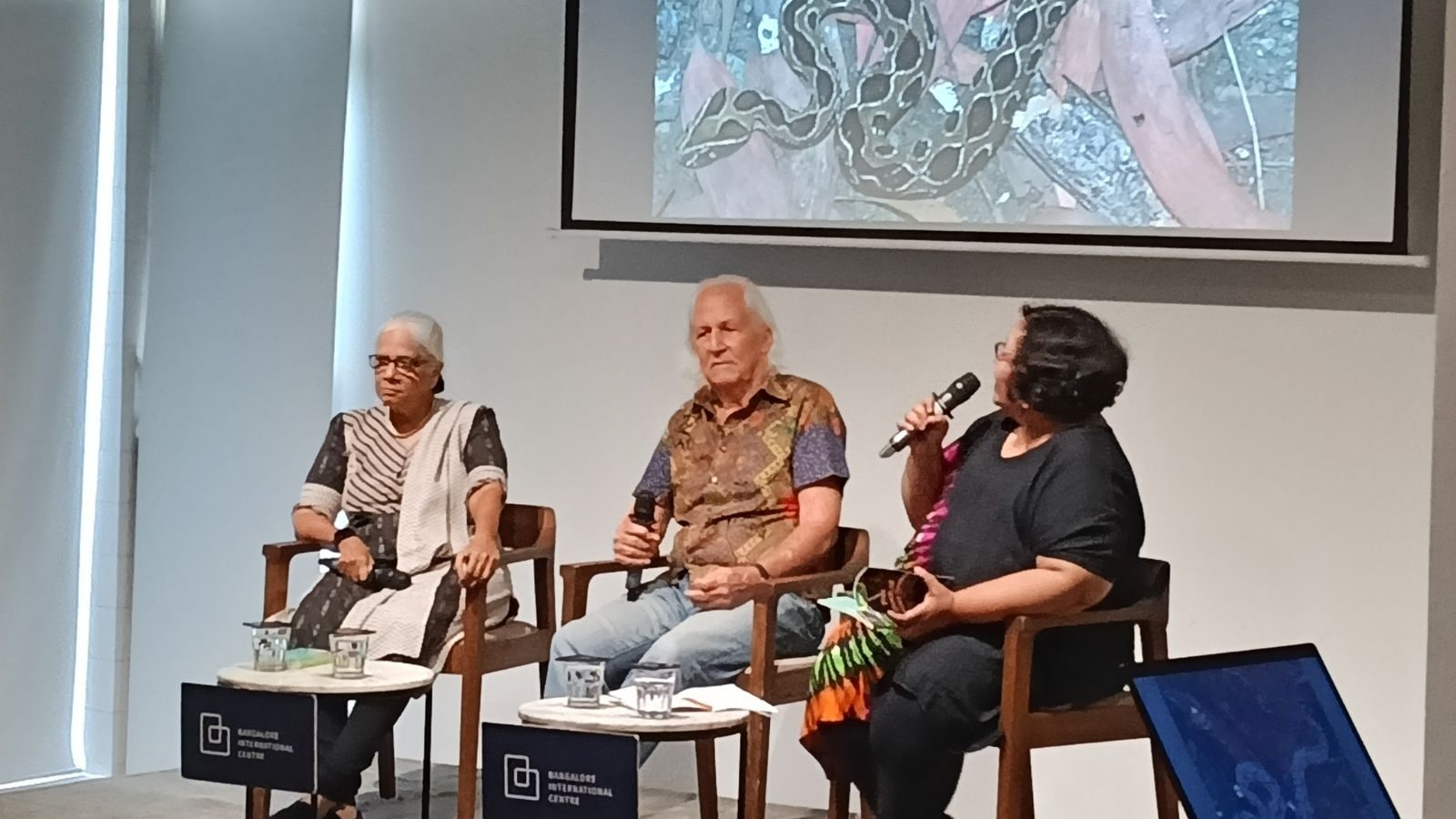

How do male cobras vie for a female’s attention? Do snakes construct nests for their eggs? These intriguing inquiries and more were explored during a session held in Bengaluru last week, featuring the newly published “The Book of Indian Snakes” by renowned herpetologists Romulus and Zai Whitaker.
Notably, a significant portion of the attendees at the Bangalore International Centre last Sunday comprised enthusiastic young children, who actively engaged with the herpetologists by posing numerous questions about snakes.
Zai and Romulus provided insights into the measures taken to ensure the availability of anti-venom for snakebite incidents, particularly concerning the four most venomous snakes in India: the cobra, common krait, Russell’s viper, and saw-scaled viper.
They discussed various challenges, including the need for anti-venom to be effective against differing venom compositions found in snakes from various regions, even those of the same species.
Romulus emphasized that snakes are generally not aggressive, often displaying more fear of humans and opting to flee rather than attack. During their hour-long presentation, they shared a wealth of information regarding snakes, alongside practical tips on how to avoid bites. This advice was informed by Romulus’s personal experience of stepping on a Russell’s viper without being bitten.
He recounted, “I consistently advise individuals in rural areas, particularly farmers, to utilize a light at night when activating pumps for their rice fields. I encountered a farmer who had suffered a bite from a Russell’s viper, and he explained that he had traversed the same path for two decades without using a light. Unfortunately, one night, he accidentally stepped on the viper and was bitten.”
Zai added, “Many bites occur at night when neither the snake nor the person can see each other.”
They also discussed their collaboration with the Irula community and their efforts in the United States to manage invasive feral python populations. These pythons, released as pets, are now threatening local ecosystems, competing with native species, and occasionally preying on alligators.
Zai reflected on her first encounter with the Irula community, stating, “They possess incredible knowledge regarding the forest’s resources for medicine, food, and religious ornaments. At that time, Romulus was already collaborating with them to gather venom for the Haffkine Institute to produce anti-venom.”
Following the event, attendees had the opportunity to have several books, authored individually and collaboratively by Romulus and Zai, signed. This included works co-written by Romulus Whitaker and his wife Janaki Lenin, such as his memoir titled “Snakes, Drugs, Rock and Roll.”
Stay informed with the latest updates – click here to follow us on Instagram.