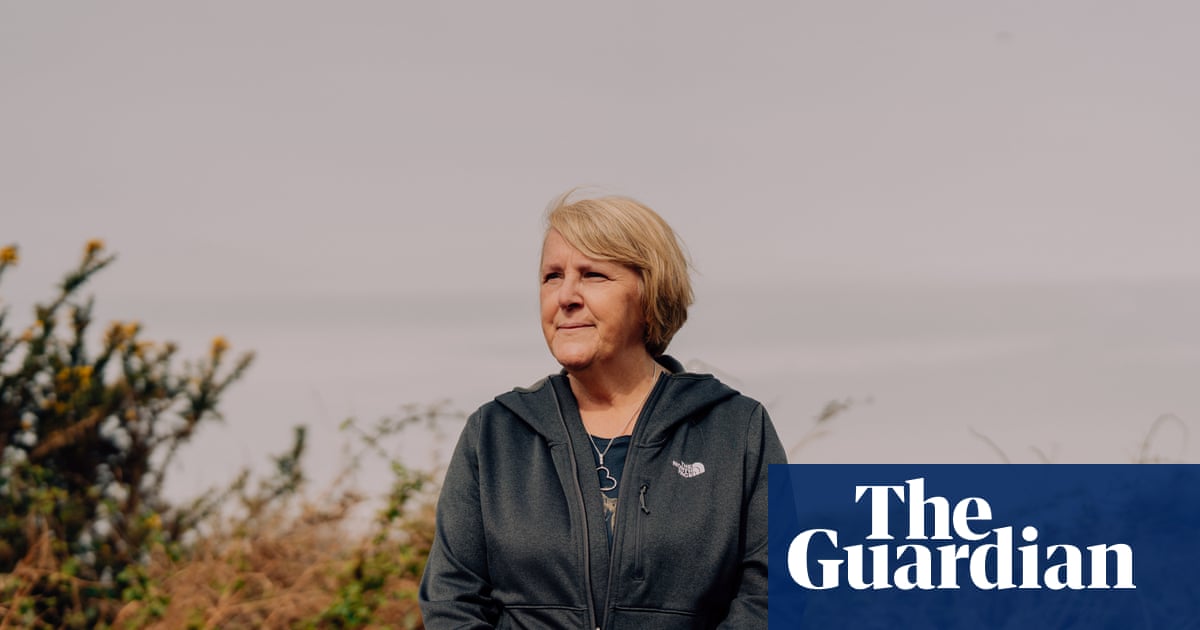

Della Keable was visibly emotional as she shared her family’s long-standing connection to the forest, which they have called home for generations. “I apologize,” she said, struggling to contain her tears. “The forest is intertwined with our very essence.”
Keable is among numerous individuals expressing their discontent with the UK government’s recent decision to restructure the management of the New Forest as part of a local government reorganization initiative.
The eastern section of the forest, renowned for its wild ponies and pigs, will be assigned to a newly formed authority, South West Hampshire, which includes Southampton. Meanwhile, the remaining portion will fall under a different new authority, Mid Hampshire.
Residents in the eastern area are particularly upset, feeling they are being “annexed” and are concerned that urban-focused politicians will influence their rural lifestyle.
“I am furious,” declared Teresa Barnes, a lifelong resident whose family is involved in the traditional role of “verderers,” who oversee the grazing rights of local commoners. “This is a cherished, historic place. We do not want to be merged with a city environment. We must fight against this decision.”
The government unveiled these changes, set to take effect in 2028, at the end of March. Housing Secretary Steve Reed referred to it as a “once-in-a-generation opportunity” to reform local governance and align councils with contemporary needs.
In response, a campaign group named New Forest Together was quickly formed, distributing over 20,000 leaflets and gathering more than 10,000 signatures on a petition opposing the proposed changes within just two weeks.
The organization contends that the reorganization would place significant areas under a “city-centric” authority and is urging the current New Forest district council to seek legal counsel and consider a judicial review.
James Hartley-Binns, a co-ordinator for the campaign, described the situation as a “takeover” by the Labour-led Southampton city council. “This is a land grab,” he passionately stated during a gathering at Blackwell Common. “We have been a community for over 1,000 years. The forest is integral to our identity, yet it’s at risk of being fragmented. This is our home and heritage.”
The eastern part of the forest, which borders Southampton Water, features picturesque landscapes and coastline, but it also houses the Fawley petrochemical complex—the largest in the UK—and the Marchwood military port, currently undergoing redevelopment to alleviate pressure on Southampton.
This has led some residents to suspect that the reorganization, which has the backing of Southampton city council, is primarily financially motivated.
Tony Croucher, a former union official at the refinery, remarked, “I believe this is Southampton’s attempt to capitalize on the resources here. They are after the economic benefits of the refinery and port.”
Croucher, who spent his childhood in Southampton, expressed no animosity towards the city. “However, it is distinct from our area. If they attempted to merge Southampton and Portsmouth, it would lead to significant conflict.”
Dean and Jennifer White, owners of a computer shop in Blackfield village, voiced concerns that the new authority might increase their business rates. “They may not be as understanding of small rural enterprises,” noted Dean White.
This debate arises as the New Forest Commoners Defence Association is working towards national minority recognition for commoners, similar to the recognition given to the Cornish community.
While the UK government has yet to formally acknowledge them, it has stated that, like all minority groups, they are entitled to certain support.
Andrew Parry-Norton, chair of the association, expressed concern that the reorganization would lead to a disjointed forest. “This area is unique and depends on its entirety for its integrity,” he remarked.
He specifically highlighted worries that critical “backup grazing” land along Southampton Water might be developed. “That land is essential for placing animals during winter when grazing is sparse in the forest. It plays a crucial role in the forest’s ecosystem.”
In support of the reorganization, Southampton city council argued that it would unite communities that, despite their distinctiveness, are already interconnected through social, economic, and transportation links.
A spokesperson stated, “We are dedicated to collaborating with local residents, existing councils, and the national park authority to ensure the new council is successful while honoring local heritage and identities.”
The Ministry of Housing, Communities and Local Government emphasized that the changes do not imply that part of the New Forest is being integrated into Southampton.
A spokesperson affirmed, “These adjustments will enhance public services by consolidating them under one council, ensuring that local residents receive optimal social care, education, and waste collection.”
This rationale did not resonate with forest inhabitants Georgie Rand, a yoga instructor, and her 10-year-old son, Will. Rand expressed that the reorganization disregards the profound emotional ties individuals have to specific geographical areas.
Will highlighted that the forest was established by William the Conqueror as a hunting ground a millennium ago. “I am concerned that they will want to construct more houses and roads here. It is disrespectful,” he remarked.