
For several weeks, Xhetan Ndregjoni waited near the Turkish-Syrian border, hoping for positive news. In early February, he received the long-anticipated word: his niece, Eva, was en route after escaping a grim desert camp in Syria, where she had been held without charges since childhood.
“I can’t find the words to express that moment,” Ndregjoni remarked about their emotional reunion.
The family’s struggle spans over a decade, beginning when Eva Dumani, then nine, along with her younger brother, was abducted from their home in Albania. They were taken to Syria by their father, who later died while fighting for the Islamic State.
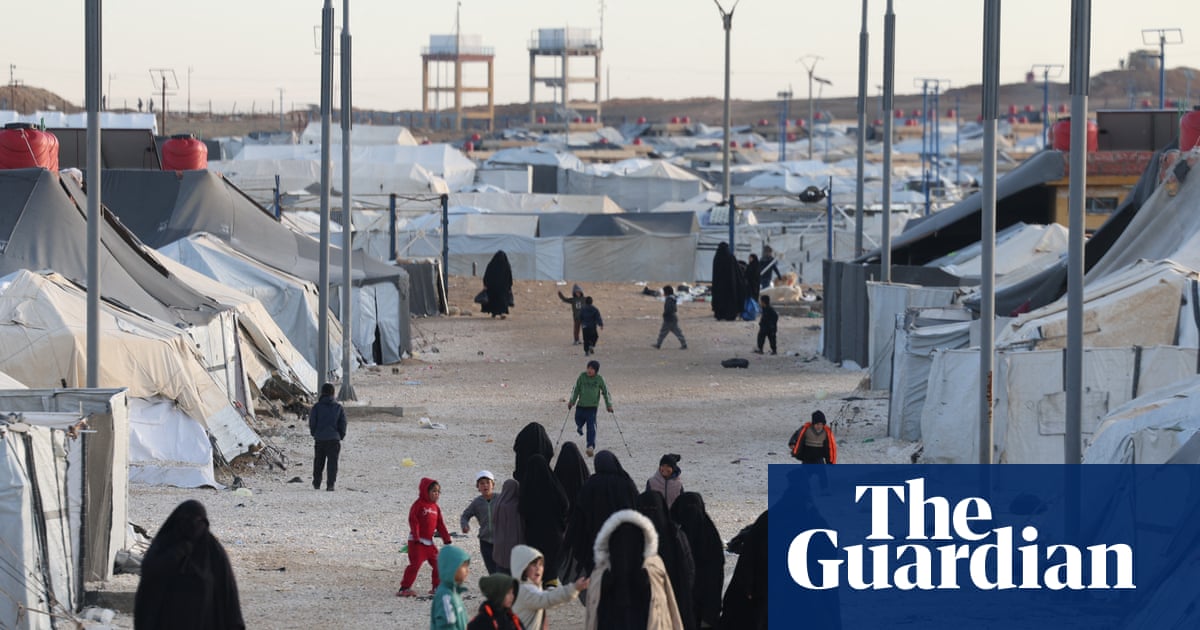
Eva’s release marked a rare instance of happiness amid what many are calling a humanitarian crisis in northern Syria. The ongoing evacuation of al-Hawl camp, where numerous women and children from over 40 countries, linked to IS, have been held for years, has left many vulnerable to exploitation in a post-conflict landscape, raising serious security concerns.
The deterioration of al-Hawl and the uncertainty surrounding the smaller al-Roj camp—where numerous Western European and Australian nationals, including Shamima Begum, who traveled to Syria from the UK at age 15, are being detained—has prompted renewed calls for governments to repatriate their citizens who have been held for extended periods without trial or charges.
“Individuals will return, regardless of governmental preferences, especially those who have managed to escape,” stated Devorah Margolin, a senior fellow at the Washington Institute for Near East Policy.
Approximately 6,000 foreign nationals, including individuals from Serbia, Bosnia, and Albania, were held at al-Hawl after the defeat of IS in 2019, with a significant number being women and children. Many have endured years in what Human Rights Watch has described as “inhuman, degrading, and life-threatening” conditions, characterized by chronic shortages of food and medicine, as well as violence from women still loyal to IS.
Margolin noted that the camp’s evacuation highlights the necessity for governments that have been hesitant or unwilling to repatriate their citizens to act decisively. “People will manage to re-enter Europe. Thus, having a proactive strategy focusing on trauma-informed care, reintegration, disengagement, along with security monitoring, is a far better security approach than allowing individuals to slip in unnoticed and ignoring the situation,” she explained. “That invites disaster.”
In addition to Dumani’s return, Belgian authorities reported the return of a woman charged in absentia for IS affiliation, who was arrested upon her arrival.
A source informed the Guardian of another woman from Western Europe who successfully smuggled herself from al-Hawl to Lebanon, where she sought assistance from her country’s embassy for repatriation. At al-Roj, over 30 Australians attempted to leave the camp to return home recently but were ultimately turned back.
In a recent interview at al-Roj, Elona Shuli, the oldest of three sisters taken to Syria as children and married to an IS fighter at the age of 13, expressed her hope for repatriation to Albania. While holding her two children, she glanced at an Albanian woman nearby. A relative later indicated that other extremist Albanian women acted as “enforcers,” attempting to keep Shuli and her younger sisters aligned with IS ideologies.
The Albanian government informed Shuli’s family that they could not facilitate her repatriation due to difficulties in locating her within al-Roj camp. The Guardian was able to locate Shuli within minutes after providing the camp administration with her name.
Despite ongoing concerns regarding IS-affiliated individuals returning, there has been scant public acknowledgment in Europe about the evolving situation in Syria.
The breakdown of al-Hawl, coupled with the uncertainty surrounding al-Roj, poses significant risks for women and children who may have to navigate a conflict zone on their own, according to Beatrice Eriksson from the rights organization Repatriate the Children. She mentioned that numerous women have reached out to their governments for assistance, often without receiving a response.
Eriksson emphasized the immediate danger facing these mothers and children, stating, “Responsible nations need to intervene now and help their citizens return home; time is of the essence. Non-state groups in Syria are keen on recruiting, coercing, and exploiting these individuals.”
Research by Human Rights Watch has found that many repatriated children have successfully reintegrated into society, though the organization cautioned that the dire conditions of their detention could lead to psychological impacts akin to torture.
While Eriksson welcomed Dumani’s return to Albania, she expressed concern that it was left to her family to secure her safety. “Eva’s uncle is truly a hero,” she remarked.
Dumani’s grandmother had previously traveled to Syria in an attempt to bring her grandchildren home but was detained and died after six years without charges. Eva was left alone after her brother was repatriated in 2020.
After her escape from al-Hawl earlier this year, Dumani walked for four hours to reach a main road, where she had arranged for smugglers to meet her and take her to Turkey, according to her uncle. Albanian officials assisted her in traveling from Turkey back to Albania.
Once reunited with her family, she finally embraced them. “We had been waiting for this moment for 12 years,” Ndregjoni said. “It was incredibly emotional when she saw her brother and mother.”
He noted that Dumani, now 20, is adapting well to her new life at home and has begun attending high school, eager to catch up on the education she missed during her detention.
Now, Ndregjoni’s attention has shifted to the approximately 25 Albanians still stranded in northern Syria. “We urge the government to bring back other children in similar circumstances; it’s crucial for their families to have their children home as well,” he stated.