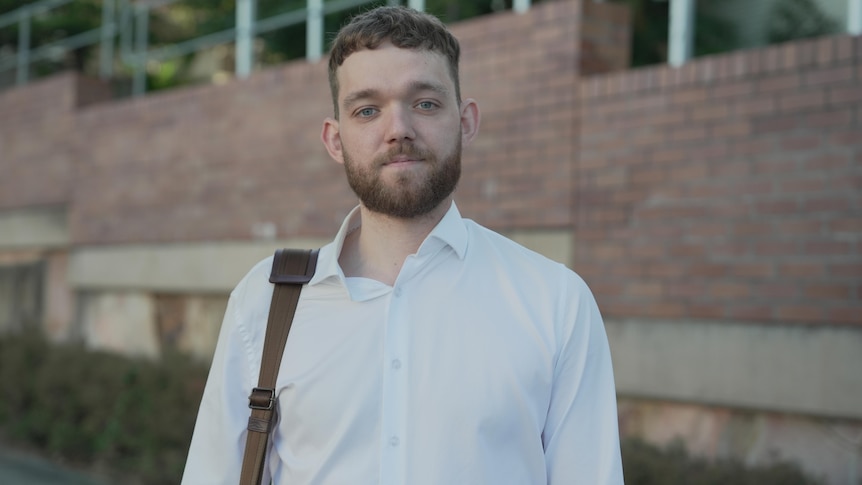

On a regular weekday, Callum Aitken begins his day by waking up, preparing for work, and walking to a bus stop in Windsor, an inner suburb of Brisbane. He then travels to his job located in the city. After work, he visits a grocery store in the central business district before boarding a bus to return home. To conclude his day, he walks to the train station, heads to his preferred bouldering gym, and finally takes a train home.
The routine of this 26-year-old lawyer may seem typical, but what distinguishes Callum from many of his fellow Brisbane residents is his choice to live completely car-free. “I previously owned a car, but the costs for servicing, insurance, and registration were becoming burdensome,” he explains. He credits the introduction of 50-cent fares for making the transition to a car-free lifestyle feasible.
Reflecting on his decision, Callum expresses relief at having sold his vehicle before fuel prices escalated. “It’s liberating not to deal with parking fees or the hassle of refueling; I can simply plan my trips around the bus schedules,” he adds.
Nevertheless, Callum recognizes that adopting a car-free lifestyle is not feasible for everyone in Brisbane, particularly for those with children or those residing in areas with limited public transport options. “Playing football on weekends has posed some challenges,” he admits. “I often rely on friends to pick me up from train stations or bus stops that are somewhat distant from the field.”
A recent study conducted by the University of Queensland involved asking ten residents who heavily depended on their cars to go without them for 20 days. The findings revealed that while completely abandoning car ownership was impractical for most, participants managed to decrease their car usage during the experiment. Associate Professor Dorina Pojani, a co-author of the study, pointed out that living car-free is primarily attainable for those in well-connected, often more expensive, residential areas. “We exist in a society where, historically, living without a car was linked to poverty, but now it has become somewhat of a privilege,” she remarked.
Dr. Pojani, who also lives car-free, highlighted the various health and financial advantages of this lifestyle. “I feel like I’m contributing positively to society by not adding another car to the roads, which helps alleviate congestion for those who need to drive more than I do,” she stated. The study, which was published in the journal Transportation in March, indicated that participants saved an average of $300 during the 20-day period. However, Dr. Pojani acknowledged that going car-free entails certain sacrifices, particularly regarding mobility. “I’ve made choices based on the availability of products or services in my suburb; if they’re not accessible, I simply forgo them,” she explained.
Evie Morris-Newell, a part-time marketing professional, has also opted not to own a vehicle for most of her nearly five years in Brisbane, although she recently purchased one. “The spontaneity and freedom that come with having a car appealed to me,” she noted. “It allows for travel at any time without the constraints of public transport schedules.” Her typical day involves a brief walk to a bus stop in Carina, followed by a 25-minute bus ride to the State Library for work, and then returning home.
Despite her recent car purchase, Evie has only utilized it twice in the past two weeks due to rising costs associated with fuel, insurance, and registration. “It certainly makes you wonder if it’s worth the expense,” she commented.
Brisbane’s public transport system, designed in a “wheel and spoke” format, complicates the prospect of living without a car. Dr. Pojani elaborated, “While some train lines connect suburbs to the CBD, inter-suburban connections are not nearly as efficient.” Nonetheless, she remains optimistic about the future. “Imagine the possibilities if we improved public transport or offered financial incentives for alternatives like bike or e-scooter sharing,” she suggested. “There are neighborhoods and cities in Europe successfully embracing car-free living, and we could certainly follow suit. In terms of progress, I believe a car-free future is achievable.”