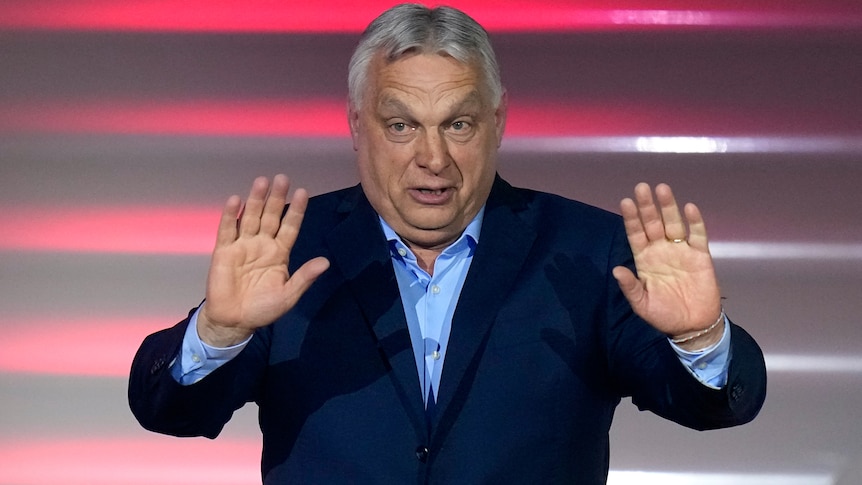

Hungarian Prime Minister Viktor Orbán has acknowledged his defeat in the recent elections.
After 16 years in leadership, Orbán stated that he would continue to support the nation from the opposition, as the centre-right Tisza party, led by Peter Magyar, appears poised to secure a supermajority in parliament.
With 46 percent of the votes counted, early results indicate that Magyar’s pro-European Union Tisza party is projected to capture 135 seats, achieving a vital two-thirds majority in the 199-member National Assembly, surpassing Orbán’s Fidesz party.
“This election outcome is difficult for us to accept, yet it is clear. The opportunity and responsibility to govern have not been granted to us. I have extended my congratulations to the victor.”
The conclusion of Orbán’s lengthy tenure carries significant consequences not only for Hungary but also for the European Union, Ukraine, and the broader international community.
This shift may signal the end of Hungary’s contentious position within the EU, potentially paving the way for the release of a €90 billion ($150 billion) loan to Ukraine, which had been previously obstructed by Orbán.
Ursula von der Leyen, President of the European Commission, praised Magyar’s win as a pivotal step for Hungary towards greater integration with Europe.
“Tonight, Europe’s heart beats stronger in Hungary,” von der Leyen expressed in a post on social media platform X. “Hungary has chosen Europe. The nation is reaffirming its European path, and the Union is becoming more robust.”