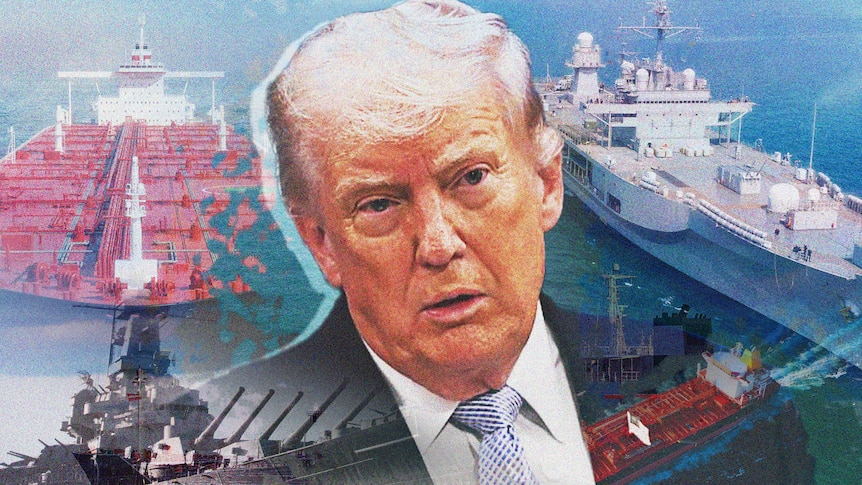

The Strait of Hormuz, a crucial maritime passage, is facing an impending blockade that will restrict all ships from accessing Iranian ports. The announcement came from US President Donald Trump, who revealed the decision on social media following a prolonged negotiation session in Pakistan with Iranian officials that lasted over 20 hours but ultimately failed to yield an agreement.
In his statement, Trump indicated that even shipping companies willing to pay toll fees to Iran for safe passage would be subjected to the blockade. “I have also directed our Navy to intercept any vessel in international waters that has paid a fee to Iran,” he stated. “No one who pays an illegal toll will enjoy safe passage on the high seas. The blockade will commence shortly and will involve other nations as well.”
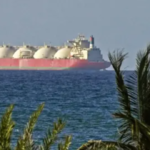
The blockade is scheduled to begin for all vessels entering and leaving Iranian ports at 10 AM US Eastern Standard Time on April 13, which corresponds to midnight on April 14, Australian Eastern Standard Time, according to a press release from US Central Command. This blockade will affect vessels from all nations seeking to navigate to or from Iranian ports and coastal regions, including those bordering the Strait of Hormuz, which connects the Persian Gulf and the Gulf of Oman.
According to the statement from Central Command, “CENTCOM forces will not obstruct the freedom of navigation for vessels transiting the Strait of Hormuz that are headed to and from non-Iranian ports.” In a post on Truth Social, Trump cited Iran’s threats to deploy sea mines in the strait as a reason for the blockade, asserting, “THIS IS WORLD EXTORTION, and leaders of nations, especially the United States, will not be extorted.” He also mentioned plans to dismantle the mines planted by Iran. “Any Iranian who attacks us or peaceful vessels will face severe consequences!”
This month, Iran’s Islamic Revolutionary Guard Corps (IRGC) declared a “danger zone” in the strait where various types of anti-ship mines had been deployed. Retired Rear Admiral Mark Montgomery, a former US naval officer, explained to ABC NewsRadio that the American military could enforce the blockade through vessel seizure operations on either side of the strait. He noted, “A more effective and less risky strategy would be to track ships as they exit the strait and conduct ‘visit, boarding, search, and seizure’ operations.”
In light of the failed ceasefire discussions with Iran, President Trump has ordered the US Navy to implement the blockade. Meanwhile, Iran’s navy chief has dismissed the blockade as “ridiculous.” Montgomery elaborated on the military’s approach, stating that it could involve the insertion of special forces and the presence of US Navy destroyers or allied ships to support the operations. “You seize the vessel and escort it to a neutral port, which minimizes risks for merchant ships,” he added.
The US military handbook on naval operations defines a blockade as a hostile act intended to prevent vessels and aircraft of any nation from entering or exiting specific ports controlled by an enemy state. While blockades are typically aimed at stopping the flow of contraband, they can also be utilized to isolate an area from international waters or airspace. Under military guidelines, blockades must be formally announced by a government authority, such as the commander-in-chief, and must include essential operational details such as the start date, geographic boundaries, and a grace period for neutral vessels to exit the area.
According to the handbook, effective blockades must be enforced by military means and apply to all nations, but they should not obstruct access to neutral ports. Furthermore, a blockade is deemed unlawful if its sole intent is to starve or deny essential resources to civilians.
In response to the escalating tensions, Iranian Foreign Minister Abbas Araqchi expressed that the conflict was “inches away” from resolution before the talks collapsed in Pakistan. He criticized the US for failing to recognize the progress made during discussions. “In high-level negotiations over 47 years, Iran engaged with the US in good faith to end hostilities,” he stated. “However, when we were close to a breakthrough, we faced maximalism and shifting demands.” Iran’s parliamentary speaker, Mohammad Bagher Ghalibaf, who led the Iranian delegation, asserted that the country would not yield to Trump’s threats. “If they choose conflict, we will respond in kind; if they approach with reason, we will reciprocate,” he said, as reported by various Iranian news outlets. “We will not succumb to intimidation. Let them test our resolve once more so we can teach them a larger lesson.”
Prime Minister Anthony Albanese remarked this morning that Australia had not received any requests from the US regarding participation in the blockade.