
In front of the new V&A outpost located in east London, a striking five-meter sculpture captures attention. This piece, designed by Thomas J Price, features an indistinct young figure gazing out over the historic Olympic Park. The sculpture is intentionally generic, combining “images, 3D scans, and observations” from local individuals, which reflects the essence of youth in east London. However, by blending individual characteristics into a singular form, it may unintentionally convey a mixed message.
The underlying principle of aggregating data to reveal commonalities is reminiscent of algorithmic logic. This raises concerns that the museum might rely on predictive models to anticipate visitor preferences, potentially steering them towards familiar choices while avoiding differing viewpoints. Nevertheless, upon stepping inside the museum, one discovers a much richer and more inclusive representation of cultural intersections than first impressions might suggest.
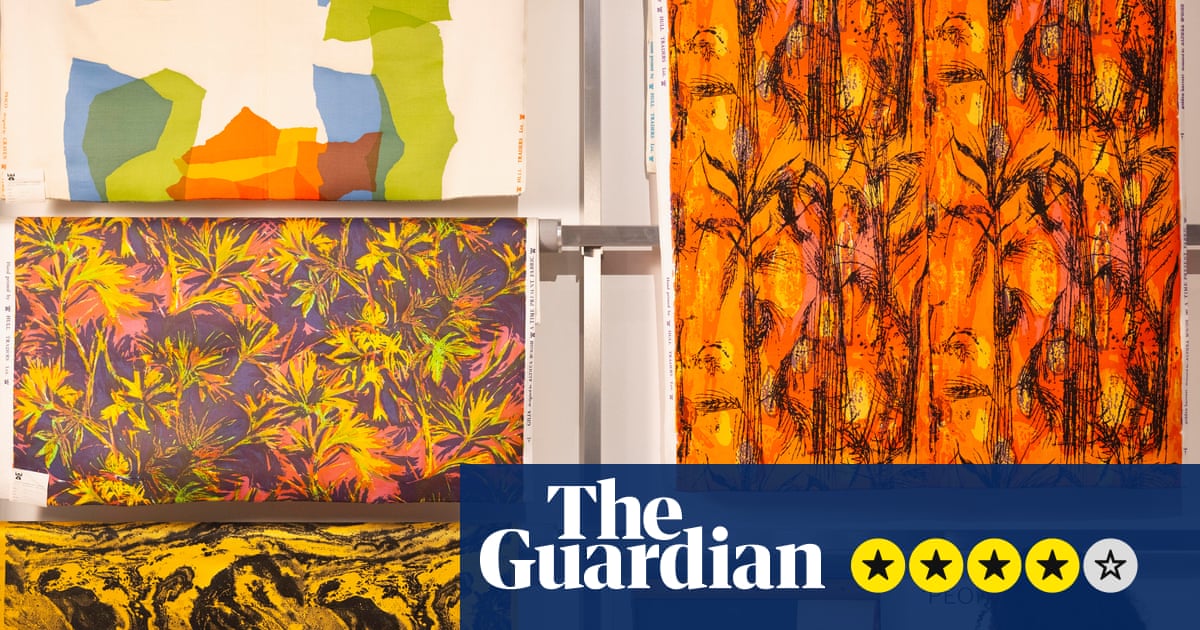
The inaugural gallery is a vibrant showcase. It features a dynamic constructivist rug by Eileen Gray, which harmonizes with punk-inspired designs by Derek Jarman and eclectic pieces from Vivienne Westwood and Rei Kawakubo. However, the highlight is undoubtedly Althea McNish’s stunning printed textiles, which illustrate how she impacted postwar British aesthetics through mass production. Her work, infused with the colors of her native Trinidad, exemplifies how diversity not only enriches culture but also helps define it.
Additional themes become apparent as the exhibition unfolds. The juxtaposition of a painted Japanese screen depicting early European sailors alongside a textile celebrating the 2011 Egyptian revolution indicates a focus on colonial history and imperial violence—issues that resonate throughout the V&A’s collection. A segment exploring William Morris’s connection to Walthamstow reinforces the idea of linking artifacts to their local origins. Similar to McNish, who created fabric designs for British Rail and Liberty, Morris demonstrated how integrating art into daily life could enhance communal living conditions.
The impact of our environments on well-being is illustrated by a gracefully designed wooden armchair from a sanatorium by Alvar Aalto, while a remarkable shirt adorned with the full text of the Qur’an highlights how everyday objects can possess restorative qualities. A unique model for a “life-extending villa” by Arakawa and Gins reimagines residential spaces as dynamic environments that encourage mobility, mirroring a curatorial strategy that invites visitors to navigate their own experiences and connections. While not every aspect may resonate, the underlying philosophy is commendable.
The museum’s true significance lies in its role within the local community. As a resident of Hackney, I can confirm that the area is teeming with creatives who actively celebrate their artistry. However, beyond the promotional language, it becomes evident that the curators do not view the establishment of a new museum as the sole catalyst for cultural emergence. Instead, they present it as a resource, a collaborative repository of ideas and inspirations for aspiring artists and designers to draw from.
For instance, a shirt crafted from salmon skins by a Nivkh artisan could spark innovative ideas in sustainable fashion, while a photomontage by Claude Cahun might encourage young individuals constrained by societal labels. The most valuable asset for those seeking to shape the future is, after all, historical context. A bamboo dwelling designed by Indonesian firm Ibuku exemplifies how contemporary designers are revisiting traditions that were suppressed during modernization, fostering a renewed understanding of our connections with each other and the environment.
As visitors enter “The Music Is Black: A British Story,” the museum’s first temporary exhibition, they are provided with headphones that respond to their movements, guiding them through a maze of multimedia art and artifacts tied to the music they reflect. This ambitious endeavor aims to trace the diverse musical cultures arising from the traumatic displacement of African peoples through the slave trade. However, the vast scope of this project inevitably presents challenges. Within this overarching narrative of Black music lie the foundations for numerous future exhibitions, ranging from the rise of grime in the early 2000s to the 2 Tone movement and the anti-racist activism of the late 1970s.
This foundational approach appears to be intentional—“The Music Is Black” sets a precedent for exhibitions at the V&A. It tells a story that is relevant to the museum’s own colonial past, using the cultural expressions that both stem from and challenge that legacy. The interplay of stirring music with contextual insights offers a complexity that arises when both emotional and intellectual engagement are required of the audience.
The exhibition does not aim to reconcile the atrocities of the slave trade or the racism faced by Black Britons with the music born from those experiences. Instead, it invites visitors to hold both realities simultaneously, encouraging reflection on music’s capacity to articulate suffering while also eliciting joy.
V&A East in London is set to open on April 18.