
By Professor Samitha Hettige
Finance Minister J.R. Jayawardena, known as JRJ, was 45 years old when he advocated for Japan’s pardon during the 1951 San Francisco Peace Conference. Little did he know that 27 years later, Japan would honor him by contributing to the establishment of the Sri Jayawardenepura General Hospital (SJGH), which features 1001 beds. At the hospital’s inauguration, journalists were intrigued by the significance of the 1001 beds. President JRJ humorously explained that 1000 beds were designated for the public, while one was reserved for himself, which became known as the ‘Presidential Suite.’ Despite never utilizing this suite and passing away at a private hospital in Colombo at the age of 90, SJGH has captured public attention on several occasions. Its location near parliament allowed for prompt medical assistance to those injured in the grenade attack on parliament (according to Nihal Seneviratna). There were concerns that clear instructions were not given to the helicopter transporting Lt. Gen. Denzil Kobbekaduwa after the deadly bombing, potentially delaying his medical care. Recently, President AKD instructed officials to make the Presidential Suite available for public use (as reported by the media). While political critics may oppose this move, it is likely to be appreciated by ordinary citizens, particularly seniors who often face difficulties finding beds in public hospitals, viewing this decision as commendable.
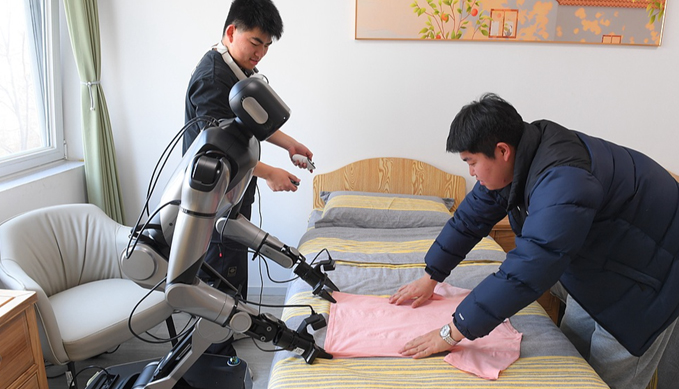
In another development, China, which suffered significant losses during the Japanese occupation in 1945, contributed South Asia’s largest kidney hospital in Polonnaruwa during President Sirisena’s administration. With China’s economic reforms, foreign investors can now establish private hospitals in the country. Furthering its advancements in healthcare, China recently unveiled the world’s first smart elder-care service robot station in Beijing. This innovative facility aims to demonstrate how technology can enhance daily life and care for the elderly.
The four-story center, covering approximately 1100 square meters, offers essential elder-care services through over 40 types of robots designed to assist senior citizens with dining, leisure, healthcare, and rehabilitation. Among its features is a pancake-making robot, which holds a food service license and can whip up fresh pancakes in minutes, while cooking robots prepare meals according to specific standards. Delivery robots facilitate a largely automated dining experience by navigating between tables. One floor is dedicated to family interactions, allowing grandchildren to play with robots, blending education with entertainment during visits with their grandparents. The most frequented area houses the health and recreation center, where a reception robot guides visitors to rehabilitation and wellness services. Robots in the therapy sector are actively engaged in providing physical rehabilitation equipment and health monitoring.
Additionally, Moxibustion therapy robots identify acupuncture points and regulate temperature to prevent burns. Health-testing devices monitor various health indicators, while exoskeleton robots assist seniors in performing movements and rehabilitation exercises. Residents live in model apartments equipped with smart wheelchairs, companion robots, and features designed for senior comfort, such as barrier-free layouts and anti-slip flooring, alongside intelligent monitoring systems. The center aims to accommodate thousands of locals, with a daily capacity exceeding 300 visitors (as reported by Chinese media). As elder care becomes an increasingly vital social requirement, Sri Lankans can look forward to leveraging recent advancements to benefit from the ‘Silver Economy’ associated with the Belt and Road Initiative that connects Sri Lanka to global trade.
(The views expressed are personal. Photo source: www)
Financial Chronicle Biz English | Sri Lanka Business News.