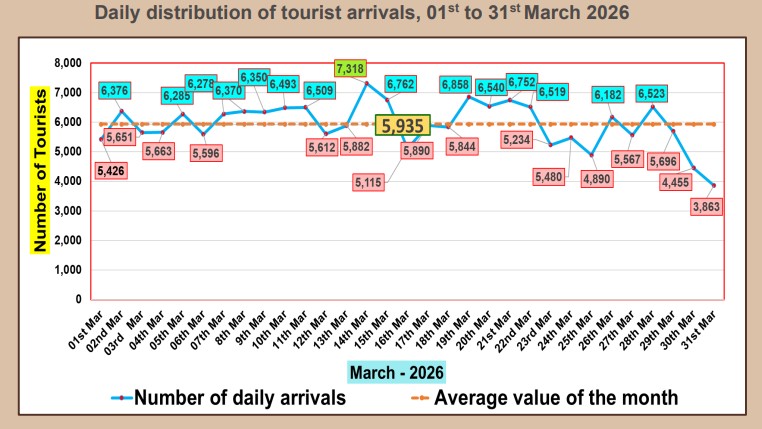

FINANCIAL CHRONICLE – In March 2026, Sri Lanka experienced a significant decline in tourist arrivals, with numbers dropping by 19.7% compared to the same month the previous year, as reported by official statistics. The increase in tensions in the Middle East has adversely affected tourism during the peak season for the island nation.
According to the data, total tourist arrivals for March fell to 183,979, down from 229,298 in March 2025. The average daily arrivals also saw a sharp decrease of 40.5%, declining to 5,935 from 9,976 in the preceding month, as indicated by the Sri Lanka Tourism Development Authority.
Despite this setback, the first quarter of 2026 recorded a modest increase of 2.5% in arrivals, totaling 740,634. Sri Lanka aims to attract 3 million tourists this year, following a missed target in the previous year.
Travelers, particularly from Western countries, are increasingly hesitant to visit Sri Lanka due to the ongoing instability in the Middle East, even though the conflicts are geographically distant from Colombo. Analysts warn that the escalating tensions in the region pose a serious threat to Sri Lanka’s tourism sector, a crucial component of the nation’s economic recovery post-crisis.
The Gulf region, with major transit hubs like Dubai, Doha, and Abu Dhabi, is vital for over 60% of high-spending tourists arriving from Europe and North America. Recent disruptions, such as the sudden closure of Iranian and Iraqi airspace and the suspension of flights by major airlines including Emirates, Qatar Airways, and Etihad due to safety issues, have created challenges for travelers heading to the island.
For potential tourists in cities like London or Berlin, what was once an 11-hour flight with convenient connections is now subject to delays or complicated rerouting, leading to numerous cancellations during what was anticipated to be a record winter season.
The ongoing regional tensions not only complicate travel logistics but also deter high-spending visitors. Tourists from the Middle East, particularly from Saudi Arabia and the UAE, form a valuable market for Sri Lanka’s luxury accommodations and wellness retreats. During periods of conflict, these travelers are likely to stay closer to home or choose safer, shorter destinations.
Moreover, the global perception of instability in the Middle East can negatively impact tourism in Sri Lanka. Even though the nation is far removed from conflict zones, Western travelers often view the Indian Ocean and surrounding areas as a single risk zone, leading to decreased arrivals despite the actual safety conditions in places like Colombo and Galle.
The economic repercussions of a downturn in tourism are immediate and significant. As a vital source of foreign exchange, tourism contributes crucial income daily. A decrease in arrivals results in lower hotel occupancy rates, diminished earnings for tour operators, and a setback in the non-food inflation relief that the country had begun to experience.
If the tourism industry, which ranks as the third-largest foreign exchange contributor in Sri Lanka, suffers due to ongoing conflicts in the Middle East, the government may struggle to maintain the stability of the Rupee and finance essential imports, potentially pushing the nation back into a cycle of scarcity and rising prices. (Colombo/April 2/2026)