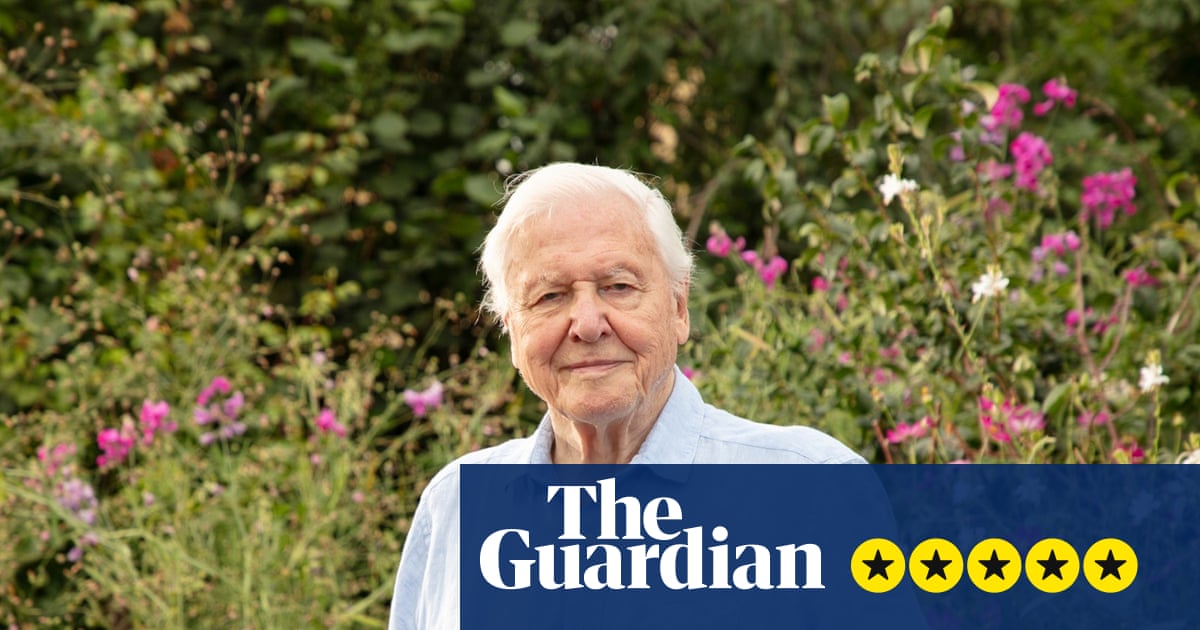

As David Attenborough approaches his 100th birthday, he has chosen to take a step back, remaining at home during this special year filled with natural history marvels. Amidst the English countryside, he meanders past a shed, remarking on the enchanting locations found across the British Isles. “Our gardens!” he quietly exclaims, surrounded by vibrant purple alliums.
The premise of “Secret Garden” is to utilize the advanced high-resolution cameras and meticulous filming techniques typically reserved for remote rainforests or the African savannah to explore the wildlife that exists in British backyards. Attenborough notes, “Many of us are completely unaware of the wild world right under our noses,” highlighting that some gardens in Britain boast biodiversity comparable to that of tropical rainforests.
However, not all gardens exhibit such diversity. While one future episode will delve into the lives of urban foxes and hedgehogs, much of the series focuses on the top-tier gardens in the UK, beginning with a picturesque island on a river in Oxfordshire. The owners of a stunning mill house, Sara and Henry, are embraced by water on three sides and a magnificent garden on the fourth, with two-thirds of it left in a natural state due to frequent flooding.
The house and its surroundings paint a charming picture of historic England, rich with delightful wildlife. Despite the familiarity of the featured animals, the show reveals the thrilling narratives of predation, survival, and reproduction that viewers have come to expect from Attenborough’s documentaries set in Africa or Asia. There is indeed a vibrant ecosystem thriving just beyond the grassy banks.
The kingfisher eventually finds a mate, and in a stunning scene of the duo in flight, Sara can be seen mowing the lawn in the background. Both Sara and Henry frequently appear as supporting figures in the narrative, underscoring the proximity of wildlife to contemporary life. When Sara throws a handful of seeds into a bird feeder, the few that fall to the ground attract a curious bank vole, which must navigate through grass that may conceal a lurking grass snake.
The most formidable predator in this habitat, akin to the lion or crocodile of Oxfordshire, is the otter. It resides in an area beneath the room where Sara and Henry watch television, with a keen interest in capturing their friend Doris, a mallard.
As male mallards compete for Doris’s attention, their lively quacking and splashing in the river occur while Henry casually tends to his garden in the background. The parallel activities of Henry and Doris continue as she raises nine ducklings in a hollow willow tree. As she leads her young ones on a daunting leap to the ground, Henry can be seen with a rake, oblivious to the drama unfolding.
Henry is absent when the otter makes its appearance, just as Doris and her vulnerable ducklings swim across the river. However, Doris’s clever escape strategy, which ensures her offspring remain safe, is executed with grace and simplicity, contrasting with the more dramatic parent protection scenes often depicted in nature documentaries.
As the summer holiday sun prompts a mayfly nymph to emerge from the river, shed its skin twice, and evade a damsel fly to join other mayflies on land, the stunning visuals captured by “Secret Garden” are almost surreal. Hundreds of glistening mayflies dance in the warm light, set against the backdrop of festive bunting and delicious Victoria sponges, as Sara and Henry host a delightful garden party for friends. While we may stay at home, the experience feels like an escape into nature.
“Secret Garden” premiered on BBC One and is currently available for streaming on BBC iPlayer.