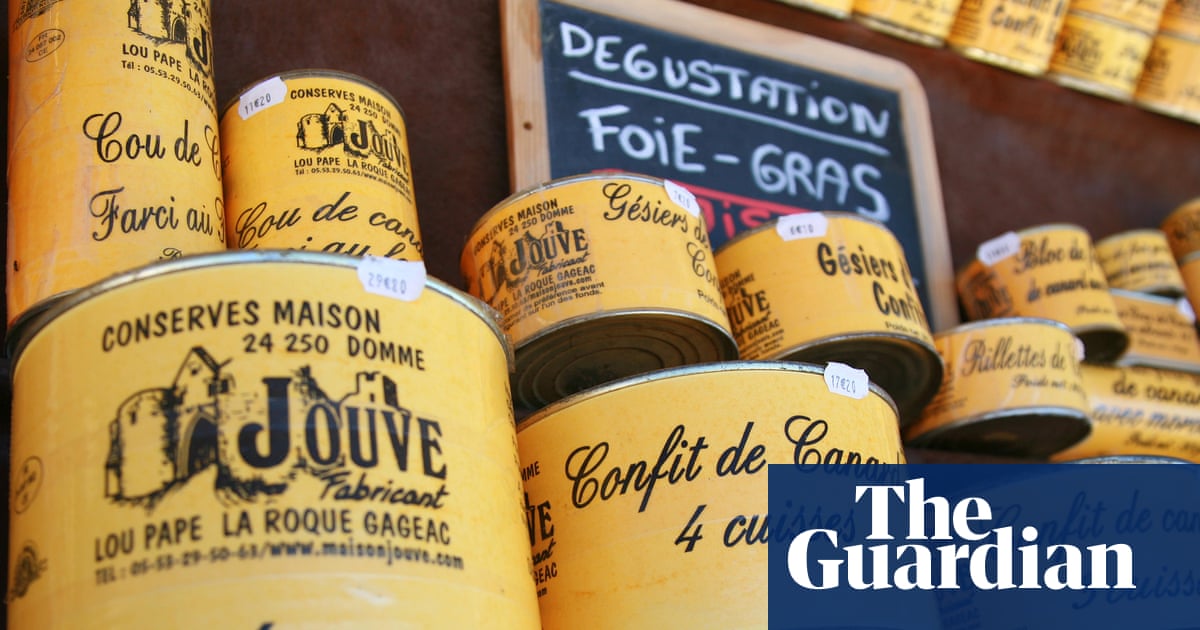

The government has decided to abandon its pledge to prohibit the import of foie gras and has also chosen not to impose restrictions on fur imports, following stipulations set by the European Union in ongoing trade negotiations.
Animal welfare organizations have expressed their profound disappointment, highlighting that the government is not utilizing the powers afforded by Brexit to limit the importation of these “inhumane” products.
Insiders involved in the UK-EU negotiations revealed that the government was willing to forgo the foie gras import ban, prioritizing other issues such as the precision breeding of crops, which officials believe could have a greater positive impact on the economy compared to a ban on foie gras and fur imports.
The recent animal welfare plan released by the government notably omitted any reference to a ban on foie gras. Additionally, the government published its response to a consultation regarding fur imports at the end of last month, where 97% of participants indicated that it is unethical to kill animals for their fur and supported a ban. Despite this overwhelming consensus, the government refrained from committing to any import restrictions and instead announced the formation of a working group to evaluate the fur industry.
Fur farming has been prohibited in the UK since 2000, and the production of foie gras has been illegal since 2006. Nevertheless, both products continue to be imported primarily from EU nations and are available in various retail outlets and restaurants throughout the UK.
Before the election, Steve Reed, the then shadow environment secretary, asserted that the Labour Party would implement a ban on the commercial import of foie gras, which is produced through the force-feeding of ducks and geese to enlarge their livers in a process known as gavage.
Under EU regulations, member states cannot prohibit each other’s products on animal welfare grounds. Since exiting the EU, the UK has had the autonomy to restrict imports but has yet to utilize this power. As a new trade agreement is anticipated to be finalized in the autumn, the UK will require an exemption from EU law to impose such bans.
David Bowles, the RSPCA’s head of public affairs, stated, “Every animal deserves a life free from suffering. We are deeply disappointed that the government has not acted to prohibit the sale and import of fur. We appreciate the establishment of the round table to explore next steps. However, more decisive actions are necessary to eliminate the fur trade in the UK, especially as Europe seems to be moving toward licensing fur farms.”
Alexis Gauthier, a restaurateur in Soho, London, criticized the government’s decision, labeling foie gras as an “atrocious product.” He remarked, “Disregarding this vital animal welfare commitment and placing the blame on the EU exemplifies the government’s disjointed policy and lack of integrity.” Gauthier, who once imported foie gras but turned vegan following protests from Peta, now offers a plant-based alternative called “faux gras” made from mushrooms, lentils, walnuts, and cognac, claiming it satisfies the cravings of foie gras enthusiasts.
Fur farms have faced severe backlash for their treatment of animals, which are often kept in cramped conditions.
Claire Bass, director of campaigns at Humane World For Animals UK, emphasized, “The previous Labour administration prohibited fur farming in the UK over 20 years ago. Allowing the UK market to rely on imported fur produced through inhumane farming practices has no place in our trade relations with the EU or anywhere else.”
Bowles reiterated, “The UK government must uphold its promise to end the import of this cruel product. High standards for animal welfare should not be compromised for the sake of trade agreements, and we urge officials to clarify and fulfill this commitment without delay.”
While some restaurants still serve foie gras in the UK, many retailers, including Fortnum and Mason, known as the king’s grocer, removed it from their offerings in 2021.
Former Prime Minister Boris Johnson’s Conservative government had intentions to ban imports of both fur and foie gras, leveraging “Brexit freedoms,” but these plans were abandoned after backlash from Conservative MPs concerned about losing access to favored products.
A representative from the Department for Environment, Food and Rural Affairs stated, “We take pride in having some of the highest animal welfare standards globally, which has led to a ban on fur farming in the UK for two decades. We welcome the release of our expert Animal Welfare Committee’s report regarding the responsible sourcing of fur, which fulfills a key promise from the government’s leading animal welfare strategy.”