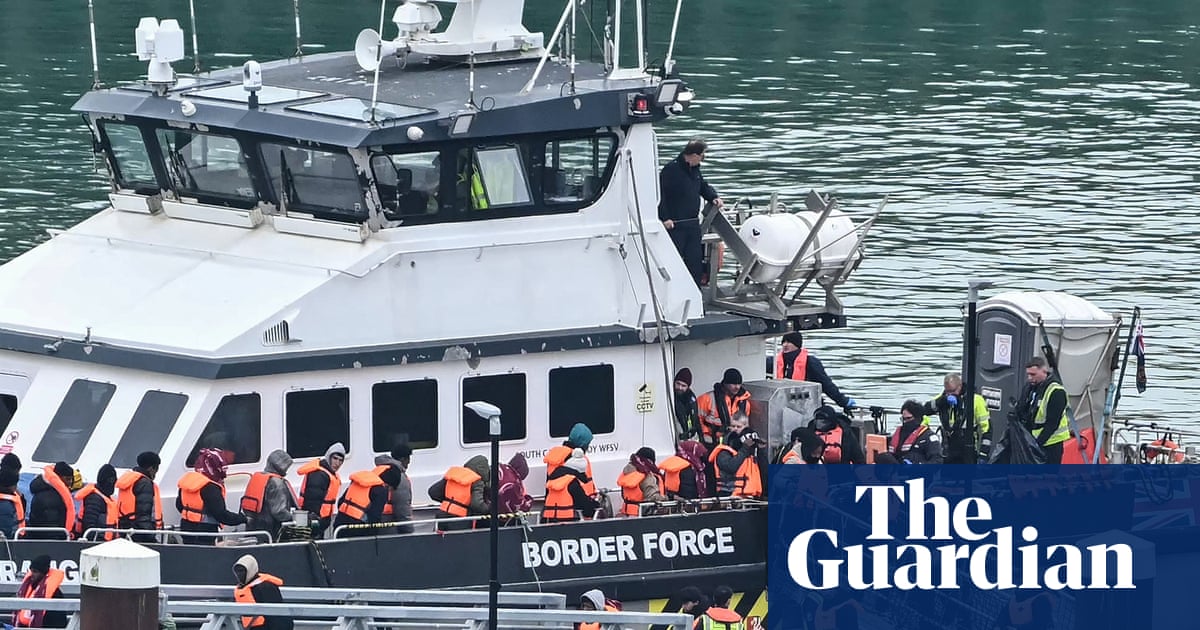

Research indicates that over 70 children from various conflict-affected regions, whose ages have been questioned by the Home Office, are currently being held in detention centers across the UK. This situation arises as part of the government’s “one in, one out” policy, which prepares for the forced repatriation of these minors to France.
The “one in, one out” strategy allows for the forcible return of individuals arriving in small boats to France, with the condition that one legally recognized asylum seeker, who has not attempted the crossing, is brought to the UK instead.
However, the detention of unaccompanied child asylum seekers in adult facilities is illegal. Data compiled by the Humans for Rights Network since the implementation of this removal scheme last September has revealed that 76 children, classified as age-disputed, have been detained.
Maddie Harris from the Humans for Rights Network stated, “Many of these children have survived torture and trafficking, and their mental health is suffering significantly due to prolonged detention in the UK.” She emphasized the barriers these children face in accessing the necessary care and support, as well as proper local authority age assessments conducted by social workers. “No child should be in detention; those currently held should be released immediately to facilitate their recovery and to ensure they can undergo community-based age assessments if needed,” she urged.
The assessment of age for young asylum seekers is a contentious issue. Freedom of information requests directed at local authority children’s services have revealed that numerous individuals initially classified as adults by the Home Office upon arrival were later found to be children after social worker evaluations. Notably, one child who was sent back to France as an adult was later reassessed and recognized as a minor by social workers.
Of the 76 detained children, 26 have been released and are now under the care of children’s social services, where they are either being assessed or have already been confirmed as children. Eleven others have been released into adult accommodations while awaiting age assessments, and 13 have been repatriated to France. This cohort includes many individuals from conflict zones, particularly a significant number of Eritreans, Sudanese, and Afghans.
Since its inception, the “one in, one out” policy has reportedly led to the forced return of over 400 individuals who arrived in the UK via small boats. In exchange, a similar number of asylum seekers, who did not attempt the dangerous crossing, have been brought to the UK through legal means. The independent chief inspector of borders and immigration has called for an investigation into this returns program.
On March 25, a high court ruling temporarily halted the removal of two age-disputed children to France under this scheme. Elizabeth Cole, a solicitor from Duncan Lewis representing one of the affected minors, expressed relief at the cancellation of the removal, stating, “The Home Office’s position that a child’s age does not need to be established before removal is deeply troubling and deserves thorough judicial examination. Children are an especially vulnerable population, and we hope this ruling will lead the Home Office to reconsider its approach to removing disputed minors to France, mitigating the inevitable distress and harm that would follow.”
Some asylum seekers who were removed the day after this court hearing have reported injuries allegedly caused by guards during the removal process. Claims include loose front teeth, scratched arms, swollen hands, and a foot injury that necessitated the use of a surgical boot.
In response, Home Office sources indicated that reasonable and proportionate force may regrettably have to be used when individuals resist or refuse to comply, ensuring safety during their removal or while detained.
A spokesperson for the Home Office remarked, “This government is committed to addressing small boat crossings. Since the election, we have prevented over 42,000 illegal migrants from attempting to cross the Channel and have removed or deported nearly 60,000 individuals residing here unlawfully. We are focused on further reducing the incentives for illegal migration to the UK and enhancing the removal and deportation processes for those without the right to remain.”