
In 1971, Manolo Blahnik made his debut in the world of shoemaking by designing footwear for Ossie Clark’s fashion show in London. As a relatively inexperienced designer, he overlooked the inclusion of steel pins in the heels, resulting in models struggling to maintain their balance on the runway. Initially fearing that this blunder would spell the end of his career, Blahnik was surprised when the press interpreted the mishap as a creative statement. Renowned photographer Sir Cecil Beaton even described it as “a new way of walking.”
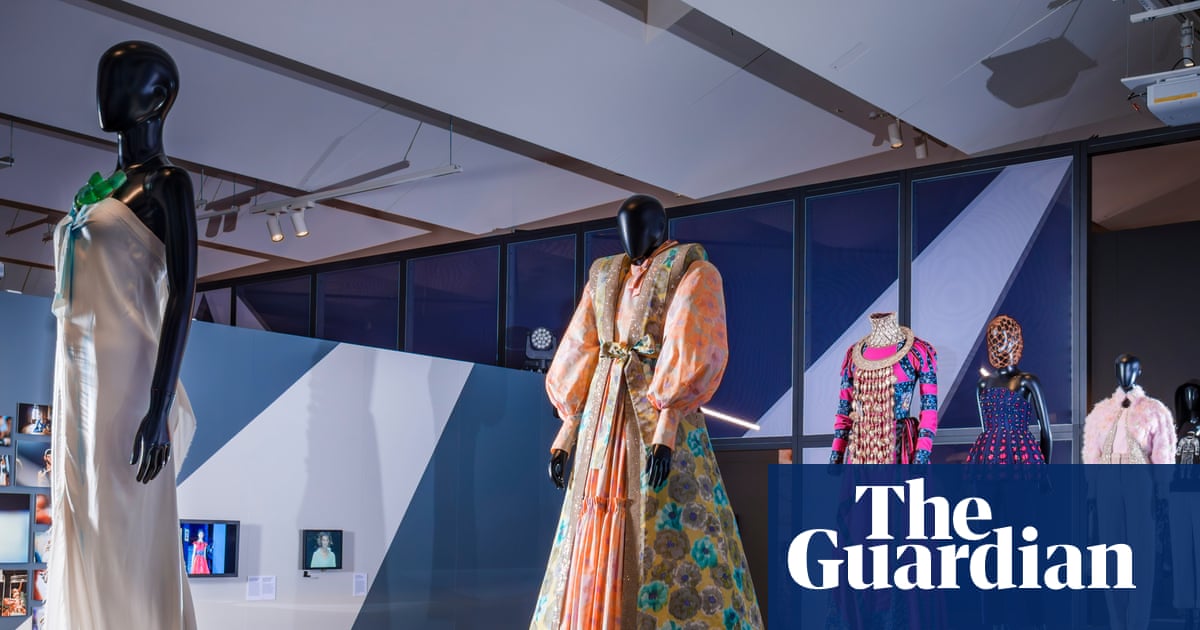
One of the featured pieces in the Victoria and Albert Museum’s Dundee exhibition, titled “Catwalk: The Art of the Fashion Show,” is a striking green suede sandal adorned with ivy leaf details. This exhibition highlights over a century of fashion history, tracing its evolution from the modest salons of 19th-century London and Paris to today’s grandiose presentations.
Leonie Bell, the museum’s director, remarked, “The fashion show impacts everything we wear and purchase, and we aim to illustrate that influence.” The exhibition, which previously ran at the Vitra Design Museum in Germany until February, has found a meaningful new venue in Dundee. Bell emphasized Scotland’s historical significance in the realm of fashion shows, citing events such as the 1938 fashion show at Bellahouston Park in Glasgow and two shows held by Dior in Scotland in 1955.
Among the exhibition’s highlights is a vibrant orange and white dress from Glaswegian designer Christopher Kane’s inaugural collection at London Fashion Week in 2007. This is particularly timely as Kane has recently been appointed creative director of Mulberry. Additionally, there is a dramatic “queen of hearts” style gown by Charles Jeffrey Loverboy and a tartan kilt paired with a Fair Isle sweater from Jamaican-Scottish designer Nicholas Daley.
The exhibition begins its narrative in the 1850s with the introduction of “mannequins vivants” (living mannequins), utilized by fashion houses such as Worth, Lucille, and Paquin to showcase their designs to affluent women. Over the following century, the role of models and the catwalk solidified as the primary platforms for fashion presentations. Co-curator Svetlana Panova noted that by the 20th century, shows transitioned from private salons to public venues, such as gardens and ocean liners, thereby transforming them into effective marketing tools.
The rise of ready-to-wear fashion in the 1950s and 60s further shifted the dynamics of catwalk presentations. The rigid movements associated with haute couture gave way to models energetically strutting down the runway to lively music, exemplified by Paco Rabanne’s avant-garde metal mirror dress and Mary Quant’s burgundy vinyl raincoat, both of which are on display.
The exhibition also features a multimedia component, showcasing pivotal moments in modern fashion shows. It highlights the evolution into immersive experiences characterized by dramatic staging, celebrity attendees, and elaborate spectacles that are broadcasted live via social media.
This transformation gained momentum in the late 1980s, coinciding with the emergence of luxury conglomerates. Panova explained that fashion houses became integral parts of larger asset portfolios, leading to an emphasis on brand fantasy and marketing. The exhibition captures this evolution through footage from Karl Lagerfeld’s autumn/winter 2018 Chanel show, where a custom-built rocket launched in the Grand Palais in Paris. Accompanying this display are models of the show’s set and other props from Lagerfeld’s theatrical presentations, including a Chanel-branded megaphone used in a feminist-themed spring/summer 2015 show.
Today, every aspect of a fashion show, including invitations, is meticulously crafted. The exhibition features Lacoste’s autumn/winter 2024 invitation made from tennis net, Jonathan Anderson’s recent Dior collarette, and a weathered wallet that served as an invitation to a Balenciaga show during Demna Gvasalia’s tenure as its innovative creative director.
Among the displays is a virtual reality setup from Gvasalia’s December 2020 pandemic show, accompanied by a vintage envelope that emits a scent designed to evoke thoughts of archives and the unsettling aspects of the fashion industry.
While the world of fashion shows may seem exclusive, the “Catwalk” exhibition presents a more inclusive perspective. This is particularly evident in the centerpiece of the exhibition, which delves into the behind-the-scenes chaos through the tools of renowned makeup artist Val Garland and hairstylist Sam McKnight. Mannequin heads showcase the eclectic wigs McKnight created for Vivienne Westwood’s collections. Bell highlights the collaborative nature of the fashion industry, stating, “No one works in isolation; designers collaborate with makeup artists, photographers, and other professionals to bring their visions to life.”
By exploring the progression of fashion, “Catwalk” offers a comprehensive view of the industry’s rich history and its ongoing evolution.