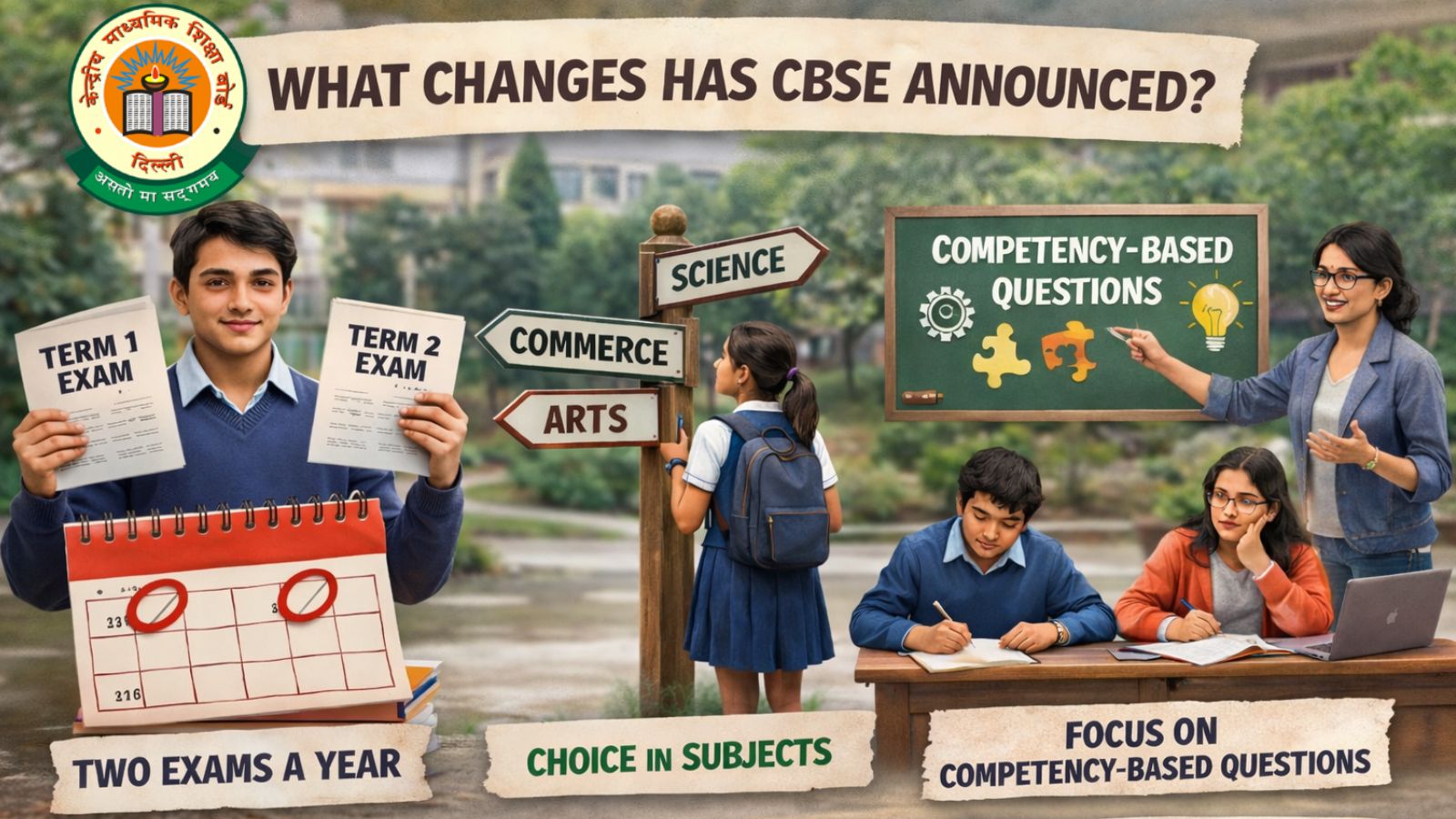

In recent years, the Central Board of Secondary Education (CBSE) has implemented a series of comprehensive reforms that extend beyond traditional exam adjustments. Beginning in early 2026, the board adopted on-screen evaluation for Class 12 answer sheets and enhanced its digital infrastructure through initiatives like DigiLocker and the APAAR ID system. Additionally, the promotion of multilingual education in line with the national education policy has been formally integrated into affiliated schools. The board has also established psychosocial counseling support as a key initiative, reflecting a commitment to restructuring educational administration rather than merely revising testing methods.
Moreover, the scheduling of examinations has undergone significant changes, particularly with the introduction of two board exams for Class 10 starting in 2026. The first phase of results is expected to be released as early as April, benefitting from the expanded digital evaluation systems, which positions the board to announce outcomes sooner than in previous years. These modifications aim to alleviate exam-related stress, streamline the evaluation process, and ensure alignment with the National Education Policy (NEP).
Below is a summary of the major changes CBSE has introduced over the past few years:
The most notable reform will take effect in 2026, introducing a dual-exam system for Class 10 board examinations. As outlined in a notification from June of the previous year, students will sit for phase 1 exams from February 17 to March 6, 2026. An optional second phase will be available from May 5 to May 20, allowing students to enhance their scores in up to three subjects. The better score from either attempt will be considered final.
The policy also sets specific eligibility criteria. Students who are absent for three or more subjects in phase 1 will not be eligible to participate in phase 2. Conversely, those who take compartment exams in phase 1 may use the second phase as a supplementary opportunity. Internal assessments will continue to be conducted annually.
While Class 12 currently follows a single-exam format, CBSE has indicated plans to adopt a similar dual-exam system in future academic cycles.
In conjunction with exam restructuring, CBSE has enhanced the on-screen marking process for Class 12 answer sheets, moving towards a fully digital evaluation system in certain workflows. Results from phase 1 will be accessible via DigiLocker, facilitating Class 11 admissions without needing to wait for phase 2 results.
The board has also initiated psychosocial counseling programs starting January 2026, highlighting a commitment to student well-being amid the newly introduced exam flexibility.
Additionally, CBSE has released a revised curriculum framework for upcoming academic years, which includes changes to language policy and subject requirements at the secondary level. As part of this framework, a third language will become mandatory from Class 6, in accordance with the NEP 2020, requiring students to study at least two Indian languages under a three-language formula.
This implementation will occur gradually, with plans for the third language to be included in the Class 10 board examination structure by 2031.
The new curriculum also mandates vocational education, art education, and physical education for Classes 9 and 10. Vocational education will transition to being a subject assessed through board or annual examinations starting in the 2027–28 academic year, while other subjects will continue to be evaluated internally.
Furthermore, CBSE has broadened the range of subject options available, including all scheduled Indian languages and has outlined a comprehensive restructuring of secondary-level education to emphasize competency-based and multidisciplinary approaches.
From the last academic year, CBSE has made skill education compulsory for Classes 6 to 8, requiring schools to establish Composite Skill Labs and incorporate vocational training into their curriculum. This aligns with the overarching goal of promoting applied learning and early skills exposure in accordance with national education policies.
At the senior secondary level, new vocational electives such as Land Transportation Associate, Electronics and Hardware, Design Thinking and Innovation, and Physical Activity Trainer have been introduced, providing greater subject flexibility for students in computer-oriented streams.
In October of the previous year, CBSE, in collaboration with the Ministry of Education, announced a framework for integrating Artificial Intelligence (AI) and Computational Thinking (CT) into the curriculum for Classes 3 to 8, set to be implemented starting in the 2026–27 academic year. This framework aims to incorporate computational thinking concepts in early education, with a more structured AI curriculum introduced in middle school, supported by NCERT-developed learning materials and teacher training resources.
In April 2024, CBSE increased the proportion of competency-based questions (CBQs) to 50% for both Class 10 and Class 12 board exams. This change marked a significant shift in exam design, particularly for Class 12, where the weight of long and short answer questions was reduced to 30% from the previous 50%. Objective-type questions will continue to represent 20% of the exam structure.
The same academic year also saw the introduction of new NCERT textbooks for Classes 3 and 6, aligned with the National Curriculum Framework for School Education (NCF-SE) 2023. Schools have been instructed to phase out older editions for these classes while continuing to use the rationalized textbooks introduced in 2022 for other grades.
A bridge course has been established to facilitate the transition for Class 6 students entering the revised curriculum structure, further supporting educational continuity during this period of change.