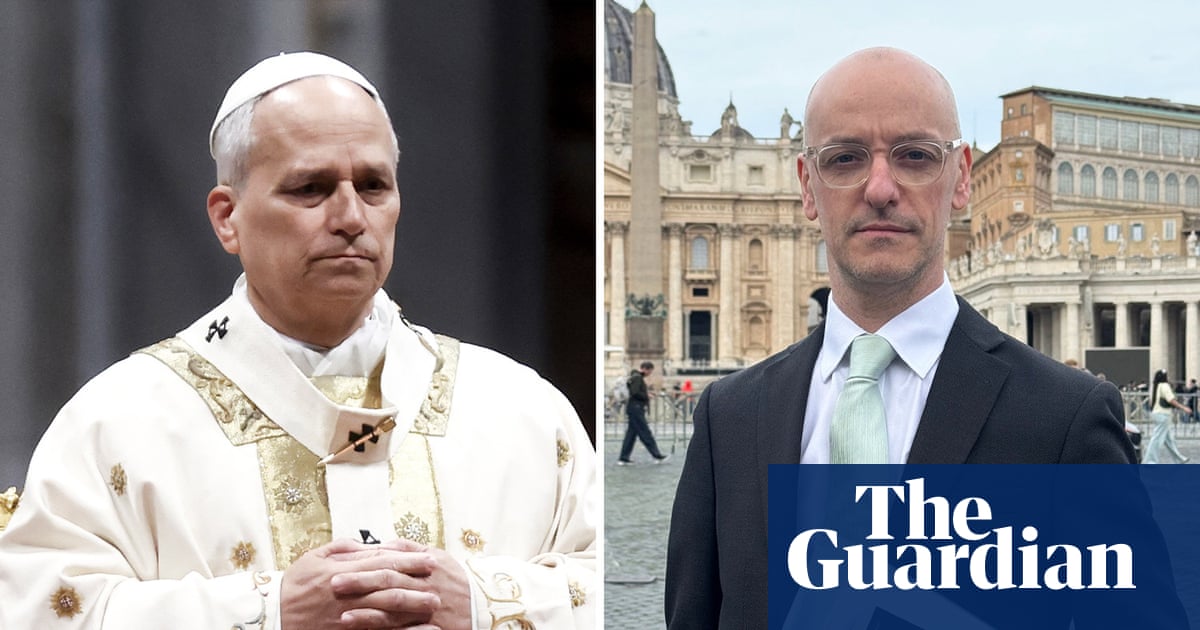

Earlier this year, Gareth Gore was conducting research in California when he received unexpected news about a potential audience with the Pope at the Vatican, leaving him astounded.
In 2024, Gore released his book titled “Opus,” which provides an in-depth and compelling examination of the alleged abuses associated with Opus Dei, a secretive Catholic organization founded by Spanish priest Josemaría Escrivá in the 1920s. Over the decades, Opus Dei has become known as a devout religious order, promoting the idea that it assists individuals in “loving God and serving others through work performed with honesty and integrity.”
In his book, Gore presents serious allegations that suggest the organization is involved in a conspiracy that includes child grooming, human trafficking, and psychological manipulation. Former members have claimed that Opus Dei exploited private confessions to control its members and even administered drugs to those under its influence—claims that Opus Dei has vehemently denied. Gore also reported that the group had close ties to Francisco Franco’s brutal regime in Spain and has supported right-wing movements globally.
In his analysis, Gore attributes a significant portion of the responsibility for these alleged abuses to the broader Catholic Church. He argues that the Church relied on Opus Dei for financial backing in the 1970s, allowing it to operate independently of the Vatican’s conventional structures. In 2002, following intense advocacy from Opus Dei, Escrivá was canonized as a saint, despite growing concerns and criticism from within the Vatican as abuse claims surfaced.
Gore contends that Opus Dei could not have functioned as it did without the Vatican’s tacit approval, making the Pope’s invitation all the more surprising to him.
Gore’s journey into investigating Opus Dei began serendipitously while he was a financial journalist examining the failure of Banco Popular, one of Spain’s largest banks, in 2017. The unexpected collapse of a major banking institution raised questions, leading Gore to uncover that Opus Dei had significant control over the bank since the 1940s, with many board members being lifelong members of the organization. He alleged that Opus Dei had exploited the bank for its own financial gain, effectively using it as a “cash machine” to support its international expansion. The former leadership of Banco Popular is scheduled to face trial in Spain’s national court in 2027 over fraud allegations, while Opus Dei has denied any involvement in the bank’s management and claimed it does not engage in commercial activities.
Through extensive interviews with former members, Gore’s book chronicles how, beginning in the 1950s, the wealth generated by Banco Popular was funneled into establishing an extensive recruitment network aimed at children and vulnerable teens, creating grand Opus Dei centers around the globe, and ultimately establishing a significant covert political presence in the United States. According to Gore, members in the U.S. played a vital role in efforts to diminish reproductive rights, financed the Washington march leading to the events of January 6, and had a major impact on Project 2025.
Gore also provides insight into the internal dynamics of Opus Dei. The most devout members, referred to as numeraries, live in gender-segregated dormitories and adhere to a life of servitude and self-punishment, engaging in extreme fasting and using a cilice—a small spiked chain worn around the thigh—as well as self-flagellation, as reported by former members. The group’s leadership tightly controls all aspects of their lives, and cases of mental illness, prevalent due to the environment of sustained abuse, were allegedly treated with a mix of antidepressants and sedatives, including Rohypnol, according to victim testimonies shared with Gore.
Women and girls from mainly disadvantaged backgrounds, known as “numerary assistants,” staff the residences of Opus Dei, working extended hours in domestic roles. Many reportedly faced isolation from their families, were moved internationally, and were often expected to contribute their entire earnings to the organization, which Gore argues aligns with the UN’s definition of human trafficking. Some individuals also reported instances of sexual abuse.
In Argentina, federal prosecutors are investigating senior Opus Dei leaders for their alleged roles in the exploitation and trafficking of women and girls. In response, Opus Dei in Argentina established a “healing and resolution” office to address the complaints. In 2024, the organization refuted claims that girls had been coerced into joining under promises of educational opportunities, labeling them as “false and misleading.” Opus Dei maintains its commitment to protecting minors and vulnerable individuals.
It is important to note that not all members experience such conditions. Many “supernumeraries” lead more conventional lives, having the freedom to marry and live independently. The primary objective of numeraries is to recruit supernumeraries who can provide substantial financial contributions to Opus Dei and promote its conservative agenda in society and politics. A priest associated with Opus Dei in Washington, D.C., who has been accused of sexual misconduct, was involved in the 2009 conversion of former House Speaker Newt Gingrich to Catholicism.
In a statement to the Guardian, Opus Dei’s communications director in the U.S. expressed that “there are cultural contexts that cannot be understood without the element of faith.” He asserted that Gore, as a financial journalist, interprets the Church through a lens focused on economics and politics. He emphasized that understanding the Church’s reality necessitates consideration of the faith dimension and firmly rejected the serious allegations presented in Gore’s book, claiming it contains numerous inaccuracies and unfounded assertions.