
Throughout American history, there have been pivotal moments where the stakes are clear. We are currently facing one of those critical junctures.
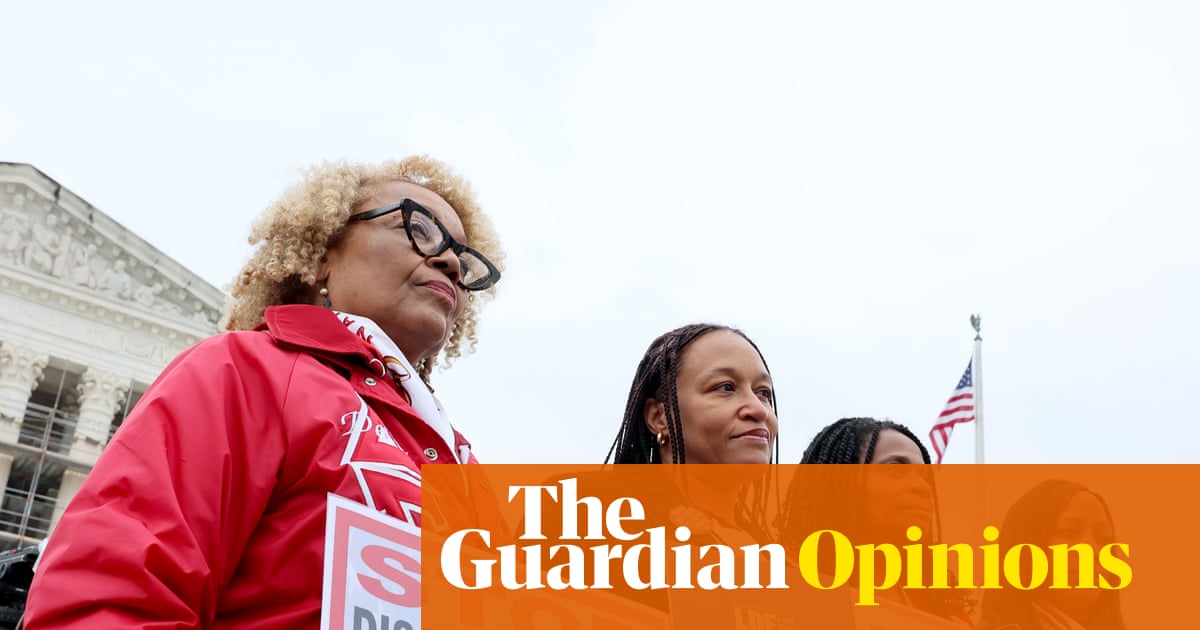
The upcoming ruling in Louisiana v. Callais will extend beyond being just another decision from the Supreme Court regarding voting rights. This case will address whether the Voting Rights Act (VRA) can still mandate that states create electoral maps that afford Black voters a substantial opportunity to elect their representatives.
This challenge to the VRA is the latest addition to a longstanding effort aimed at suppressing Black voters. For over a decade, there has been a concerted attempt to marginalize and fragment minority voices, ultimately seeking to establish dominance by one political party.
It is important to be candid about the situation at hand.
Following the Civil War, the Reconstruction Era opened the door to a more inclusive democracy. Black Americans registered to vote, participated in elections, and even held public office. For a fleeting period, the promise of the 15th Amendment seemed attainable. However, this progress was met with violent backlash, leading to the establishment of Jim Crow laws that stifled Black political power for nearly a century.
Methods such as poll taxes, literacy tests, and complex legal frameworks were employed to disenfranchise Black voters. After the Confederacy’s defeat, it reasserted its influence through state legislation.
The modern civil rights movement compelled the nation to confront its historical injustices. The Voting Rights Act of 1965 emerged as an unprecedented civil rights law, designed to prevent discriminatory legislation from being enacted. It aimed to protect communities that had already suffered significant barriers to voting access.
The success of the VRA was undeniable, as Black voter registration surged, representation increased, and the South transformed.
This very success made the VRA a target.
When the Supreme Court weakened the VRA in the 2013 Shelby County v. Holder decision, it essentially provided states with histories of discrimination a free pass to enact restrictive measures. This led to the closure of polling stations, predominantly affecting Black neighborhoods, and the introduction of voter ID laws that disproportionately impacted African Americans. The campaign against Black voters intensified following their success in Georgia and the unseating of Donald Trump.
From the Shelby County ruling until June 2023, 11 states with histories of voting discrimination enacted 29 laws aimed at restricting voting rights, often based on unfounded claims of electoral fraud.
In the aftermath of the 2020 election, groups promoting conspiracy theories inundated state legislatures with baseless fraud allegations and demands for audits. National organizations like ALEC and the Heritage Foundation helped transform these narratives into model legislation, which was then replicated in state legislatures nationwide.
Even six years later, Trump and his allies remain fixated on the 2020 election, leveraging it to create doubt, justify interventions, and contest outcomes when they face defeat.
This trend is not limited to state legislatures.
Public statements from the president about “taking over” elections have raised concerns. There have been unprecedented raids on local election offices, such as in Fulton County, Georgia. The Department of Justice has requested extensive voter roll data from various states, and reports of intimidation tactics involving ICE have surfaced.
This is not a series of isolated incidents; it represents a coordinated strategy for power: centralizing control, undermining local election administration, purging voter rolls, and limiting participation.
The proposed Save Act, which masquerades as a security measure, would impose new documentation requirements on millions of eligible voters, making it difficult for individuals such as women who have changed their names, seniors born at home, naturalized citizens, and working-class voters without easy access to identification. This is not an oversight; it is a calculated tactic.
When we consider the cumulative effects—the weakening of the VRA, the rise of restrictive laws, congressional inaction, intimidation efforts, and calls for greater control over election administration—a troubling picture emerges.
We are witnessing a modern manifestation of Jim Crow.
This resurgence is marked by new laws, court rulings, and procedural obstacles that disproportionately affect Black communities.
Once again, the South is at the forefront of this battle.
Thus, the establishment of state-level Voting Rights Acts is more crucial than ever. These acts are not merely symbolic; they serve as crucial defenses. They aim to restore the protections that the federal government has neglected. As federal safeguards diminish, states eager to restrict voting will act swiftly.
The momentum is accelerating.
Jim Crow was a systematic effort to maintain racial hierarchy through legislation and the power structures that upheld it. When we observe organized attempts to purge voters, centralize election control, dismantle the VRA, and weaken Black political influence, we must recognize it for what it truly is.
Brick by brick, efforts are being made to construct barriers that exclude Black and brown voters from participating in democracy. Yet, history teaches us that some barriers are meant to be dismantled.
Once again, the South serves as a proving ground for our commitment to democracy. Sixty-one years ago, individuals marched and sacrificed on the Edmund Pettus Bridge in Selma for the right to vote—an endeavor that played a crucial role in the passage of the Voting Rights Act. Today, we must channel that same spirit, mobilizing, organizing, and energizing our communities to ensure voter registration and turnout, ultimately striving to steer the moral and political arc of history toward justice.
Dr. Carol Anderson is the Charles Howard Candler Professor and Chair of African American Studies at Emory University and the author of “White Rage: The Unspoken Truth of Our Racial Divide.”