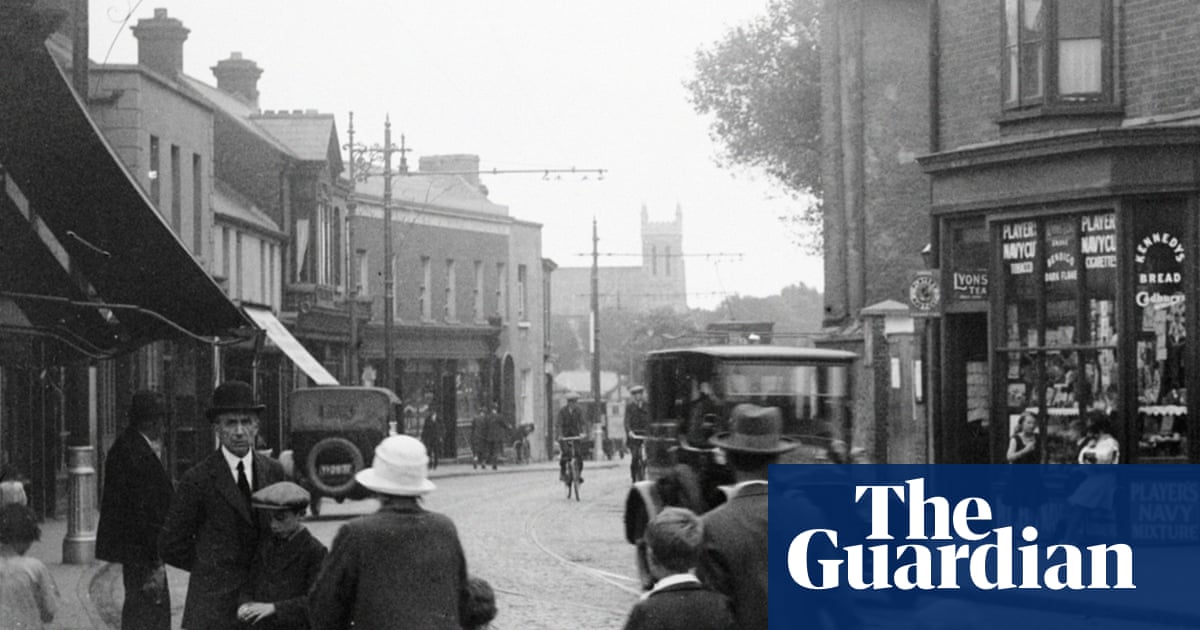

The early years of Ireland’s independence are often viewed, if at all, through the lens of a dull and conservative society marked by localism. Following the intense events of the 1916 uprising and the Anglo-Irish War from 1919 to 1921, the newly established nation appeared to enter a stagnant phase characterized by isolation, as the initial aspirations for freedom faded into a period of muted conformity.
This prevailing view is poised for a significant transformation with the upcoming release of the 1926 census, a groundbreaking project that will make the personal information of nearly the entire population from that time publicly accessible exactly one hundred years later.
The National Archives of Ireland has digitized the census data, which encompasses over 700,000 pages, providing an intimate portrayal of the country and revealing the lives, professions, and in some cases, the hidden stories of 2.9 million individuals. This dataset will be made available online on April 18, creating a valuable resource for researchers.
According to John Gibney, a historian with the Royal Irish Academy who contributed to the project, the findings will challenge the notion that the fledgling state, having gained independence from Britain but not yet established as a republic, was a homogenous and insular society. He noted, “Immigrants were present throughout the Irish Free State during that period. This contradicts the stereotype of a somber and conservative environment. While conservative elements existed, the 1920s were part of a more globalized context. People engaged with popular culture, traveled, and these influences permeated Ireland.”
Although the number of foreigners was relatively small, the census uncovered a diverse array of nationalities—including British, American, French, Italian, German, and Egyptian—scattered throughout Ireland, as highlighted by Gibney. He remarked, “This reveals a level of cosmopolitanism that adds complexity to our understanding of the past. It’s likely that no town or village was without someone who spoke with a different accent, enhancing the diversity of local communities.”
While many Irish citizens faced poverty and unemployment prompting emigration, the nascent state also attracted individuals like Germans who moved to Limerick for jobs with Siemens on a hydroelectric project, and a Hindu law student from India who resided in a Dublin boarding house. Orlaith McBride, director of the National Archives, expressed her fascination with the rich tapestry of individuals represented in the census.
Data from hotels further revealed that despite, or perhaps due to, its geographic isolation in Europe, Ireland was a destination for foreign tourists. “The census provides insights into those employed in the hospitality industry, indicating that entire towns were involved with hotel operations,” McBride noted.
In accordance with the 100-year rule, the census is mandated to be publicly released this month. Supported by €5 million (approximately £4.3 million) in government funding, a dedicated team of 50 from the National Archives meticulously extracted records from 1,344 boxes, repaired damaged pages using traditional methods, and cataloged and digitized the information to ensure it is freely accessible to both scholars and the public. Unlike the UK’s 1921 census, which was released in 2021 behind a paywall, Ireland’s census will be available at no cost.
McBride remarked, “This project has been an extraordinary undertaking, requiring significant labor. Each census entry encompasses 21 categories, including age, gender, marital status, occupation, religion, living conditions, and proficiency in the Irish language.”
In addition to households and hotels, census forms were filled out in various locations such as prisons, hospitals, and ships, capturing the residences of individuals on April 18, 1926. The 2,000 gardaí, or police officers, responsible for distributing and collecting the census data utilized their local knowledge to provide additional context.
In some instances, gardaí noted discrepancies, such as a woman who was listed as the daughter of an elderly resident but was actually her granddaughter—an adjustment made to conceal the fact that the real mother was unmarried. In another case, a garda observed that a widowed farmer had remarried his housekeeper, a detail omitted from the official census form. “This census will likely unveil family histories that individuals may not have been aware of,” Gibney stated.
Historians are optimistic that the census could shed light on a significant mystery of the time: the sharp decline in the Protestant population. Between 1911 and 1926, the non-Catholic demographic in Ireland’s 26 counties—excluding Northern Ireland—decreased by 32%. While factors such as World War I casualties, the influenza pandemic, and the withdrawal of British troops account for part of this decline, historians are left to ponder whether Protestants departed due to feelings of unwelcomeness or threat in a predominantly Catholic society. Analyzing the movements and occupations of individuals may help clarify this issue, according to Gibney. “The census results could potentially provide insights into this matter.”
To commemorate the release of the census records, various exhibitions, documentaries, theatrical performances, and a book titled “The Story of Us: Independent Ireland and the 1926 Census” will be organized. Additionally, authorities are seeking “centenarian ambassadors” among the approximately 1,200 individuals who have reached the age of 100. “They possess remarkable stories to share,” McBride remarked. “Their experiences reflect the first century of modern Ireland’s development.”