
After more than five hours of relentless work, with only brief interruptions for tea and cigarettes, the atmosphere was thick with anticipation. Workers displayed signs of fatigue, their eyes heavy with sleep and legs yearning for rest. Occasionally, a joke would break the tension, but the satisfaction of completing the task remained elusive. A sense of unspoken anxiety permeated the scene, mirrored in the expectant expressions and restless movements as they frequently checked the sky, which was gradually brightening with the dawn.
All eyes were on a lone welder, stationed on a ladder, as he meticulously cut the final inch of a massive 30,000-kilogram girder. The sides had already been severed, and the crane was ready, its ropes securing the weight of the girder. However, the last inch—a thick, stubborn section of steel anchoring the structure to a pillar—refused to budge.
At 6 a.m., the welder descended from the ladder, prompting phones to be raised in anticipation. The crowd erupted with shouts of “rassa pakdo,” instructing workers to grip the ropes attached to the girder to guide its descent as it hung in the air.
It was time for one final push. A worker on the east side inserted a crowbar behind the girder and tipped it forward, causing the massive structure to swing downwards.
As day broke, the sky exploded with fireworks—a surprise celebration orchestrated by a contractor in preparation for this moment. After three months of effort, a relic that had stood for 112 years had finally been dismantled.
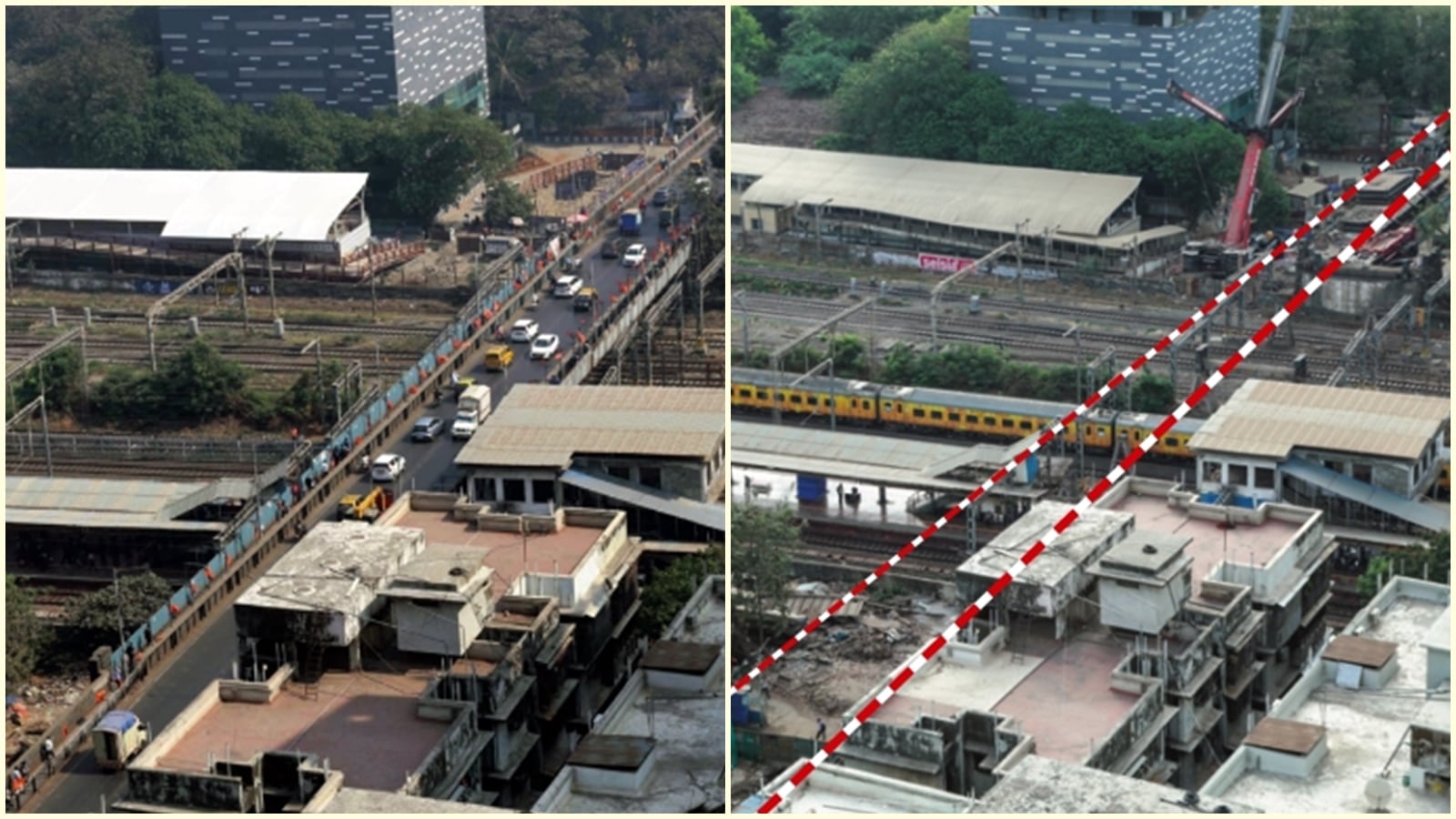
The Elphinstone Bridge, which had served as a vital link between the eastern and western parts of Mumbai for over a century, was more than just a physical structure; it was a part of the community. It connected the bustling areas of Prabhadevi and Parel, where towering office buildings now loomed. Commuters filled its steps, queuing for share taxis under its archway, with the familiar sights of tea vendors and animated discussions echoing against its sturdy basalt walls.
However, the bridge’s age and the city’s evolving demands for faster transit signaled its inevitable retirement. In September 2025, the bridge was closed permanently, symbolizing a broader transformation within the city as old structures made way for new ones. Plans were in place for a modern double-decker replacement, featuring a lower deck for local traffic and an upper deck as part of the Sewri-Worli Connector, promising quick travel across the city.
Before this vision could come to fruition, however, the bridge had to be dismantled—a task that proved to be quite challenging.
Engineers studying the bridge’s original 1911 blueprints identified natural divisions in the structure, which could be segmented into 28 pieces. However, they faced two significant challenges.
First, the bridge spanned 11 active railway tracks, necessitating that any cutting work be conducted during periods when no trains were operating. This limited their working hours to a narrow three-hour window between the last train of the night and the first of the morning, or during longer blocks that would halt train services—a rare occurrence.
Second, there was the issue of the overhead electrical (OHE) wires that powered the trains. Over the years, these wires had become entangled with the bridge due to the gradual raising of the railway tracks.
“The overhead electrical wires of the railways are tangled up with the bridge,” explained Anirudh Sharma, project manager at Maharashtra Rail Infrastructure Development Corporation (MRIDC). “The bridge’s height is just 5.5 meters. Over time, as the railway tracks were elevated, the catenary wire became intertwined with the structure.”
Sharma devised a solution during a sleepless night in October, inspired by a clothesline advertisement. He proposed using a temporary beam to support the OHE wires while the panels were taken down beneath it. This idea received the green light from Western Railway.
Despite some initial setbacks, including a stalled attempt on New Year’s Eve and a challenging night on January 3, progress gradually unfolded throughout January. Workers carefully cut the edges of the panels, ensuring the structure remained stable by leaving the corners intact until the final night of dismantling. The temporary OHE setup functioned effectively, allowing the span over the railway lines to be safely removed.
By the time the central span was being dismantled on the night of February 16, the crew operated with a newfound confidence, their movements synchronized like a well-rehearsed dance.
As the last train departed around 1:30 a.m., a signal from the railways announced a power block. Railway staff discharged remaining electricity from the OHE and inspected the wires overhead, while workers on the bridge prepared their gas cutters. Sparks erupted as they began their final cuts. Once the panel was extracted, the temporary beam was positioned, and the railway team reattached the OHE wires, completing the task by 4:30 a.m.
The extraction of the remaining panels built towards a crucial megablock: a six-hour period on the night of March 14 dedicated to removing both girders. The block commenced at 12:40 a.m., with power shut off and the OHE disconnected. The atmosphere was optimistic.
However, less than an hour into the operation, the crane’s grip faltered due to a burst hydraulic pipe, causing water to leak. Immediate disappointment followed, with railway workers humorously acknowledging the long nights spent working on this bridge. The task would extend into the following week.
Despite the setback, Sharma felt a sense of quiet relief. If this challenge had to arise, it was better to face it now.