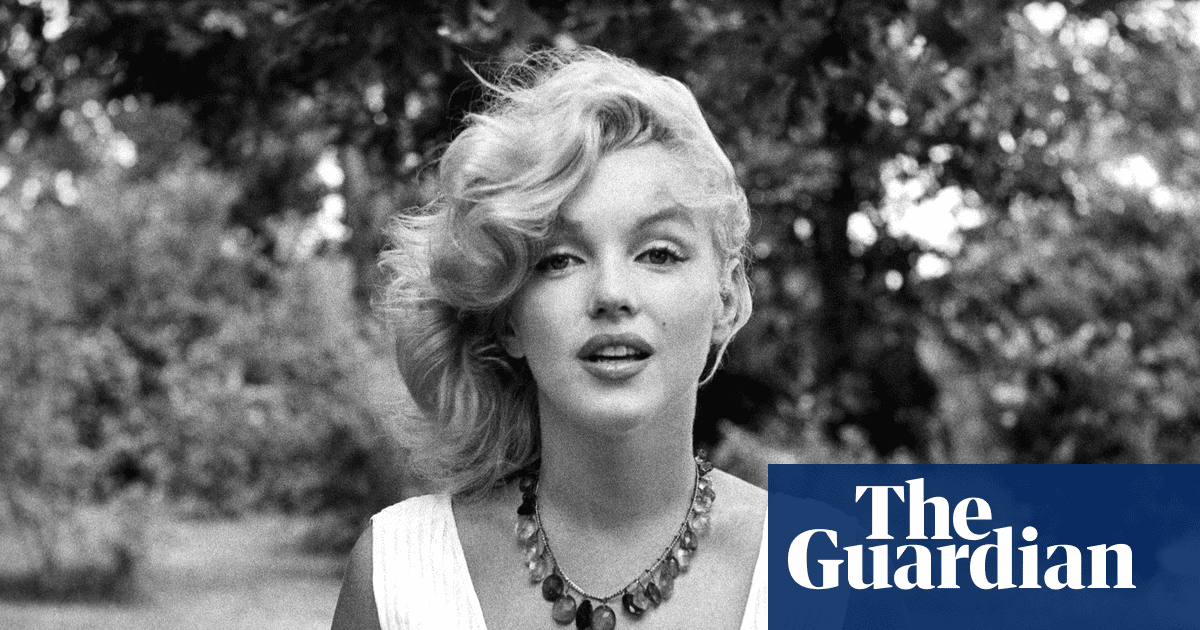

Often perceived merely as a timeless sex symbol or a tragic figure embroiled in numerous controversies, Marilyn Monroe was, in fact, a much more complex and subversive individual. This perspective is highlighted in two exhibitions that celebrate what has been dubbed “the summer of Marilyn” in honor of the centenary of her birth.
In recognition of this milestone, prominent British cultural institutions are acknowledging Monroe not just as a celebrated actress but as a witty performer, a savvy creator of her own public persona, and a transformative figure in the realm of female stardom in cinema.
The British Film Institute (BFI) will host an extensive two-month retrospective that revisits her extensive film career, while a significant exhibition at the National Portrait Gallery will explore the evolution of her public image.
Kimberley Sheehan, the lead programmer at the BFI and curator of the film season, remarked, “Marilyn Monroe may very well be the most iconic star in cinema history. She was the original triple threat and deserves recognition for the way she shaped her own stardom.”
The exhibition titled “Marilyn Monroe: Self Made Star” will commence on June 1 and continue until the end of July. It will showcase Monroe’s most renowned performances categorized into three themes: Star Attractions (musicals and comedies), Dramatic Turns (serious roles), and Scene Stealers (notable smaller roles).
Sheehan expressed her hope that attendees will discover or rediscover the vibrant energy Monroe brought to films such as “Gentlemen Prefer Blondes” and “How to Marry a Millionaire,” as well as the poignant depth she portrayed in “The Misfits.” She emphasized that even in smaller roles, like those in “Clash by Night” and “All About Eve,” Monroe displayed remarkable versatility and subtlety.
From her breakout performance in “Ladies of the Chorus” (1948) to her last unfinished film “Something’s Got To Give” (1962), Monroe collaborated with some of Hollywood’s most significant directors and actors, crafting a career that spanned vibrant comedies and deeply layered dramatic performances.
The BFI aims for this season to encourage audiences to look past the mythology surrounding Monroe and to reevaluate her as a pioneering artistic force who challenged the Hollywood studio system, advocated for better scripts, and became the first woman since the silent film era to establish her own production company.
A central aspect of this celebration includes the BFI Distribution’s re-release of “The Misfits,” Monroe’s final completed film, which will be screened in cinemas throughout the UK and Ireland. Directed by John Huston and penned by her then-husband Arthur Miller, the film narrates the tale of aimless cowboys and fractured relationships in the Nevada desert, with Monroe portraying a recently divorced woman who falls for a disenchanted cowboy, played by Clark Gable.
Sheehan noted that Monroe’s extensive cultural representation has often overshadowed her contributions as a performer. “For many, Monroe is primarily an icon and a secondary performer,” she explained. “While they recognize the image, the gossip, and the tragedies, they may not be familiar with her films.”
She continued, “It’s crucial to revisit her work now, especially as her image is frequently commodified and even utilized in AI-generated art. Delving back into her films reveals the authentic human artist behind the persona.”
Meanwhile, “Marilyn Monroe: A Portrait” will be exhibited at the National Portrait Gallery from June through September, featuring works from renowned 20th and 21st-century artists and photographers, such as Andy Warhol, Pauline Boty, and Richard Avedon.
This exhibition delves into Monroe’s role in shaping her own image and her enduring impact on visual culture. It also includes previously unpublished photographs from Life magazine, intimate snapshots taken by Allan Grant at Monroe’s Brentwood home in Los Angeles, just a day before her passing in August 1962.
Born on June 1, 1926, Monroe continues to be a significant figure in popular culture. From her early pin-up images as a young model named Norma Jeane to the final photographs taken in 1962, she remains one of the most photographed individuals in history.
The exhibition emphasizes her collaborative nature in image creation and her ability to exercise creative control—she not only performed in front of the camera but also directed photo shoots and rejected images that did not meet her standards.
“One of her greatest achievements was the creation of the persona ‘Marilyn Monroe,’” Sheehan stated, “but it was also one of her most significant struggles, as she spent much of her later career attempting to escape it. She sought to reinvent herself, an endeavor that was quite rare in the 1950s.”
Drawing parallels to modern celebrities, Sheehan remarked, “Today, we have artists like Taylor Swift, who embraces different eras, and Madonna, a pioneer of reinvention. Monroe attempted a similar transformation with her production company, but it was met with misunderstanding and mockery.”
“We have made substantial progress, yet there is still more work to do,” Sheehan concluded. “If Monroe were alive today, she could have emulated someone like Margot Robbie—an individual with significant influence over her image, as well as being an exceptional actress and an astute producer. I believe that had she lived longer, she would have had greater opportunities.”