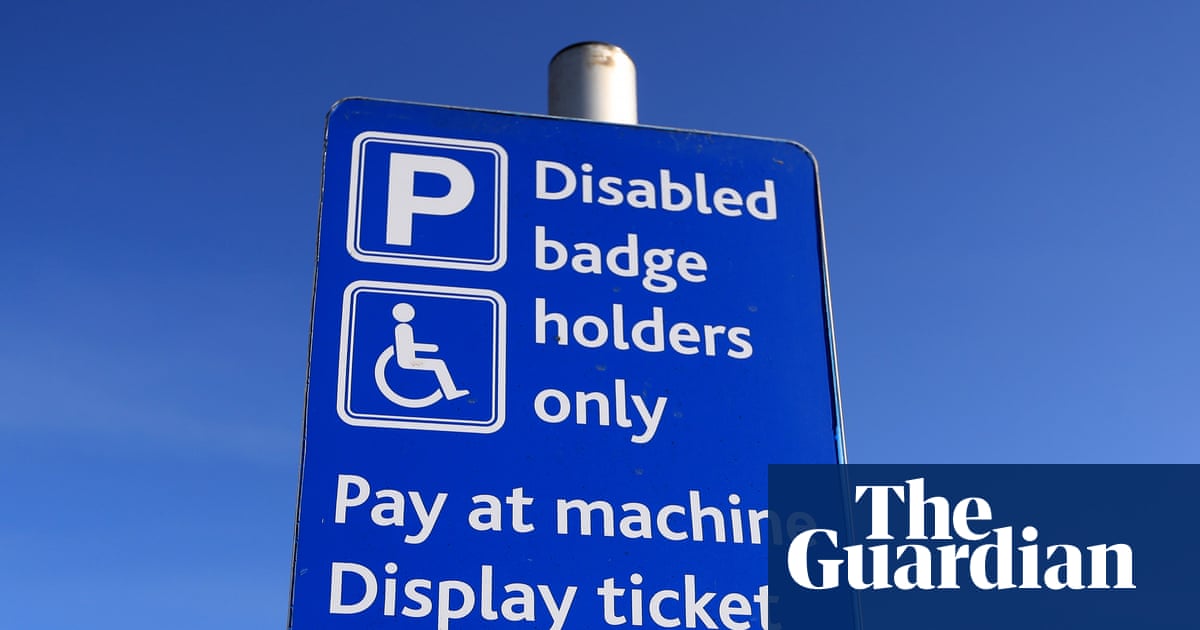

Local councils across England have been called upon to intensify efforts against the improper use of blue badge parking permits, both authentic and fraudulent, as the number of individuals possessing these permits has soared to one in every 15 people.
The Automobile Association (AA) has highlighted the necessity for enhanced measures to identify violations, such as the utilization of counterfeit or stolen blue badges.
These permits, which require renewal every three years, are designed to assist individuals with disabilities or health issues by allowing them to park in closer proximity to shops and services. In London, blue badge holders are also exempt from the £18 daily congestion charge.
Recent data from the Department for Transport (DfT) indicates that as of March 31 of the previous year, approximately 3.07 million blue badges were issued, representing over 6% of an estimated 46 million adults in England.
Edmund King, president of the AA, remarked, “The blue badge scheme serves as a vital mobility resource for millions of legitimate users and their families. Our concern lies not in the total number of badges issued, but in the troubling estimate that up to one in five badges may be misused by individuals other than the authorized user.”
King pointed out that fraud can manifest in various forms, including misuse by family members, continued use after the badge holder’s death, and the use of counterfeit badges or stolen ones. “We advocate for a stringent approach to eliminate unauthorized badge use to protect those who genuinely need them,” he added.
While there are no recent statistics on the financial impact of blue badge fraud in the UK, a past estimate from the now-defunct National Fraud Authority suggested it could cost £46 million annually as of 2011.
The DfT data also revealed that the north-east of England boasts the highest percentage of blue badge holders at 6.1%, while London has the lowest at 3.5%.
In 2019, the criteria for obtaining a blue badge were expanded to include individuals with non-visible disabilities, such as Parkinson’s disease, dementia, and epilepsy.
Notably, over 40% of badges issued in the 2024/25 period were granted without the need for further evaluation.
Depending on the area, these permits typically allow holders to park free of charge in pay-and-display spaces and for a maximum of three hours on single and double yellow lines.
Recently, several councils have reported legal actions taken against individuals for blue badge misuse. For instance, Croydon council in south London announced in January that seven individuals were fined nearly £6,000 collectively due to offenses involving stolen, counterfeit, or misappropriated badges.
In another case last September, Oxfordshire county council secured two convictions related to blue badge misuse, including one where an individual was caught using his deceased grandmother’s badge.
A spokesperson for the Local Government Association stated, “While the majority of blue badges are used appropriately, there exists a small fraction of individuals who fraudulently use them, either to evade parking fees in disabled spaces or out of sheer negligence, thus denying access to those in genuine need.”
The spokesperson urged residents to continue reporting suspected illegal use of badges to assist councils in their battle against fraud, emphasizing that the need for a badge may not always be visibly apparent.
A representative from the DfT affirmed, “Any exploitation or abuse of the blue badge scheme is entirely unacceptable and constitutes a criminal offense. Local authorities have been granted enhanced powers to combat fraud and misuse, and they collaborate closely with law enforcement.”
This report includes contributions from the Press Association.