
A council in Victoria has designated the state’s inaugural purpose-built public skate park for heritage protection, marking a significant acknowledgment of its cultural importance.
The City of Greater Geelong has included the skate park in a list of heritage sites, which also features historic churches, residences, and public parks. The local community, along with the state government, will have the opportunity to assess these proposed changes.
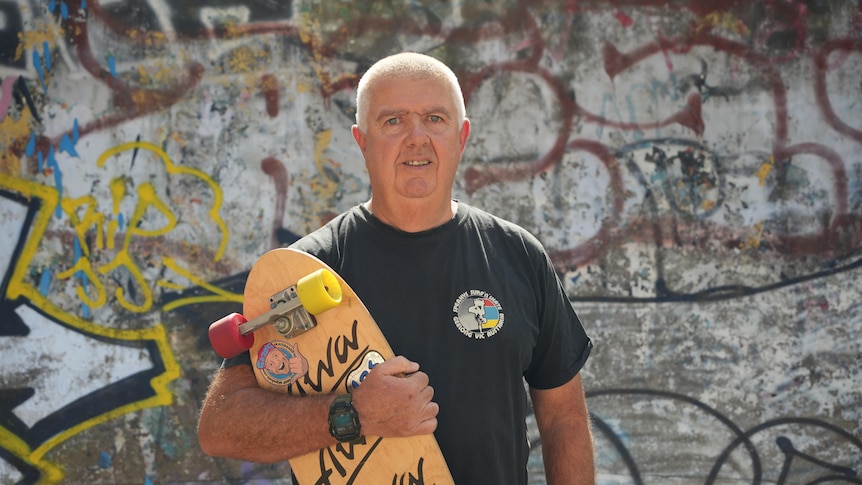
Accompanied by energetic guitar music, grainy footage captures the excitement of the opening day at Corio Skate Bowls in Geelong, a moment etched in the memory of Alistair Miller, who recalls the vibrant atmosphere of that day in 1980. “Everyone was hyped up, amped, super excited, and there would have been 200 to 300 people around the bowl to watch the opening demo,” he reflects.
During the 1970s, traditional sports began to shift as counterculture movements gained traction. In the diverse and industrious northern suburbs of Geelong, young residents sought an outlet for their energy. At just 13 years old, Mr. Miller found that outlet in skateboarding and, along with friends who shared this passion, established the Corio Skateboard Club.
The young skaters closely followed the development of parks in the United States through skateboarding magazines and aspired for similar facilities in their own community. Taking initiative, club members set up a booth at Corio Village to gather signatures for a petition advocating for a new skate park. Over the course of a month, they collected 300 signatures and presented their petition to the local council.
In a surprising turn of events, the Shire of Corio agreed to construct the skate park, a notable achievement for the children of the area, who came from hard-working families focused on industry and employment. “They were all really hardworking families that didn’t have much but made do with what they had, and to get something like this was totally amazing,” Mr. Miller stated.
According to Mr. Miller, the shire and a local service organization jointly financed the project, each contributing $15,000 toward the total cost of $30,000.
The Corio Bowls, located in the Fountain of Friendship Park along Cowies Creek, comprise three distinct bowls catering to different skill levels: one for beginners, one for intermediates, and one for advanced skaters. This establishment became Victoria’s first dedicated public skate park and quickly gained popularity among locals, even attracting visitors from afar. “We started seeing people from Melbourne and Melton, then interstate — and then some of the skaters we’d see in the magazines,” Mr. Miller recalls.
In 1987, the skate park welcomed a notable figure in the sport—American skateboarding legend Tony Hawk, who visited during the Ramp Riots competition in Torquay. While many professionals skated at the bowls, they also served as a crucial social hub for local youths. Geelong Mayor Stretch Kontelj, who lived nearby, reminisced, “Back in those days, the parents would turf you out of the house and say ‘see you back here at dinner time.’ This was just our playground, our backyard.”
Though he typically avoided the advanced bowl, Mr. Kontelj did venture in once, an experience he hardly forgot. “I did once and nearly broke my knee. You really had to be an expert skater to go into that bowl,” he recalled.
Over time, the Corio Bowls have experienced wear and tear, but recent actions by the council suggest they may be preserved for future generations. The City of Greater Geelong has voted to impose a heritage overlay on the area, affording it additional protection from potential development—a move the mayor endorses. “This was identified as one of nine areas of significant heritage. A number of churches have been identified and a milestone marker, but this one is very unique,” Cr. Kontelj noted. “I understand it’s one of the oldest skate parks in Australia, so to have this protected for future generations is really something.”
However, the park’s age is becoming apparent, as the once-smooth concrete surface has eroded, revealing rough bluestone aggregate beneath. “If you’re not wearing pads or protective gear and you hit the bottom, you’re losing skin. It’s just like running your hand over a cheese grater,” Mr. Miller explained, humorously referring to his many “blood donations” to the park over the years. Despite considering resurfacing, he appreciates the natural aging process of the park. “It’s not the fanciest skate park, and it’s hard to skate, but it makes you work for the tricks.”
While many skaters now prefer the smoother surfaces of modern parks like the nearby Northern Skate Park, the Corio Bowls remain a beloved spot, with discussions about possible upgrades and the addition of a contemporary skate park above them.
Although such improvements may be some time away, the peak body for skateboarding in Victoria supports the heritage protection of the bowls. “Victoria has been a stronghold for skateboarding in Australia. It really was in the early days, the birthplace of skateboarding in Australia. Preserving these historical artefacts is incredibly important to the history of the sport,” remarked Tim Preston, CEO of Skateboarding Victoria.
If the Victorian government approves the heritage overlay, the City of Greater Geelong will accept public input on the proposed changes. Any concerns raised will be reviewed by a planning panel before the amendment is submitted to the state government for final approval.
For Alistair Miller, who continues to participate in skating events throughout Geelong and beyond, the Corio Bowls ignited a lifelong passion for the sport. “Skateboarding will give back to you more than you can ever imagine,” he concluded.