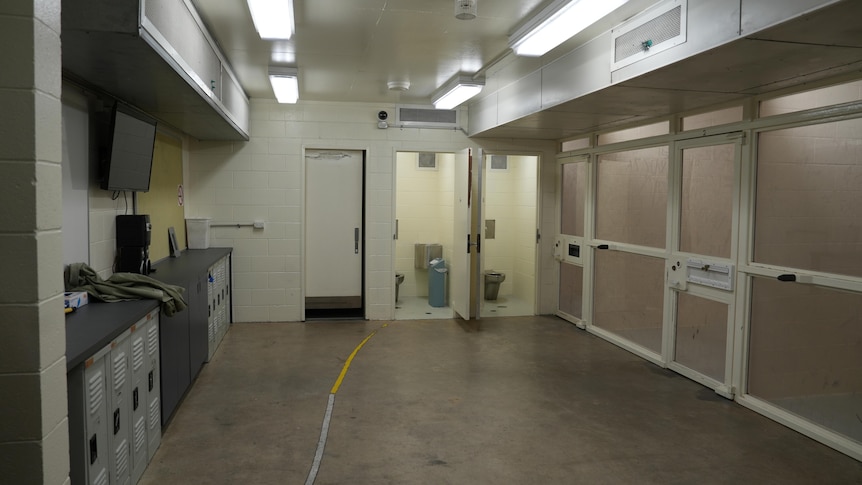

The oversight body for youth detention in South Australia has reported that the cells located within the Adelaide Youth Court do not comply with necessary standards and are deemed “not fit for purpose.” Detainees have described these cells as small and “very cold,” while the court asserts that the facility is seldom used.
According to the state’s youth detention watchdog, the conditions in the Youth Court cells fail to meet “acceptable minimum standards of safety, dignity, and care.” This has led to a growing trend of child detainees appearing in court through video links rather than in person.
During a recent inspection of the Adelaide Youth Court, which is housed in a building dating back to the 1970s, it was observed that the cells measure just 2 to 3 square meters and contain minimal furnishings, including only a bench. Shona Reid, the Youth Training Centre Visitor, commented on the conditions, stating, “They are tiny cells, very sparse, very cold, with Perspex glass and just a single bench.”
The Youth Court indicated that these cells are rarely utilized when young individuals in custody are brought for trials or sentencing and are only used occasionally for those remanded following court appearances. Reid conducted a thorough investigation over a year regarding the conditions and the increasing reliance on audio-visual links, prompted by concerns raised by detainees and their legal representatives.
In her findings, Reid referred to the cells as “not fit for purpose” and urged for improvements within a year to align them with “child-appropriate standards of safety, dignity, and humane treatment.” In a report presented to the state parliament in February, she highlighted significant evidence indicating that the existing conditions in the Youth Court cells are detrimental to the well-being of children and young people.
One detainee reported being confined in the cells for an extended period, stating they were held “from 9am till 6pm.” Another expressed discomfort, saying, “Nah, can’t sleep in there … there’s a bench and it’s tiny.”
Reid noted that the inadequate conditions of the Youth Court cells have led to a notable increase in the number of young people from the Kurlana Tapa Youth Justice Centre participating in court proceedings remotely via audio-visual link (AVL). Data shared with Reid revealed that the use of AVL by the Youth Court surged by nearly 33% from 2020-21 to 2024-25, with fewer than 10% of young detainees attending sentencing hearings in person.
She remarked that the adoption of AVL had become the “prevailing operational norm” following the COVID-19 pandemic. While some children expressed a desire to appear in court personally, most opted for remote participation from the Kurlana Tapa Youth Justice Centre.
One young person noted, “Showing up to the judge shows respect,” while another commented, “When we go in person, they know we’re just people … kids, not criminals.” However, several young detainees raised issues regarding technical difficulties that hindered their understanding during court sessions, with one stating, “Half the time you can’t hear the people or sometimes it messes up.”
Reid emphasized that the use of AVL should not exempt the court system from its responsibility to rectify unsafe court environments. She stated, “While it may be convenient to conduct proceedings via video link for adults, it does not meet the needs of children, and we must not overlook that.” In addition to advocating for improvements to the Youth Court cells, she recommended that the state government eliminate the routine use of AVL for substantive hearings and ensure that any decisions to proceed via AVL are documented and made with informed consent.
The Youth Court acknowledged receipt of Reid’s report and expressed appreciation for its insights. A spokesperson mentioned that the factors influencing a young person’s comprehension and engagement in court proceedings are multifaceted. “The Court is committed to ensuring that children and young people grasp the nature of the proceedings, tailored to each individual’s needs and within the constraints of existing resources,” the spokesperson stated.
Attorney-General Kyam Maher indicated that the government received Reid’s report prior to the recent state election and is currently reviewing its recommendations and findings. He noted that the government has invested considerable funds in upgrading court infrastructure but acknowledged that the conditions of the Youth Court cells are “not ideal.” Maher emphasized the government’s commitment to implementing programs aimed at diverting young people away from the criminal justice system, stating, “We are actively exploring ways to prevent young people from entering such circumstances in the first place.”